Author: Cate

  • The Battery

    The Battery

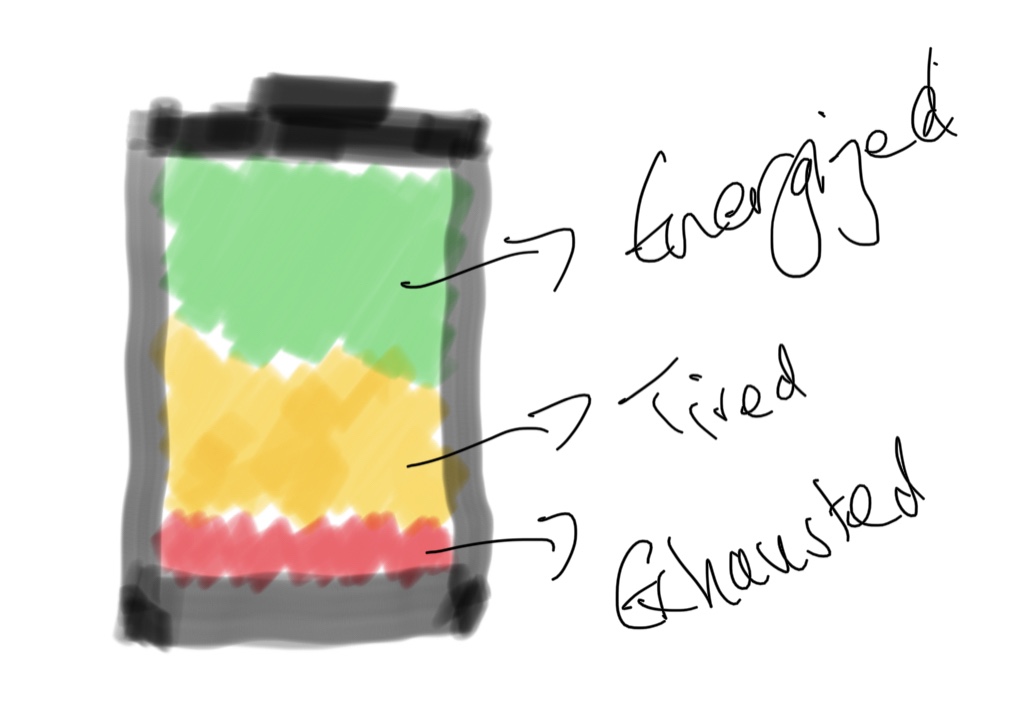
    I keep coming back to what it means to recharge. The metaphor that has been working most for me lately is the idea of a battery.

    In the green, I have plenty of charge. Everything is possible.

    In the orange is the ideal place for “active rest”. But if that’s not an option, I can keep going.

    In the red, everything is a struggle. I am in the human version of “low power mode”. Service is diminished, and I need to be on the charger, or I will keep cutting out.

    Trying to recharge, I operate from three lists:

    • Adventures and real breaks. These happen infrequently.
    • Planned recharging activities, like a date night, seeing a friend or spa trip. These happen a couple of times a week (mostly).
    • Unplanned low effort activities. Picking up a novel from a backlog (note: no decisions), giving myself a facial, watching an episode of something with my partner. These happen most days.

    Of course there are also the things I do when I don’t make an active decision to recharge. Mindless doomscrolling or playing a game.

    It takes energy to plan, so things that require planning need to be arranged in the orange (or green). The low effort no planning activities are actually the most crucial. Decisions take energy, so making those activities as easy as possible is critical.

    Decisions increase the activation energy of a activity. I.e. reading might be recharging, but trying to choose a next book is not (for me). In the red, there is no activation energy.

    Some activities also require significant activation energy. For example, generally, I find writing a recharging activity. But it has a relatively high activation energy. I need to sit at my desk, open up the editor, come up with some kind of idea. The best thing I did for my writing was to reduce the activation energy – I bought an iPad Pro with the fancy keyboard, and I keep it on the sofa, to pick up and write something (anything) when I might not muster the drive (activation energy) to make it to my desk. I drop random ideas into a notes app sync’d across all of my devices, so that at any time I can just go through and see if there’s some idea to flesh out, so I don’t have to think of one.

    The other side of recharging is: what drains you? There was a lot of talk early in the pandemic about how much time and energy people freed up by not commuting, and how they were happier and more effective as a result. I never got the boost of losing a commute, and in this timeline, I feel like I drain more quickly and recharge more slowly. Paying attention to why has been illuminating.

    • Having set times and needing to make phone calls made the activation energy of working out much higher and the quality lower. I leant into Peloton classes instead.
    • Heavy meeting days are exhausting, and it’s easy to think it’s just “zoom fatigue”. The battery metaphor helped me understand that “only” 6-7 hours in length on Zoom used 10-12 hours of energy. I realized that beyond the time on Zoom it was the context switching and lack of breaks. I reorganized my calendar as much as I could, and reframed my expectations for myself to make those days less depleting.
    • People management is more draining when people are stressed / unhappy, which in this timeline was more regular an occurrence. I gave myself more space to manage that, and looked for ways to expand my toolbox.

    One of the core things I’ve taken from this exercise is that when something feels “disproportionately” draining, that’s not automatically me failing at something, but an opportunity to learn something about myself. Getting curious about why helps me understand things more fully – which makes it easier to address them. I’m hardly alone in finding some things oddly exhausting, and it’s always fascinating to see what other people find draining. One question I like to ask is, “if you could change one thing about your job, what would it be?” – the answer illuminates what for them is particularly hard, which is useful to know even if there’s little to do about it.

    The biggest change for me, however has been to accept being at zero. It sucks to be at zero, but fighting and judging it doesn’t change it – actually it makes it worse, because fighting and judging are exhausting activities. Only once I can let myself be at zero without judgement do I begin to recharge.

    If you want to start analyzing your battery, a some things to try:

    • Every day for a week (or a month!), reflect on what was most draining, and what was most rewarding. At the end of the period review, and see what patterns emerge.
    • Make a list of low activation energy activities that recharge you. See if there are things you can do to reduce the activation energy of them – e.g. identifying things to read or watch to reduce decision making, or buying supplies for crafting or facials or whatever is your jam.
    • Make a list of planned activities and see how you can make them more regular occurrences. Schedule standing dates with your friends or partner, or set aside time to book advance tickets or appointments for things you know you’ll enjoy.
    • Think about how you can reduce the activation energy of things that you know you enjoy but sometimes struggle to start.
    • Pay attention to where you are at when you finish your work day each day. If you finish in the red every day, your rest time is likely to be lower quality. What would finishing in the orange 1-2 days a week give you, and how could you make that happen?

    One big difference is for people who enjoy planning, it can be a recharging activity that is self re-enforcing when what is being planned are recharging activities. For people who aren’t planners (it me) planning may be a chore to accept in pursuit of an overall happier life.

    What is personally recharging or draining to you will be different, but the first step is identifying what that is and deciding what – if anything – you want to do about it.

  • Low Process Culture, High Process Culture

    Low Process Culture, High Process Culture

    When I changed jobs in 2020, I went from a low-process culture to a high-process culture (or: what I perceive as high-process, all things are relative). It was a bit of a culture shock.

    The process stressed me out. For instance, my previous job did not have performance review. You were supposed to submit feedback every ~6 months – which I had always understood to be inconsistently enforced (I typically managed to do feedback for my directs every 6-9 months). So, coming into my first performance review, somehow my first ever as a manager despite years of experience, was something of an Ordeal.

    To be clear, what stressed me out was the process. I really struggled with the template I had been given. And then I finally submitted what I’d put together, only to get the feedback that I had written everything as a list of bullet points.

    Well, yes. The template had been a list of bullet points. Hence: my struggle.

    My boss gave me a helpful piece of advice. He told me that if I knew what to do, I should just do it, and then fit the process to it. It helped a lot.

    Time passed, and we came to the next performance review cycle. This time I was less caught up on my own struggle, and had more insight into how other people were approaching things in the role of “feedback reviewer”. From this vantage point, it was clear that having a performance review doesn’t guarantee great, or even good feedback – because that depends so much on all the other feedback that happens in between.

    But, it’s better than nothing at all.

    In Thanks for the Feedback, one of the frameworks is the difference between “evaluative” and “developmental” feedback. Evaluative feedback tells someone where they stand (and whether or not someone gets promoted is inherently evaluative). Developmental feedback tells someone how they can improve. If someone only gets developmental feedback with the evaluation, the evaluative feedback will override everything else. Being great at performance reviews (if there is such a thing), requires consistent developmental feedback the rest of the time – a product of accepting that people are unlikely to fully process the developmental feedback in the review.

    The second review cycle was still stressful, but for entirely different reasons. Largely it was stress about whether or not people would get promoted, and anxiety about telling people if they didn’t get what they wanted. In short – it was healthy, unescapable stress. Not stress about process, or the stress of a manager who last gave feedback last review cycle.

    Perhaps a less emotionally charged example, consider the release process. Any release process has a checklist. And I believe such a checklist is essential. But the checklist is about the release process and not what is being released. A great release is defined by what is in it – exciting features. A bad release is also defined what is in it, a bug, that causes a problem (and another process: that of running an incident).

    The checklists maintain adequacy. They are necessary, but insufficient.

    We have checklists for onboarding. We’ve worked hard on improving them. But I knew our onboarding process was better when the checklists failed, and people stepped in anyway to ensure the outcome – the success of the new person. The mindset of the team was one of collective responsibility, the checklist was just adequacy.

    I believe the judicious application of process is a super power. But I also believe that process is necessary, but insufficient. Process as a super power makes the unclear, clear, and supports a mindset shift that leads to something more.

    But like all super powers, used the wrong way, process becomes a bind and a distraction. People focus on the mechanics, rather than what they’re supposed to accomplish and why. They start thinking their job is to perform the process, rather than the desired outcomes they’re looking to achieve.

    Stepping back to consider the contrast makes more clear to me why the low-process culture didn’t really bother me, or (for the most part) impede me from the things I wanted to do. I was willing to create what was necessary in order to achieve the outcomes I wanted. At the same time, it gives me more empathy for the people who I saw really struggle without it. There is no clear starting point or agreements about how things work in a low-process culture, and that can be very overwhelming.

    All of this is not to complain about a higher-process culture. It is a relief to have a starting point for most things, even if I don’t agree with all of it. But process is inherently a mechanism of standardization and enforcement. There is no way to enforce greatness – we just enforce adequacy, and should be cognizant of the limits of that.

    A company with a performance review process won’t necessarily mean you have a better manager or a better growth path than an organization without one. It just makes it harder for managers to fall short of the absurdly low minimum of some amount of somewhat reasonable feedback on some specific cadence.

    No release process will guarantee a great release, just like no onboarding checklist will ensure someone is successful. But – they can help you avoid known pitfalls such that your release doesn’t explode and your new hire isn’t still completely lost after their first month.

    But it’s always worth considering what process makes sufficient, and what you’re really aspiring for. Sometimes adequacy is the goal, but when it’s not, the process is usually the least of it. What are you optimizing for?

  • Co-Active: Synergy

    Co-Active: Synergy

    The last course in my coach training journey – for now – was Synergy. This follows Fundamentals, Fulfillment, Balance, and Process.

    The final course, this tied everything together. We learned about the attributes of a coach (fierce courage, aliveness, and connection), worked on range (including silent coaching!) and the idea of “stories”.

    Going into it, I was focused on the finish line – this has been a significant undertaking, and I was excited to be “done”. The intention I set for the course was to stay present and “enjoy the last mile”. Mixed success here, 4.5 hours is a long time to be on Zoom, but at the end I felt somewhat bereft. Each course has created a small community, and this was the last one.

    It has been quite a journey. I took fundamentals at the end of 2020, after wanting to take it since 2018-19. Spacing out the courses meant that most of my previous classmates had left me behind, although it was nice to reconnect from someone from Process and even another person who had been in my Fulfillment group! Most people get through the courses more quickly, but I’ve been glad to give things space. It makes each one very distinct for me, and that’s helped cement my understanding of the tools that get introduced each time.

    I’m glad I chose to make time for it all, I got much more out of it overall than I was anticipating. It has fundamentally changed my thinking and how I approach things. Beyond the impact on me, it’s spread to my team. Four of my teammates have now taken Fundamentals! It’s been fascinating to see what they got out of it, and the overall impact on the team.

    As for what’s next, despite the certificate, this still feels like very much the beginning. I continue to bring this mindset to my day job (where useful/appropriate) and the handful of external clients I work with. I continue to stay in touch with some of my classmates, which I love. Beyond that, I’m debating whether (and when) to go through the certification process, and other options for continued learning, but likely nothing more in 2022 as I want to focus on other things for a while.

    So much gratitude to everyone who has supported me in this adventure.

  • Book: Woman of Influence

    Book: Woman of Influence

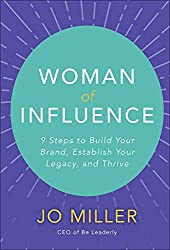
    Woman of Influence (Amazon) is about building your brand as a leader and taking charge of your career. It’s full of actionable strategies for understanding how you’re perceived – and how to change it.

    My personal favourite is a long time favourite tool of Jo’s – the shadow org chart. This is the map of who influences who in an organization, and the concept alone is so helpful for bringing this new awareness into what’s actually happening.

    The other thing I really loved in the book was identifying the 12 most common pitfalls that women fall into that hold us back. Such as doing work that will never make you shine, being good at a lot of things and famous for none of them, accepting low-visibility assignments and downplaying your accomplishments. And – of course – being over-mentored and under-sponsored! Never forget that one. Each of these come with a “leaderly move” to help escape the trap and build a better brand and career.

    Overall I really loved it. There’s a lot of work in the exercises and I definitely didn’t do all of it! A good book to come back to again and decide where next to put attention to.

  • Sometimes you have to choose between being right and being effective

    Sometimes you have to choose between being right and being effective

    My latest in Quartz…

    My partner and I had a hellish move recently. We were lucky in that our landlords are nice, reasonable people, and unlucky in that they were quite disorganized and hadn’t done everything they needed to, like ordering furniture and thoroughly cleaning up after the last tenant.

    So as this played out, living in a hotel, in a new (to me) country, trying to juggle his new job, my existing job, and the absolute chaos of everything, our differences started to play out.

    My partner, a software engineer, said “they should do these things.” I, an engineering director, started to develop a risk mitigation strategy.

    Continue reading…

  • The Intention

    The Intention

    Credit: hoekstrarogier / Pixabay

    New Year’s resolutions are terrible because we are not a different person on January 1 (or 2) than we are in the last days of December, or November or June. They are also terrible because we over-estimate what we can do in a day, and under-estimate what we can do in a year.

    Today is the last day of January. Maybe all your “resolutions” have already collapsed. That’s okay, you have time: try setting an intention for 2022 instead.

    What is the one goal? The one thing you want to be different at the end of the year?

    Hope for many things, but choose the one thing that is most important to you, that will make the most difference to you.

    When we start the year with a list, we break it as soon as life gets in the way. When we start the year with an intention we can keep coming back to it again and again – and find that even if the specific goal was accomplished, there is still more depth to uncover. Or we can just pat ourselves on the back; that’s fine.

    First, ask why this thing is important to you? What will it give you? What will be possible once it is done that is not today?

    Then ask, what is most likely to get in your way? Make a list.

    How big are those things? Maybe one of them needs to be the intention for the year; you have more groundwork to lay for the original intention you came up with. That is okay. You have time.

    Next, ask who will support you? Who will you share this intention with? How can they help you come back to it? How can they support you practically? We need practical help as well as emotional support to achieve big things.

    Now, ask what are you willing to say no to? What do you like, or want to do, but are willing to make less important than this intention? What are you willing to continue as-is, imperfect but adequate, in order to create space for your One Most Important Thing?

    Finally, you’re ready to determine your next steps. Every big goal can be broken down, or if not, maybe the first step is figuring out how to break it down and where to begin.

    That’s okay. You have time.

  • Book: Big Magic

    Book: Big Magic

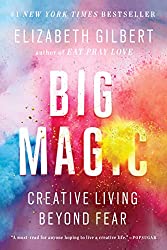
    I started with the podcast: Magic Lessons with Elizabeth Gilbert, which I loved so much that I ordered the book that prompted it – Big Magic (Amazon).

    In the podcast, Gilbert takes people one at a time through their creative block, following up with a call to someone else who she thinks will be helpful. It was so reassuring, after having a long struggle with creativity myself, to hear people echoing the same fears, and finding a way through them.

    The book is more Gilbert’s manifesto for what she calls a “creative life”. It’s a little bit out there in some ways (ideas floating around the universe waiting for the right person) but in some ways refreshingly pragmatic. She talks about showing up consistently, and expecting nothing in the way of material success, accepting brutal edits, and letting go of what you put out in the world.

    I loved it, really. The book was exactly the pep talk I needed, the podcast the context and empathy that validated my struggle. Definitely recommend if creativity is a topic you’re interested in.

  • 2021 Retro

    2021 Retro

    2021 was not the easiest year for the world, but personally it was a good one in many ways.

    Career

    I hit the one year mark at DuckDuckGo (more on that in: 1 Year @ DuckDuckGo), and got promoted for the second time ever in my career (my last job didn’t have promotions). A lot of my energy has been on building out and scaling the team, and it’s been cool to push some of the things we did to achieve that into the wider organization – such as changes to the hiring and onboarding process. I still get to spend time on product development, such the new products we’re building and better delivery overall.

    Outside of my day job, a focus has been long term plays for what options I want to have open to me in 5 years. I became an LP in the Acquired Wisdom Fund; I’m really excited about the model of investing in experienced founders, and getting a closer insight into early stage companies.

    And, I continued my coaching journey. I took 3/4 courses from the intermediate Co-Active program (one remaining in February), and worked with 3-4 clients at a time over the year, 5 total. I love coaching. I was worried about how I would find the time, but firstly, I find it really energizing, and secondly, it’s only about 2 hours a week. I’m excited to continue that in 2022, although I don’t plan to rush into certification (the Advanced section) as it’s a lot of work and I want to focus on other things for a while.

    I had already given myself 2020 off speaking, and in 2021 I kept it light – I replied to many kind invitations with “unfortunately, I realized I hate giving talks on Zoom”. I gave one talk in person (a terrible mistake) and did 2 talks for the LeadDev Together program because LeadDev are the only people I’ve seen doing great remote events, and I have always loved working with them. I also moderated a panel for them, which is another thing I generally don’t do, but I loved the topic – Manager Mistakes – and got to invite some of my favourite people and play with a format of more in depth conversations (watch it here).

    Generally feeling good about my priorities and trajectory here, and the balance between my day job and the space (both time and emotional) I have to do things outside of it. Hoping for that to continue in 2022.

    Life

    My partner and I passed one year of living together, which was exciting. I can see how surviving lockdowns together would either affirm or destroy a relationship, and I’m grateful that ours was (mostly) affirmed. Once things reopened and the madness of summer accommodation abated (somewhat), we continued the attic renovation that we started in 2020, which continued to be a bit of a nightmare, now because of global supply chains. And since my partner got a job that required him to relocate to the Netherlands, we now have a second place in Rotterdam and are going back and forth. This is extra convenient in the periods where our Irish house is uninhabitable, and we’re figuring out how we want to split our time. As much as moving during a pandemic has been a nightmare, it’s been fun to explore a new city. I really like Rotterdam.

    My fitness goals for 2020 were basically just “do what you can and survive a pandemic” (although I did also get my kayaking certification), but in 2021 I came back to my love of exercise. I caved and became a Peloton person (regular spin bike + app), and have been getting back into regular spin classes. I love the quality of the classes and the on demand nature, I am never going back to group exercise classes. I finally got a yoga mat and started trying to do yoga at least somewhat regularly. The gym has been a bit rubbish in Ireland, with one hour slots, advanced booking etc, and once I was vaxxed and wanting to do personal training again, I discovered that my trainer was an anti-vaxxer. But, I swam as much as possible, especially when we travelled. In Rotterdam I was able to get a good balance in with a mix of cardio/swimming, personal training (the gym right below us does these very intense 30 minute sessions), and spinning. It was great, and I’m excited to pick it back up again when we’re back there (and things are open).

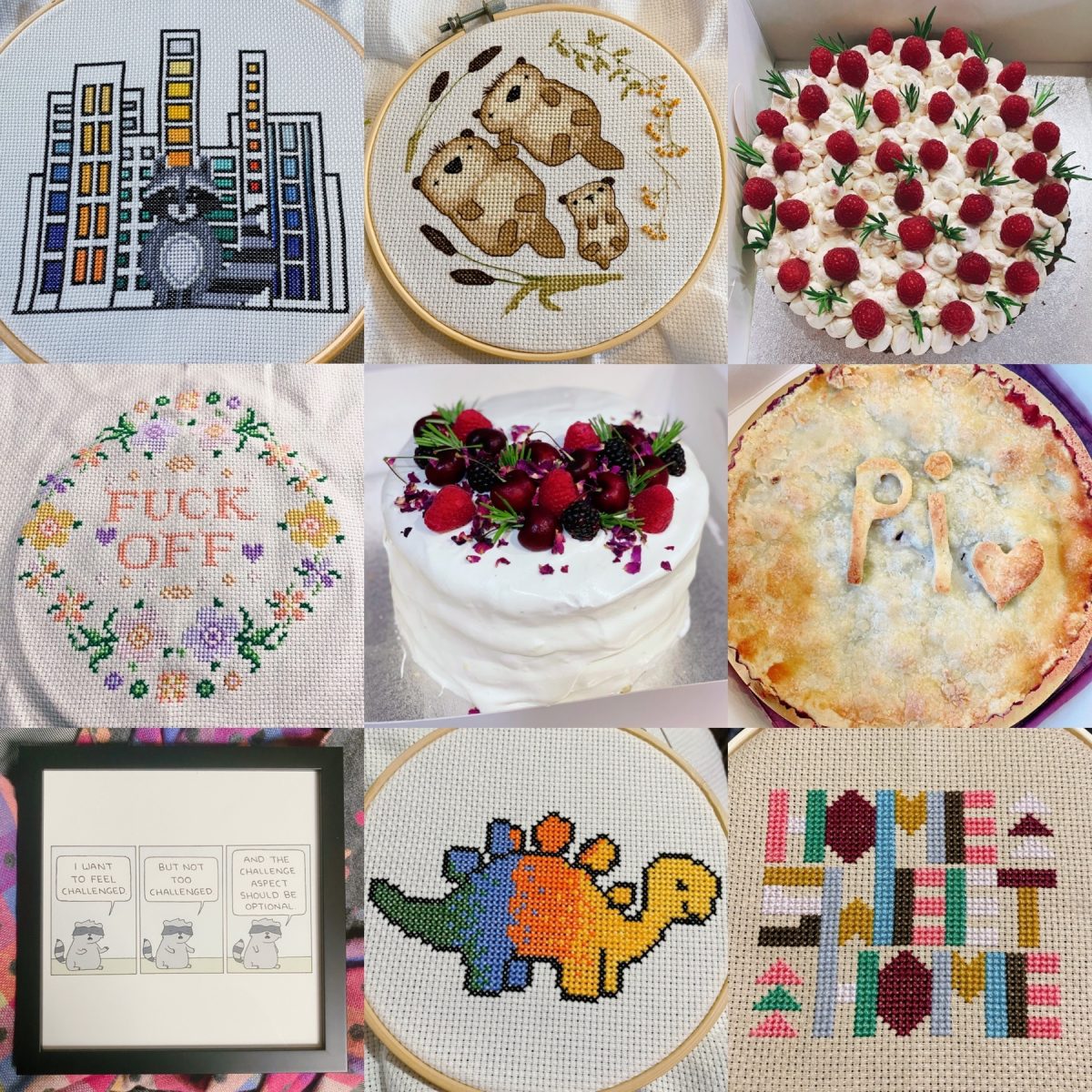
    I did a lot of crafting this year. I started it last winter break as a way to jump start my creativity. I’m not sure how creative I was after that – I mainly followed patterns – but it was a nice outlet, away from the computer. I completed four huge cross stitch projects, and many more smaller ones. I built some fun things using my Glowforge, hardest of which was the mini phone jukebox.

    Our travel was mainly in Ireland this year, other than that I was only in France (for the terrible conference), Croatia (for work) and Rotterdam (to scope it out, and to live). We had a fun time exploring Ireland though, especially now we have a bigger car (a Suzuki Swift replaced Pinkness the Smart car – I still love a Smart car as a city runaround, but it was not fun for driving across Ireland in) returning to some of our favourite places from last year, like Liss Ard and Castlemartyr (we spent a month in one of the holiday homes). We had a weekend in Kinsale, which was lovely and a nice easy way to resume travel again, went to Fota, had a very quick (one night) trip up to Glengarrif to see the Ewe Experience (very weird but charming), went to Killarney to stay at the Europe (amazing, omg the swimming pool), and finally made it to Dingle (after last year’s trip to “not-Dingle”, aka Cahersiveen), where we stayed in a strange and not entirely comfortable place, with a gorgeous swimming pool. The Dingle peninsula is gorgeous though, a highlight was a seaweed bath by the side of the ocean. We also went to the K Club, where my partner enjoyed the golf, and I adored the spa, but we were otherwise a bit underwhelmed. I took my friend for a “decadent sleepover” at the Dean in Cork, which was super fun.

    At the start of 2021, feeling a bit desolate, I booked a bunch of random things spread out through the year, figuring that we would at least get to do some of them. It went better than I expected and we made most things work, and I was really grateful to have things to look forward to. I’m hoping we can travel a bit further afield in 2022 – especially from our base on the continent, but we’ll see. Travel is still not fun in this timeline, and I am fine to wait until it is again. Except for my much delayed trip to St Lucia – originally planned for May 2020, now scheduled in May 2022.

  • 2021 in Photos

    2021 in Photos

    Since 2017, I’ve been posting a photo every day to Instagram and photo.cate.blog. I kept that up last year, posting 361 photos in total.

    In 2021, the aesthetic monotony of pandemic life really started to get to me and this was probably the hardest this project has ever felt. I think part of the appeal of the intense amount of crafting I did was to have something new to photograph at the end of each project. I found myself continually digging through my photo roll to find something – anything – to post, and multiple times I found myself about to post a picture I had already posted before.

    That being said, I’m glad I kept at it. It is a nice and minimal time commitment habit, and I hope when life becomes more “normal” it will feel easier, again, and I’ll be glad I stuck with it.