Tag: women

  • The Pipeline is a Bullshit Argument, and Other Rants

    The Pipeline is a Bullshit Argument, and Other Rants

    melting girl
    Credit: Flickr / Charis Tsevis

    The latest comments are from a guy who runs a startup incubator, but next week it will be someone else. Men, so many men, would like to explain why there are no women in the tech industry, and how it is not, actually, their fault, and there is nothing they can do, so can we just stop complaining, please? Why do they have to feel so bad about it? It’s just how the world is. Watch your tone.

    It’s The Pipeline, Stupid

    The pipeline argument is the ultimate refuge of the tech company or incubator that would like to pass the blame. There aren’t enough women graduating, so that explains the numbers. There aren’t enough girls going into the right courses at university, so there is nothing they can do.

    This argument is blind to privilege, but also, I think, classist. The tech person making in excess of $100k a year, would like to blame the school teachers who make a fraction of that.

    The school teacher could argue that 63% of women working in STEM report experiencing sexual harassment, why would they encourage students to go into that kind of toxic environment? They might be better off being accountants.

    The pipeline leaks from the age of 5 until all women have dropped out, or died. (See The Primer). Handily it means that everyone can divert attention from the leaks closest to them by pointing to leaks further away.

    Fast, Cheap, Good – Pick Two

    A constraint of project management is – Fast, Cheap, Good. Pick two. My understanding is that the VC model is built on Fast and Cheap. Postpone as much as possible (including finding a business model) until after the big exit.

    Women are shut out of this, and so women run business tend to more the Cheap and Good – bootstrapping – with a business model, and customers! – over a long period, with lower rates of failure.

    The myth of the 20 something male, is correlation, not causation. What are VCs really looking for? Hubris? Lack of interest in anything else, willingness to work 80 hour weeks and put their life on hold in pursuit of some definition of success?

    10,000 Hours and Other Nonsense

    One argument is that starting at 13 is necessary in order to have put in the 10,000 – as explained by Malcolm Gladwell in his best selling book – in order to be good enough at 23. Except it’s not just about the sheer number of hours thrown at it, it’s about the type of work done. 10,000 hours will get you a middle ranking at chess, but it takes 5,000 hours of deep practise to become a chess grandmaster.

    Also, this level of dedication is when you aim to become the best in the world at something. This is a master craftsman level of wood carving. Except what we are actually talking about is something closer to assembling a bunch of Ikea furniture, albeit in a tight timeframe. We wouldn’t extrapolate that playing with hammers and bashing together chaotic structures with no stability bears much relationship to the wood carver. And yet, writing terrible code with little feedback other than “it works” – for some definition of works, not a definition that includes any QA control – is seen to bear a significant relationship to the ability, 10 years later, to build a production quality service with millions of users and 99.9% uptime.

    The level of “deep practice” during universities is unclear, but at the very least, whilst men definitely outnumber women in university computer science, I can’t find any data that suggests they outperform them – I’ve actually heard the opposite, that women tend to do better in 3rd and 4th year, by which point they outperform men. The thing that women do score less well on than men, is confidence.

    So back to that argument about hubris.

    The One True Way of “Hacking”

    I posit that programming is a way of thinking, and that programming languages and technologies are just tools that we use. Why is there such a fixation on tooling? This is just an extension of the Vim vs Emacs war.

    In sports, something much more measurable, as things like how fast someone can swim 100 metres of butterfly has a definite answer, path is less prescriptive than it is in the tech industry. There are different ways of training, people who come to the sport late and still succeed – I heard a talk by Alisa Camplin who won Gold in aerial skiing at the Olympics, who didn’t consider the possibility of competing as an aerial skier until she was 20.

    Why is there this limited view on what it means to become good at something? Is it because we don’t really know what it means to be good at it? Or is it a deliberate attempt to keep the barriers to entry artificially high? Oh you’re learning to code at 18? Wow, you left it too late, may as well give up.

    Inclusive, Not Pink, Makes $$

    The video game industry was saturated, and then Nintendo launched the wii – opening up the market to people who had not bought video games previously. This included women, but please recall, the wii wasn’t pink.

    Women control the majority of consumer spending. Women are the dominant users of social networks. Inclusive products, make a lot of money. Under-powered pink products get cancelled.

    In 2014, still the idea of making something “for women” means making it pink (hilarious parody commercial of a pen for women). As a business strategy, this is stupid. This experiment in funding teenage boys to work incessantly and build things has only demonstrated what adult women have known all along – teenage boys have no idea what women want. The result is that the female market (and British women actually spend more money on technology than cosmetics) is completely underserved. The old way hasn’t worked. Surely, it’s time to consider the assumptions?

    Meanwhile, women have been bootstrapping companies, and turning to Kickstarter, and it might take longer, but I do think that eventually women-led technology companies will show the adolescent boys and their admirers what women really want, and importantly, what they will pay for.

    Such products may or may not, come in pink.


  • Emotional Women Have Context

    Emotional Women Have Context

    office
    Credit: flickr / decor8 holly

    Do you remember the thing at Pycon, earlier this year? I’m not going to write specifically what, because I don’t want to linkbait. But if you are on Twitter and follow any technical women… I’m sure you saw it.

    It seemed like in the end, the consensus on the Internet (which I do not agree with), was that “oh, that guy made a social faux-pas, educate and forgive”, but “that woman was not 100% her best self a situation she found hostile, burn at the stake”. I use the word hostile there, deliberately.

    And how many of us are our best selves in a hostile situation? I’ve been watching a lot of Covert Affairs (Amazon) lately, and her ability to keep calm when there is a gun to her head has given me an answer. It’s a special kind of person, like the kind of person who could be a spy. James Bond had a lonely life. Emotions are what make us human, and what bring us together – even if they also drive us apart. Not having them, well, that has it’s own downsides.

    I found the tweeting of a photo a little tacky. But later I was at a conference and a speaker made a dumb and gendered remark… I was tempted to add a photo and a twitter handle to the snark I tweeted. I didn’t. But I understood better why someone might think that was their best option.

    The thing about actions, and situations, that have historically been gendered, is that they disproportionately effect women. Because they come with context.

    One of the things I envy about my (technical) male friends, is their ability to just shrug off someone else’s attitude without letting it affect them. They say, “That guy is just an idiot. Ignore him.” One of my friends recently told me about how he was impressed by someone, and he described their behaviour and I thought, “wow, I would find that stressful” – because it would come across to me as though he didn’t value my knowledge, or judgement. And that has context.

    One thing that really pushes my buttons, is feeling patronised. A medical student interrupting me and clarifying when I’m explaining cloud computing and software as a service? Yeah, that’ll make me mad. When a high-school boy interrupted me, spoke over me, to answer the question I was helping someone with… and he was wrong.

    And you could just find that funny, right? I told my mom, and she was so confused, she had to clarify. “A high-school student? Patronised you? About programming?”

    Yes. Yes he did. And I was so annoyed.

    And here’s the context. I spent my four years of CS at University feeling like I wasn’t good enough, and my goal was to survive and then go work in something tangentially related. And there were so many reasons for that (Unlocking the Clubhouse covers most of them). But here’s a big one – guys on my course, they would be patronising, superior. I was worrying I didn’t belong, and the way they looked at me and interacted with me… that re-enforced the idea that they didn’t, either.

    I’ve got the advice, multiple times, that you need to forget the context. Essentially treat each new micro-aggression as the first.

    But studies show, that women drop out of the industry at a much higher rate than men. On days when I feel like there is a clock ticking over my head, I wonder if the reason why they go, is there is too much context, and if that will be true for me, as well.

  • Getting Started with the Raspberry Pi

    Getting Started with the Raspberry Pi

    Raspberry Pi Boxed
    Credit: Wikimedia

    I lucked out in being in town when the Women Powering Technology Raspberry Pi event was on, and also in hearing about it – and being allowed in at the last minute!

    Of course I had heard about the Raspberry Pi, and loved the idea, but I’m pretty intimidated by hardware and cables, so it had never occurred to me to buy one. Now, I want one!

    Judi McCuaig from the University of Guelph was running the workshop, and started by talking about their use of the Raspberry Pi in their first year course. I have long thought it is cruel an unusual to teach first years C or even C++, but since they have to teach C at Guelph right now, at least it’s fun and exciting.

    Instead of a textbook, each student buys a Raspberry Pi (no more expensive), which they partnered with a hacker space to package and sell to the students. It has a custom OS on it, and comes with everything the students need to get started.

    It addresses the problem of the students bringing in their own computers, which they are afraid to break. Now they all have the same platform. And the flakey SD card (or, pulling it out at the wrong time) means the students are even using git and checking in their code constantly.

    I think it’s a really, really cool idea, and aside from the use of C, addresses some of the improvements in curriculum and experience that we know make computer science more inclusive.

    Then, we had a little time – maybe an hour – to play with it ourselves. We started by making a light blink on and off. My team (a Chemical Engineer, and Electrical Engineer, and s Software Engineer – which sounds like the start of a joke…), by going over and being the last to hand back our equipment, managed to also create a little program that took in a string and blinked in out in Morse Code. So much fun!

  • Book: The Misogyny Factor

    Book: The Misogyny Factor

    misogyny factor The Misogyny Factor, by Ann Summers (Amazon) is AMAZING. Regardless of whether you live in Australia, if you are interested in the plight of women and the long and winding road we are taking to equality (no, we are not there yet), buy it and read it. It’s short – my Kindle estimated less than 90 minutes for me, and it is fascinating.

    The political history of women in Australia is really interesting – they  enacted a number of processes, especially for measuring, which were subsequently undone. This was easily missed by more people as it just seemed like a bureaucracy change, but how do you fix a problem when you are refusing to measure and acknowledge it?

    The other key part of the book is pointing out the systematic inequalities, and the signs that we are yet to reach parity – e.g. in respect to pay. It’s not a matter of women “opting out”, that is only a small factor – 60% is down to other reasons, what the author terms “the misogyny factor”.

    Perhaps the most important contribution of this book is that she has named the problem. Even once legal barriers are removed (and there were many! Women being forced to leave jobs in the public service after marriage, for example – until 1966), social barriers remain – this is the misogyny factor.

    The book is expanded from a speech she gave (warning – R-rated version, with link to more vanilla version), which discussed the treatment of Julia Gillard, and whether if she was CEO of Australia Inc. rather than a politician, and Prime Minister of the country, she would have recourse to employment law as a result of her treatment. Fascinating, and Gillard’s own comments on the misogyny of the opposition leader (amazing video!) are also covered.

    Really really recommend this book.

  • Staying Silent

    Staying Silent

    TRIGGER WARNING

    Silent, woman! Shh... Don't be so loud
    Credit: DeviantArt / MarielleAxelsson

    There’s a sick cycle in the tech industry, where if a woman say someone assaulted or harassed her but doesn’t name names, she’s probably making things up. But if she does, she’s public shaming and ruining someone’s life.

    I don’t know what people think happens to the life of someone who’s been sexually assaulted. To be clear – they don’t just take it as a complement and move on. The memory fades, but doesn’t disappear, and there are a variety of after-effects – including PTSD. I can’t find statistics on relationship breakdown after such an event, but there’s no question that the effects would cause a strain on any relationship. After what happened to me – a relatively mild occurrence compared to things you hear about, I doubt that I will ever be able to relax in an economy seat next to a random dude again. Luckily, most of my flights that has not been the case – but the result is that business class is no longer pure luxury, but the only place on a plane where I feel safe.

    I hate that that guy took that from me – the willingness to hop on a plane and just think, worse case I’ll take something to help me sleep and eventually it will be over. I have a new worst case, and it’s not 14 hours of discomfort next to a screeching baby.

    And all this push back comes from the idea that women might be able to make this up. I have such a hard time believing that. Personally, I had such a hard time believing it was happening, that I set some bar for being “sure” that was way in excess of what was needed. I know what the statistics say, but they don’t measure what they claim – the article “I am a false rape allegation statistic” will make you cry.

    But to go back to the idea of why I felt I had to be sure, my worse case scenario would have been going away, not having been believed, and being forced to go back there. Safely away from that moment, I doubt an airline would force a hysterical female passenger to go back and sit next to a man she was afraid of, but at the time I was calm. I didn’t know that I wouldn’t be once I went away.

    But this is why women keep quiet. About this, about smaller things – different shades of the view that women are somehow lesser, that their rights and wants are worth less than those of men – inappropriate comments or material at work for example. About someone being attracted to her in a way that makes her a bit uncomfortable, but doesn’t seem to cross some line – do we even know where that line is? Is it when she feels uncomfortable? Or does she have to feel threatened? Or does she have to show that she has some reason to feel threatened? Which given just 7% of communication is verbal, seems like it would be hard to quantify.

    Choosing to stay silent, is choosing to be able to tell ones self that “well, I could have said something”. It’s surprising how comforting that can be. Choosing not to be silent, well, that’s a bit more unpredictable. On occasion things are well handled and she is supported. But that’s not always the case and it’s not like her suffering ends with the end of whatever process is enacted.

    And what if her concern is dismissed, or downplayed, usually by a man who doesn’t understand that men can be physically threatening even when they do nothing – they are bigger, there is a social context (Louis CK on “There is no greater threat to women than men”), or the perceived threat of higher status – in the few (no way all) stories we actually do hear about at work and at conferences, it’s often the case that the perpetrator was more senior to the victim.

    And then, her problem is now exponentially bigger. Because something made her feel uncomfortable, and she went to someone she trusted, who she had reason to believe would help her… and they dismissed her concerns, didn’t want to hear it, chose not to help.

    He doesn’t have to agree, but dismissal is so harmful. He can say, “I don’t agree, but I can see why it would seem that way.” And he can ask, and offer things, that will make her feel safer. There is good reason for her to feel unsafe and take precautions in this industry and in the world.

    There are a lot of subjective things. But how she feels is not one that he can or should argue with. She should feel safe – at work, at tech conferences, sitting next to strangers on planes. And if speaking up about those feelings makes the problem exponentially worse, there is a good chance she’s going to choose to keep quiet… and who can blame her.

    No doubt the trolls will find a way. But decent human beings won’t.

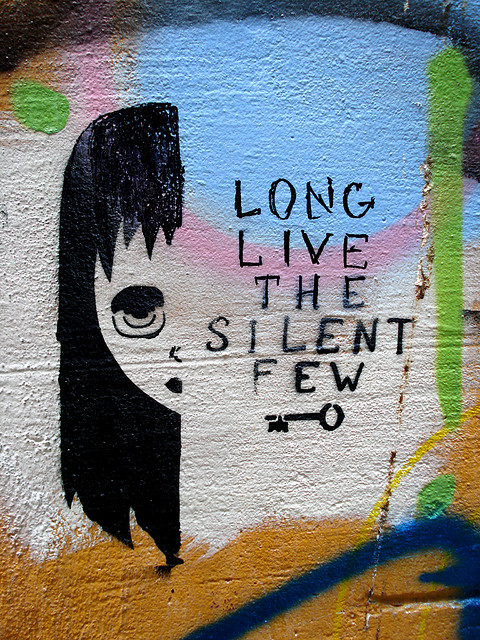
    long live the silent few
    Credit : flickr / Anna Phillips
  • On Burnout

    On Burnout

    burnout
    Credit: flickr / Tim Williams

    I am so burnt out right now. There’s a long list of reasons for that, but a lot of it is just the industry and how women are treated – as one of my friends put it “dudes are just a trigger warning for you at this point”. And this is exacerbated by not feeling that I’ve been doing anything meaningful, and I’ve just been questioning a number of things, including where I live.

    So I’ve been concocting a plan – come December 2nd, I will be based in London. And October and November are devoted to Adventures. First the Grace Hopper Conference (which was awesome), and then California for an internal leadership course, and as of today… officially non-work-related-adventures.

    I’m going to relax in Bali, roam around Barcelona, catch up with friends in Kitchener-Waterloo, see the Northern Lights in Reykjavik, and look for some kind of inner peace on a yoga retreat in Faro (Portugal).

    Shorter explanations:

    “I’m exploring my alternate career as a travel blogger”

    “I’m an international fuckwit of no fixed address”

    What do I hope to get out of this?

    First up, I just need a break, a chance to reconnect with what I think is important. There’s a freedom that comes from not having to answer to anyone, and weekends and short breaks have not been long enough for me to really connect with and hold onto that.

    Secondly, I need to remind myself why I love to make things. This means more time to make things for fun, learn the things that I want to learn just because they are interesting, rather than because they’ll help my career or team or whatever.

    Thirdly, I want some distance from this industry, and the appalling treatment of women within it. Every week I encounter new pieces of data, and new stories, and they are not abstract to me, this is the world I live in. I’m hoping a break from this world will help me not connect with these stories and data as much for a while.

    Finally, this is my time to explore what I would do if I wasn’t afraid.

  • Thinking About Statistics

    Thinking About Statistics

    Fifty years of sports statistics. Hardly recreational reading material, Marty.
    Credit: flickr / Nati Devalle

    I’ve been thinking lately, if we really accepted the statistics about technical women as being likely to reflect our own experiences, how might that affect our behaviour? It can be hard, as technical women, as we deviate from the statistical “norm” for a long time, and it’s easy to think that will keep going… but what if it doesn’t?

    Find a Sponsor

    I personally have had a hard time accepting that hard work and being smart is not enough. There’s a game on, and it involves getting the right projects, and getting noticed. Studies show that women are over-mentored and under-sponsored, and actually have a hard time convincing their mentors they are ready for bigger challenges. I do think mentoring is helpful, I’m so grateful for my amazing mentors, but it’s not a career strategy. That’s getting noticed, and getting the right projects, and sponsorship really helps there.

    Cluster

    Look very carefully at a place where there are no women – do there just happen to not be any? Or are there none there for a reason… maybe it’s a “brogramming gulag” (new favourite phrase). 63% of women in STEM report experiencing sexual harassment, and people who believe they are in a meritocracy (that word, it does not mean what you think it means) exhibit larger amounts of cognitive bias. Clearly, there are places that women would be best to avoid.

    Accept a Slower Trajectory

    Women do not get as many promotions as men. Which is super-depressing. No-one wants that statistic to be true of them, but if it is… how do you find a way to be OK with it? Less responsibility, less money… but more time to live? One idea.

    Expect Burnout In 30s

    Studies show that women leave in their 30s. So if that is the timeframe, what are some options?

    1. Work to burnout, save enough money not to need to work, or work much less at something else.
    2. Maintain or develop other skills, as an exit strategy.
    3. Marry “well” – i.e. another high-earning professional. (I hate this, but… can’t deny it).

    Avoid HR / Quiet Exit

    I think this post from Penelope Trunk is interesting, on reporting sexual harassment. Key quote: “The law is set up to encourage a company to take proscribed steps to protect itself from liability rather than to protect your emotional stability, or, for that matter, your career.

    Have an exit plan instead. Women often move to other companies to get their next challenge, and I infer from this that it’s best to quietly notice the signs that a situation is bad, or no more opportunities are forthcoming… and move to somewhere where that is not the case.

    Open Question

    I find Facebook’s focus on women interesting, cynically, women are the dominant users of social networking and the drivers of consumer spending. In this context, “understanding women” is not a joke about heterosexual relationships… it’s a necessary business strategy. And I wonder – in that kind context (Facebook is not the only place where this is true) – is it be better for women?

  • Three Phases of Technical Women

    Three Phases of Technical Women

    Zodiac's Stuff - One of pisces stone
    Credit: flickr / Vivian Viola

    Amongst other technical women, I’ve observed three broad phases when it comes to their feelings and attitudes with respect to the issues of women in tech. These are my unscientific and generalised observations.

    Ignorance is Bliss

    This phase is where women deny that there are any issues facing women in the industry, and sometimes even point to (some) guys as being worse off. They don’t notice gendered experiences, their own or other peoples – e.g. I once heard a women say “I’ve never experience any issue as a woman in tech”, and then immediately account a horrifyingly sexist remark someone had made to her.

    They sometimes reject conventional femininity, by for example, always dressing in jeans and a tshirt (to be clear – not a judgement on people’s clothing choices, there are many reasons to reject conventional femininity, but whether they feel they have them – what’s interesting here is whether once they move into another phase they start dressing differently).

    Mostly students and early career women, although some women manage to keep this up for a impressively long time (interesting perspective from one woman attributing this to Aspergers). As much as I sometimes find it difficult to interact with women in this group, I think women in this phase are the happiest – power to them.

    Engineer it Better

    This phase is where women have more awareness of the issues, through literature and have observed or experienced issues that they suspected were gendered.

    Here, they have often accepted that they are different than the stereotypical techie – sometimes this manifests as choosing to dress how they want, and be willing admit to “girly” hobbies or interests. They get involved in women’s events, read up on literature, look for ways to support other women.

    The key thing here, is recognising there is a problem but believing that things will change and our actions will make a difference. It is also being able to shrug off the gendered experiences, as not being the norm. Also here, they recognise and appreciate the occasional things that are better for women – the network of other technical women, for example. It’s a necessary support network, but wow is it amazing. There’s the occasional extra opportunity, for example recruiters and teams looking harder to find women, rather than expecting women to come to them (necessary because women are more likely to underestimate themselves, but still – nice), or many companies (Cisco, IBM, and others) run internal programs aimed at developing women leaders.

    Deprecate

    These women are hyper-aware, familiar with the depressing nature of the numbers and the research (for example the downward trend since the 80s). They have experienced and witnessed sufficient gendered situations that they have lost the ability to shrug things off and instead may find themselves braced for them.

    Here, there are low expectations for the future and the morality of encouraging future generations of women may even be questioned. Yes it will be better for the world if we have a more diverse representation of humanity building the digital experience, but for any individual this may well not be the case (consider the statistic that 63% of women report being sexually harassed).

    This is where women drop out. Either actually dropping out, or by mentally dropping out and trying to find ways not to care as much – for example citing the job flexibility and the high pay as reasons to stay around, rather than what they are actually doing.

    What To Do?

    Since these phases seem to come with information and experience, it is extremely hard to move back to a previous phase, and (short of drugs and/or a major head trauma) it seems impossible to move back to “Ignorance is Bliss”. Once you have noticed, there is no un-noticing. The best we can hope for is to prolong each one, but especially the middle phase.

    There is a catch-22 here, in that the existence of “Ignorance is Bliss” slows down progress. One woman thinking there is no issue is often presented as over-riding all statistics, which is ridiculous, but prevalent. However, without this phase, if every 18 year-old-girl entering university knew the statistics and recognised the issues, I don’t believe we would even be hitting the measly not-even-15% we are (US and Canada).

    I think the key is managing burnout, and maintaining hope.

    Managing Burnout

    We need to remember why it is that we want to be in this industry. Shanley wrote a good post about this recently.

    Make time to remind ourselves why we want to be an engineer. For me, this is because I love to make things. So, I look for projects where I can feel a sense of satisfaction – regular milestones, regular shipping (in a little less than 3 years, I’ve worked on 3 new products). Places where I can focus on creating a great user experience, and ideally solving real-people-problems, not what in an angsty mood I would describe as “made-up-engineer problems”. Making time for personal projects also helps.

    Let go of obligations. Sometimes I find myself overwhelmed by things that I’m being asked to help with, that will help other women. Making time to talk to someone, or take an interview, or speak at an event. I want to do all these things, but sometimes it is just too much, and I have taken to reminding myself that the best thing we can really do, is be great at and love our work. This means sometimes saying no, or taking a deliberate break, and being OK with that.

    The network of fellow women is so important for me. Feeling alone in my worries, concerns, and negative experiences would make me feel like I was going mad. When I’m feeling despondent about something, and I read about someone else’s similar experience or situation… it’s a sign, that as much as there may be wrong with me, there’s a fundamental problem in this industry that is far bigger than my flaws as an individual. And as I work to always be better, nicer, more effective… I can also work to find situations where it is easier to be better (hostile situations rarely bring out the best in anyone).

    Hope

    This week it’s the Grace Hopper Conference. This will be my fourth year attending. Every year, I meet amazing, amazing women, listen to amazing talks, and leave with a bunch of new ideas and information. It’s my shot of hope, that I need to sustain me for another year, or at least until the next one is close enough to look forward to.

    Role models, I think, are key for hope, feeling that there is a career path and that other people have thrived in similar situations and with similar experiences. I imagine that internal programs for women also help with this. The network of technical women helps with this – the high profile women, the Marissa Mayer’s and the Sheryl Sandberg’s don’t actually give me that much hope (especially when I see the press about them), the more normal-seeming women who seem to be enjoying their work and their life are much more immediately inspiring to me.

    Other Considerations.

    One of the things that I am – shamefully – only recently starting to notice is the prevalence of racism and transphobia. It won’t be equality if we don’t all win.

    Only in the tech industry is a middle-class white woman “diversity”. I had a very privileged upbringing, and whilst my university experience was hard because of feeling other, and displays of rampant sexism (watching so many of the other women in my class be portrayed as the “token girl” in the group project exercise for example), I can’t imagine how much harder it would have been whilst say, struggling to make ends meet, or dealing with the extra challenges of being a “visible minority”.

    So if we could just keep reminding ourselves what equality really means, that might be a start.

  • And then, Nothing

    And then, Nothing

    credit: muse of nothing / deviantart
    credit: muse of nothing / deviantart

    This guy came on too strong to me, I think he thought it was passionate but I just felt uncomfortable. So I actually physically pushed him away from me.

    Being a Nice Bloke, he was upset that he had violated my boundaries. And so, I comforted him.

    This is one of those scenarios that I look at, and think, illustrates so much of how we are socialised as woman. Socialised to put our needs second, and so we feel bad when we enforce them. Socialised to find it a complement when a man is attracted to us, however inappropriate it may be.

    And I feel for the guys in this, I do – because what is sexy when a woman is attracted to them, is creepy when she isn’t. This socialisation hurts men too. I wouldn’t find it sexy to have every move prefixed with “and are you comfortable if I do [X]”, but I definitely do not find it sexy to feel my personal boundaries steamrollered over, either.

    There’s been a lot of stuff on Twitter lately about women reporting men who behave inappropriately. I particularly liked this post – no details of the event are included, it’s just a how to. But I’ll give away the ending, she reported something, to the company and the conference organisers, and then… Nothing.

    The thing is, there are a lot of something’s that look like nothing. When you have to report someone for inappropriate behaviour, it’s likely you are going to stay well away from them. So if:

    • They realize their behaviour is inappropriate and seek professional help.
    • They continue on with it and eventually get written up a second time, which might result in some actual action.
    • Other women hear what happened and take care to stay away, resulting in no more complaints.

    It looks a lot like… nothing.

    And that’s really hard – I know when I have reported things, it’s been scary. To put myself out there and say I am not OK with this, and then… Nothing. I try to be brave and do it anyway, just in case a something-that-looks-like-nothing comes as a result, and I want to sincerely thank every women who stands up and does the same, but I’ll never judge a woman unwilling to put herself through that. Ever.

    It’s always scary to put your feelings out into the unknown and not know what will happen. It’s scary to say “Not OK”, for the same reasons it’s scary to say “I want more”, “I love you” first, or “I still miss you” – things that potentially have positive outcomes.

    In case you do, and then… Nothing.

    And that’s why it’s hard to report things. Because there is no good outcome, but one of the worst – and most common – is when you do, and it seems like nothing happens… it’s like being violated all over again. I hate to think about how the weirdo on the plane touched me, but I hate more to think about how he approached me in the airport, after I had made my feelings, and my boundaries – via the police abundantly clear. Him walking towards me? That is what it looks like when you say, “this is not OK”, and then… Nothing.