Tag: travel

  • North Korea: Overall Impressions, and Tips

    North Korea: Overall Impressions, and Tips

    IMG_3038

    North Korea is an odd place. The best way I’ve found to describe it, is that it is like being in an elaborate piece of performance art. Everything is controlled – the last time I was so restricted, I was at boarding school. The guide tells stories about a strong, prosperous, lucky people for days, and at the end of the trip walks away with a tip totalling more than half the GDP per capita. I was in one of the most fancy buildings I’ve ever been in, upsetting three people by trying to leave my change (as they didn’t have any to give me) – totalling maybe a dollar. It’s fine, and then it’s jarring. Those moments were jarring.

    It is fascinating though. I realised and appreciated whilst I was there that there are three stories that are told about North Korea – the one they tell internally, the one they tell externally, and the one the West tells – there is little relationship between them. This is the way to hear the one told internally. It’s a long way from the Western one, mostly defined by the US.

    The US is a capitalist society, but as a European I have more of an appreciation for Socialism. North Korea claims a better maternity leave policy than the US, for example. There are many problems with the actual system in place, but the claimed goals, of healthcare, and education, for all – those I cannot argue with.

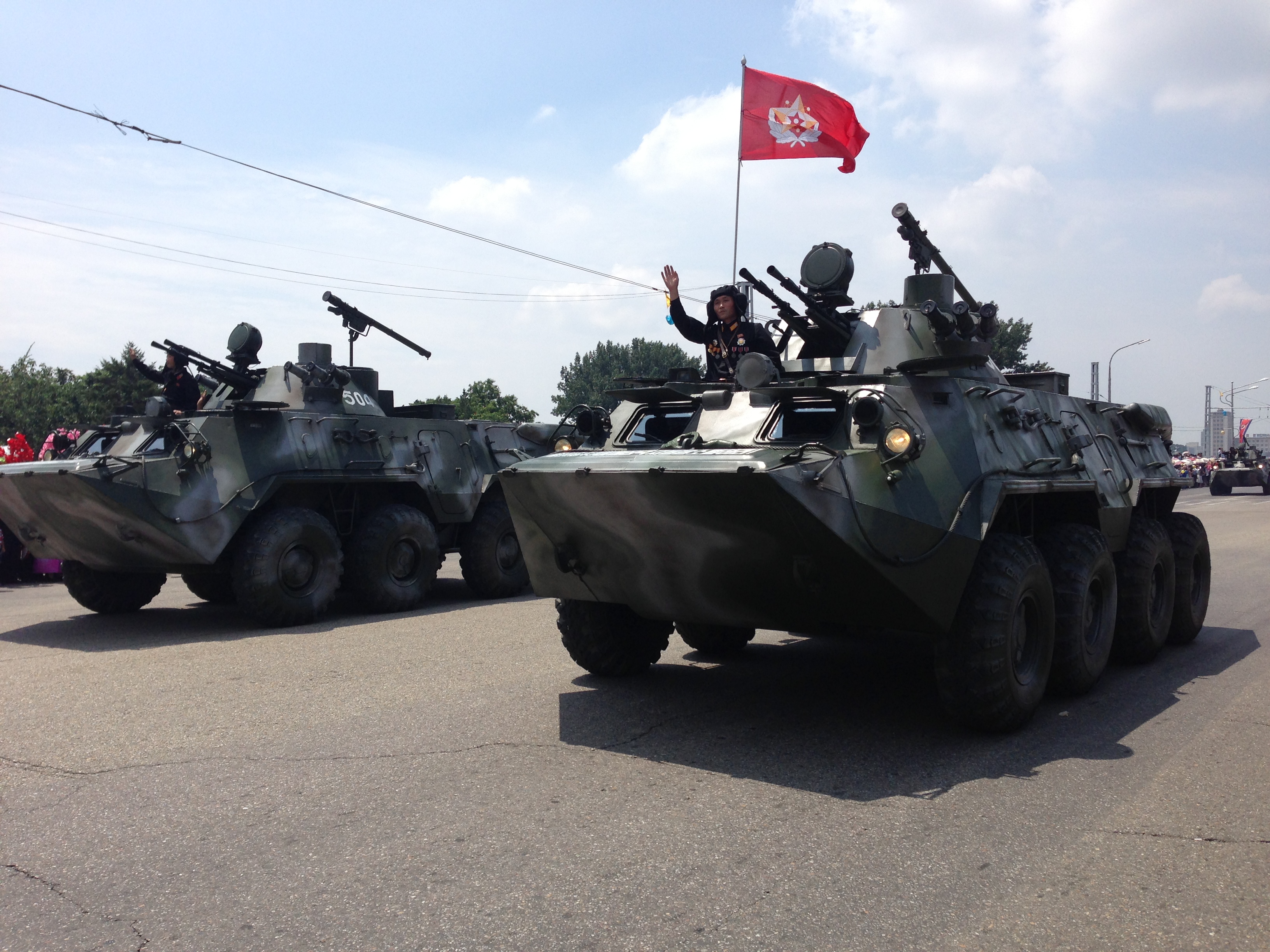
    It’s not an easy trip. The “luxury” hotel is, well let’s say, not my idea of luxury. The standards of cleanliness, especially around food preparation, can be damaging to your health. The hectic schedule and the constraints about what you can and cannot do – with no understanding that would be a challenge for a liberated Westerner left me stressed and exhausted. But there are things – like the mass games – you’ll never see anywhere else, and watching the military go by after the “Victory Day” parade was a window onto another era, where wars were fought using machine power, and not by unmanned aircraft.

    There is also something to be said for the break from decisions, as a cure for decision fatigue. And it’s definitely a way to get perspective on first world problems – these are not problems in North Korea.

    You can find my extensive notes and picture collections for each day:

    Prequel

    Day 1

    Day 2

    Day 3

    Day 4

    Day 5

    Day 6

    My friends and I went with Young Pioneer Tours, which I think from Narelle’s research was one of the cheapest options – there is no point paying more, as you stay in the same place and see the same things anyway! You get a Western guide as well as the two Korean guides, which we thought would be helpful, but I’m not sure what he did, really, so I can’t advocate for it making a big difference.

    Tips for Travelling for North Korea

    • Take plenty of money! There are no ATMs, and credit cards aren’t accepted. I saw only one credit card machine the entire trip, and it wouldn’t work. Things like good seats for the mass games, and NK Android tablets (man, I wish I had got one of these) add up, and it would suck to miss out on anything – it’s not like it’s easy to pop back! You also have to keep some currency to tip the guide – about 5 euro per day is recommended.
    • Small denominations of RMB (Chinese currency) are best for drinks etc, but Euros are good for bigger things. USD is acceptable.
    • Pack some hand-sanitizer, and sanitising wipes, as many places do not have soap (ick).
    • Also, tissues, as many places lack toilet paper.
    • The usual gastro supplies are a good thing to pack, I had a packet of pills for stomach cramps that were a hot commodity after we were all poisoned (as NK is not a popular destination, ask for what the doctor or pharmacist would recommend for a trip to India).
    • Granola and protein bars! I wish I had packed some food. Allows for skipping breakfast (extra sleep – significant when the elevator could take 20 minutes, and people were missing breakfast because they were waiting for it), and to eat instead of any cold (uncooked, or just air-cooled) food on offer.
    • Gift for guides, but western commodities are hot everywhere. We saw some super adorable school-girls on the train who gave up their seats to us, I wish I’d packed mini-lipglosses and the like to give away in those situations. Note – the guide will probably sell your gift on the black market anyway, so don’t feel you have to put too much thought into it.
    • Comfortable walking shoes.
    • The “smart” clothes for the mausoleum don’t need to be that smart – I wore a dress over leggings with Toms, which was fine. It’s likely you’ll spend all day in it, and the schedule gets changed around so multiple acceptable outfits that are also comfortable is a good idea.
    • If visiting during the summer, hat and sunscreen. Sunscreen to carry with you. Thin, long-sleeved tops. All the usual things you need for harsh sunlight, with the added aspect of having zero control over your schedule (we were outside waiting for the parade  for ages, and even with sunscreen my fair skin was not happy).
    • Warm sweater for the bus and other indoor places, which are often over-air-conditioned and quite cold.
    • Plain moisturiser, I like Aveeno (Amazon). The combination of heat, sun, dirt, air conditioner, and possibly the soap had mine, and other’s skin irritated.
    • Audio-books for long bus journeys – it was so bouncy that neither my Kindle nor iPad were an option. It’s 2.5 hours each way to the DMZ, and there are other lengthy drives.
    • Pack clothes that you don’t expect to wear more than once, because it’s pretty dirty. I found leggings and a thin dress were better than shorts or jeans.
  • Sydney 2013: Sculptures and the Sea

    Sydney 2013: Sculptures and the Sea

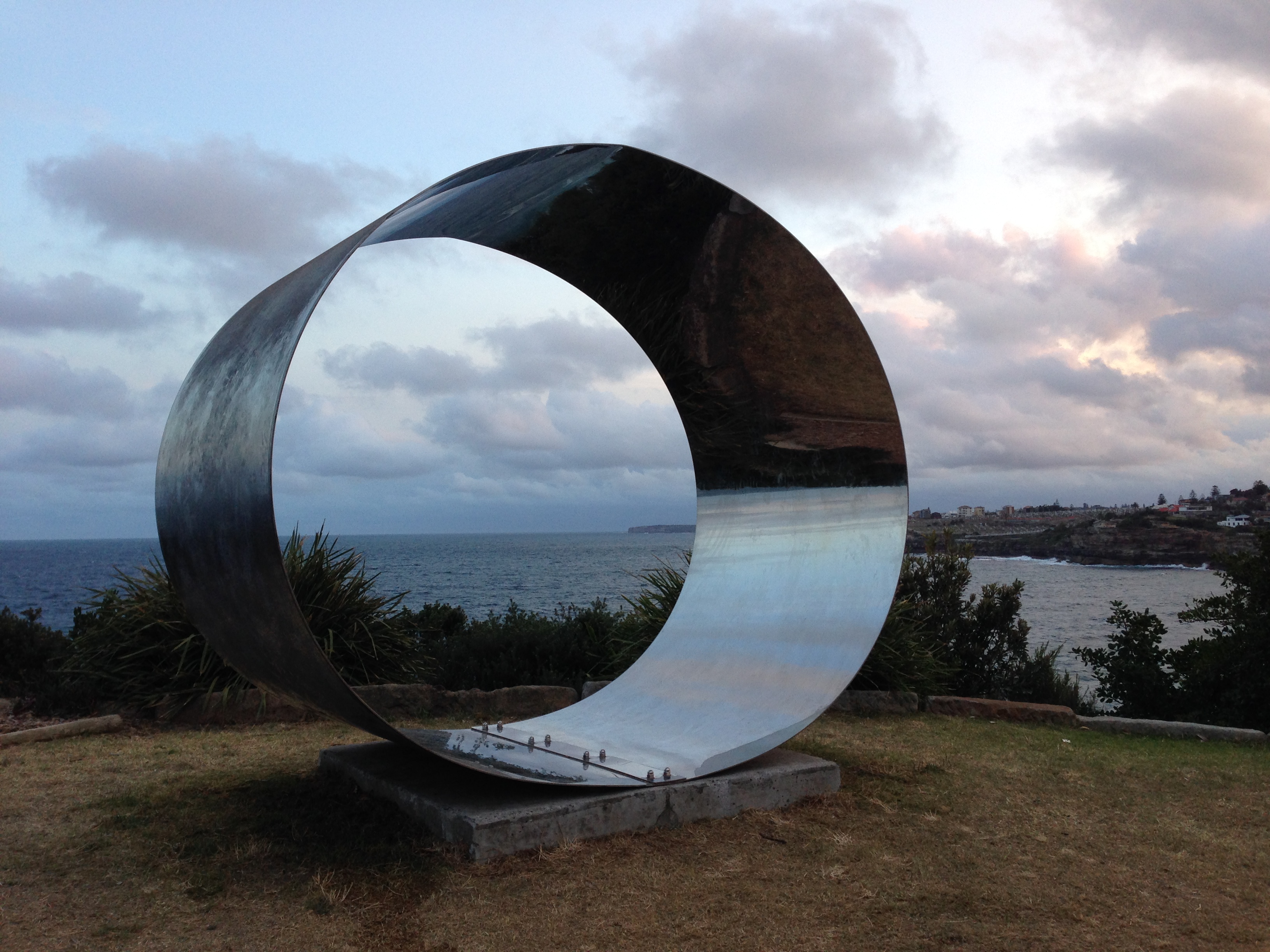
    I had a brief stop in Sydney between Bali and Barcelona, mostly spending quality time with friends, but I also got in some cultural activities. The Ansel Adams exhibit at the Maritime Museum is small but stunning (open until December 8th), and of course, Sculptures by the Sea (ended November 10th, but will be in Perth next March), which was gorgeous – Bondi beach is very pretty and I love modern sculpture. I was so disappointed to miss last year (discovered it’s existence a day after it ended), so I was really happy that I managed to catch this one on my way out of the country!

    %%wppa%% %%slide=11%% %%size=auto%% %%align=center%%

  • North Korea, July 2013: Day 6

    North Korea, July 2013: Day 6

    As we meet up in the morning, there is much complaining about the showers – or lack thereof. Quote of the day: “How is your hair so nice when you only had a bucket?” “There was a comb, on the ground.”

    My “showering” the previous night was a good idea – people are complaining about the water temperature. But after a hot day lukewarm water didn’t seem so bad!

    The hotel staff are so sweet though, and line up outside to wave us off. We are in the capital of the southern province (I’m not sure which) where the main industries are cement, electricity, and “chemical industries”. 380k people live here, and it is a 40 minute drive from Pyongyang.

    Of course we don’t get to see anything of it, as we leave early (of course later than planned) back to Pyongyang. Today we are to see the Palace of the Sun (where the Kims lie in state) and the State Gift House where all the gifts given to the Kim leaders from Korean people are collected (note – this is not the International Friendship Exhibition, which houses gifts from foreign dignitaries). We will picnic on a mountain in Pyongyang city and have a special farewell dinner, of pizza.

    They are very strict at the Palace of the Sun, where the Kims lie in state, for Koreans as well as foreign visitors. No-one is allowed to take pictures, and we are to check cameras and other belongings at the cloakroom.

    There is a 1000m “travellator” (like a horizontal escalator, of the kind often found in airports) – much pride is taken in this. We start at the Bronze statues, and in rows of three we take of our shoes and pay homage to the statues. Then we will see the Kims lying in state – we will take 3 bows to each of them, one at the foot, one at each side, but not at the head. Then we enter the hall where medals and honours from foreign states and international officials are displayed. Then to the other Kim, his honours, and his train car.

    Whilst in the Mausoleum, looking at the first Kim’s honours, the western guide comes up and touches my arm – I jump violently but thankfully don’t make a sound – that would not go down well here!

    The Mausoleum is cold, and full of pictures. Kim Il-Sung and Kim Jong-il. I’m fascinated by the honorary degrees and awards – I wish we had more time there (and, of course, that I could take pictures and notes). Kim Il-sung has an honorary engineering degree from Kensington University in the US (since shut down). Kim Il-sung has awards from France, and Kim Jong-il awards from Russia, and many from his father. We see both their train carriages, and the black mercedes – heavily modded for protection. On the wall in each room with a train carriage, a map shows the places they went by train, and by plane (less so Kim Jong-il, who was afraid to fly). One of the most impressive things is how they brought Kim Jong-il’s boat inside! It’s in some kind of fake ocean – maybe wax. His train carriage is just as he left it when he died in it – coat hanging up, gloves on the side, a new-looking macbook pro open on the desk. What did that advert say? For the misfits…!

    Being in Pyongyang is like being in an elaborate piece of performance art. It’s sometimes hard to know what is real, and what is fake, or staged, and people are reserved – there is no telling what they really think. But, making our way through the Mausoleum, the next people are a group of women, in beautiful traditional dress. As we bow to the left of Kim Jong-il, they bow to his feet, and we can hear the crying – real, almost primal, sobbing – this is genuine grief.

    Our mausoleum guide has this incredible, deep, melodious voice. I don’t understand any of what she is saying, but it seems very fitting for our environment – what our Korean guide has described as “our holy place”. She tells us about the Mourning Room, and the idea to “turn sadness into power”.

    After we have made our way through the Mausoleum, we come out into a man-made park. Built after Kim Il-sung died, under the “wise guidance” of Kim Jong-il. This is where Kim Il-sung worked up until he died, it is called “sun” to say that he will always be with them. Inside the Mausoleum, two songs play on repeat – they are “Kim Il-Sung will always be with us” and “Kim Jong-il will always be with us”. Creative.

    As of 1997, Kim Il-sung is the “eternal president”. His death was the greatest blow to Korea and so sad (apparently, I don’t think people in the South felt the same way for the most part). His birthday is a holiday. Kim Jong-il died on December 17th, 2011, and is described as a “bolt from the blue” – interesting, as the West had been discussing his poor health for a while. Everyone was very sad. The constitution was revised to make him the eternal General Secretary of the Worker’s party of Korea , and the eternal Chairman of the National Defence Commission, of which Kim Jong-un is now the Marshall.

    Our explanation of Juche is as follows. Juche is the guiding ideology created by Kim Il-sung in the struggle against the Japanese, it means “master of self”. Mankind is the master of everything, and decides everything. Juche defines the relationship between human and everything, places mankind at the centre, in control of his own destiny. Working people rely on themselves.

    Out next stop is the friendship museum. We have to wear covers over our shoes, and are not allowed to take pictures (or notes). There’s a basketball from Dennis Rodman, and carved out of red jade is Kim (not sure which) riding a tiger. There are tea sets sent by the president of Hiyundi, and an old (coloured) mac in a case. There is also a case full of tape recorders – 10 or so? – sent by the president of Samsung. Not sure that was their intended use! There is a golden globe from Korean Chinese, which symbolises wanting Kim Il-sung to lead the whole world. There are so many beautiful things here, I wish I could take pictures. And many quite weird things – unopened beauty products, a lamp of rotating plastic flowers, and a collection of little things relating to Mama Mia because Kim (likely Jong-il) loves music. There is a beautiful vintage telephone and a pictures of a flag with a Kim on it – done in the style of aboriginal art. Weird! It would be fascinating to wonder through properly, I would love to be able to read the history of each thing, but as ever that is not an option – we are closely escorted and not allowed to take pictures, and I have nothing to even take notes with, so that feels even more oppressive. The museum contains 22,000 gifts, 8300 of which are on display, over 20 rooms.

    I’m feeling sick again, and I have not eaten anything because I think if I do I will be. One of my friends is also feeling really unwell. I’m relying on another friend to keep me upright.

    We go to a BBQ for lunch, it’s hot so more likely to be safe (although the way raw meat gets mixed with partially cooked meat… I’m less sure). I eat a little bit, and some bread that I take care to toast. There is also soda, and the faux-coke bottle reads “5% diabetes”. The girl cooking for us tells us she likes Westlife and Celine Dion.

    Our Korean guide is concerned that I’m not eating, she asks me: “do you have the run?” which momentarily baffles me until I figure out what she means.

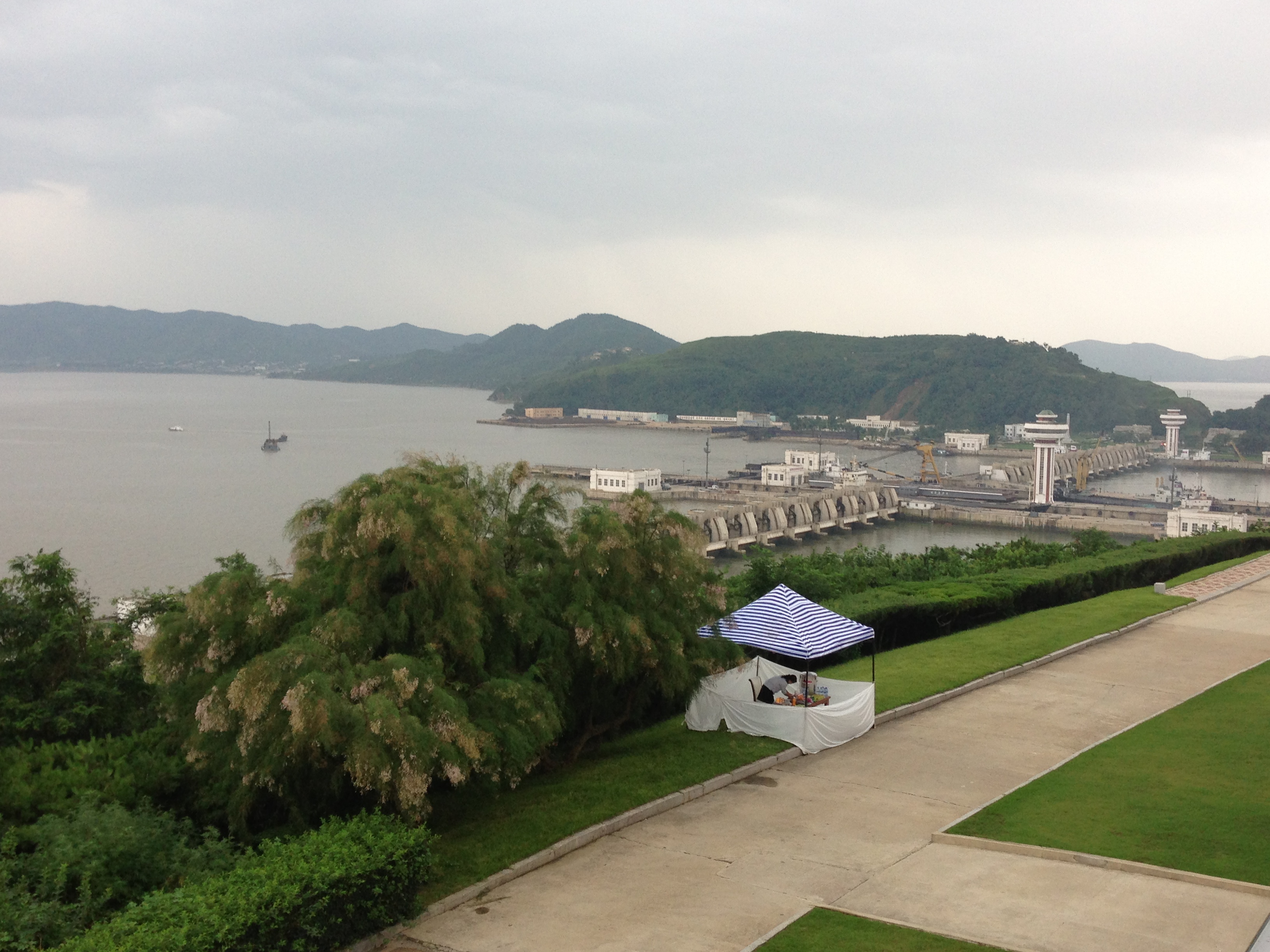
    We drive to a dam, about 50k from Pyongang. The west sea barrage. The towers are dedicated to the builders, and there is a monument to the exploits of Kim (of course) and the constructors. We watch a video about the construction of the – it’s (un-intentionally) quite hilarious. I’ve tried to take down the original words, where I can.

    Kim Jong-il took the initiative to build the dam as part of the grand nature remaking program. On May 22nd, 1991, having studies the water depth and tidal flow he decided on the present area (well, I’m sure that honorary engineering degree helps). Designers worked out the volumous plans in short time, working for the everlasting prosperity of the fatherland. Tens of thousands of builders worked very hard, need to fight the strong total current. It was the fight of man against the sea, they built both dams together. The army soldiers found themselves in a difficult workplace (you don’t say) committed both to national defence, and to socialist constructions. The indomitable spirit of self-sacrifice can be traced from every part of the barrage. Water was drained from lock area by men on pumps, and soon the land underneath, long buried by the sea, makes it’s appearance. The sea gives way to man!

    The whole nation supported the construction, backed up by self-reliant industry, and civilian builders also worked on it. Kim Jong-il closely followed the progress so it could be completed as fast as possible. He came to visit in 1984, and appreciated that a lot of work was done in the first year. He discussed all the problems with the builders and how to tackle them (that honorary engineering degree again). September 19th, 1985, construction was nearly finished and Kim Jong-il came with Kim Il-sung. They pinpointed the main targets in construction and helped builders in technical and construction. Innovative and fast causing lead to early completion of the locks. Project was a summing up of engineering, hydraulic engineering, and all other science and technology. Korean scientists are successful in defeating the sea!

    Dangerous work in deep water, revolving bridge is incredibly heavy. Assembled in 2 days and 2 nights. 60m gap increases up to 20m per second. With the nation’s attention, the river at least stops it’s flow. Many trials and bottlenecks, builders and scientists came through in “high yet self-sacrificing sprit” to make this triumph happen.

    Started in May 1981, completed in June 1986. 280k tons of steel, 4 billion dollars, 5 years 8k long dam across wild estuary with 36 chambers and 8 sluices. Sluices can drain water in rainy season, normally just 5 are open to maintain normal water level.

    3 locks for different size vessels. Barge has several fish ways. Small hydro station using water flow through sluices to supply power to the barrage. There is a monument which is inscribed with the signature of President Kim Il-sung, which reads “glory to barrage constructors”.

    Inaugurated by President Kim Il-sung, who highly praised the soldier builders and technicians for building in a self-reliant spirit.

    Thanks to the barrage, the river is now free from tidal influence. Allows better movement of trade, making part of a loop.

    Now there is a big, man-made lake, containing 2.9 billion tons of water. The water supply for industry and daily need in the west (of Korea) is also solved. The barrage prevents damage from flood, solves problems of trade and transportation, and contributes to a prosperous nation. The river is virtually a fisher farm, with resort places for the good people.

    President Kim Il-sung took former US President Jimmy Carter to the barrage in 1994, and posed for a souvenir picture. Visitors from abroad say it is a great creation of self-reliant spirit, led by great leaders. The Korean people are proud as it attracts eyes from all over the world.

    The dam is pretty beautiful, and the propaganda video amazing… well worth the drive! I’m curious to know whether the dam was actually a good idea, or helpful.

    Our last stop is the Victorious Fatherland Liberation War Museum, which was renovated last year and was newly opened on July 27th – victory day. It also has the captured ship USS Pueblo.

    We stand aside to watch the military stream in – I wish I could have taken pictures (I have a couple towards the end). First male soldiers, then female soldiers, then other male soldiers, but different – they have different uniforms.

    The Museum opened on the 40th anniversary and was renovated last year, reopening on July 27th – 3 days before our visit, and that day was the first day that foreigners were allowed in. At the front, there is a guide, on the right they display the captured weapons, on the left merited weapons (I think this means the weapons used by the DPRK), and there are 10 auxiliary statues on each side. The main statue shows a representative of the soldiers, who devoted their all to war. There is a main building, and a round building, which shoes the liberation battle.

    The seized weapons are quite disturbing, many of them just the battered remains. There are also some pictures of dead soldiers – one shot in the back of the head in his helicopter – which is confronting. I’ve never seen anything so glorifying killing, and find it distasteful and disturbing. I can’t say the US is any better though.

    The USS Pueblo is a US ship that was captures by the DPRK, they claimed it was in their waters, although according to international law it was in international waters. The DPRK claims a maritime border of 12 nautical miles. Inside the ship there is a war propaganda video. What follows are notes I took from the commentary.

    After the capture of the ship, the US demanded it’s return, saying it wouldn’t rule out all out war if it was not returned. The DPRK said they would counter aggression with aggression, and all out war with all out war. Many countries supported the DPRK and said to counter war with war. The enemy attempted to get them to surrender with negotiations, said they should apologise and would return prisoners, but not the trophy (the ship). They had a press conference, and said the US had to apologise otherwise the men on board the ship would be tried by the laws of the country and imprisoned or killed. The crew asked for mercy and said they wanted to go home alive. A journalist said they were ashamed to be American, and that the President should apologise and assure it would never happen again. The American people blamed the US President and administration, and the US administration was thrown into utter confusion.

    On December 23rd, 11 months after the capture of the ship, the US finally made an official apology. The US representative was so confused, he forgot to write the date on the apology, and had to write it hurriedly. President Johnson complained that it was the only one of it’s kind in history. The DPRK announced that it would expel 80 spies out of the republic. The aggressors who lord over the world were driven out of the country. The imperialists knelt down before the Korean people, now running downhill. People of the world unanimously said that the US was shattered by the Korean people. Victory by the leadership of Kim Il-Sung. The boat is a trophy, and symbolises the aggression of the US imperialists against the Korean people.

    Wondering around the boat is really interesting – the bullet holes from the takeover are circled in red. Many of the “secret” documents on board the ship when it was captured are out on display, which I like. The soldier’s IDs and pieces of their uniforms are also displayed in glass cases.

    I leave feeling sad in general about how brutal humans are. Some stuff doesn’t seem unreasonable – keeping the ship as a trophy, for example (at that point I didn’t know about the difference between the DPRK’s claimed nautical border and international maritime law), but other things seem less so, such as claiming that everyone condemned the US. No doubt some people did, some people watch Fox news – unlikely to be the same set of people, though. I’m unsure about what is true and what is not, and want to find out more. Main point: their story doesn’t seem wholly unreasonable. Maybe Afghanistan and Iraq will have museums someday.

    Now we are headed for pizza, I’m hoping for clean bathrooms.

    We leave for the airport at 6am the following morning, which is where I discover that they are worried about me (and one of my friends) blogging – we had taken an earlier bus home the previous evening. In the end though, no-one says anything to us directly. We drive past a new cemetery for the 60th anniversary of the Korean War – the cemetery is for the soldiers who gave their everything in the Korean War, and also in the Vietnam war.

    Approaching the airport, our guide gives us the following goodbye:

    “Goodbye, thanks for cooperating, we don’t ask you to believe – you see what you see. Tell people about the DPRK. Best wishes. See you again.”

    We are recommended to tip 35 euro each, and so she leaves us in the region of $1k (USD) better off.

    North Korea has a GDP per capita of less than $2k.
  • How To Be More Adventurous

    How To Be More Adventurous

    Credit: flickr / a4gpa

    I love that my How I Learned To Love Solo Travel post is still going on Medium and had something of a bounce again recently. And I guess it had to happen, finally someone points out that I wasn’t really being that adventurous.

    Fair enough, although I’m not interested in any man’s thoughts on the precautions I, or any other woman, take for our physical safety, or for our feelings about our physical safety. I have been sexually assaulted. Even aside from that, the statics show that precautions and concerns around physical safety are more than reasonable.

    Mainly, I felt it missed the point. Sure – I’ve not taken a trip to a desert to survive on my wits whilst sleeping in a yurt or some such, but I think that is why the article resonated with people. It’s about making new experiences more accessible. Sure, going for dinner in a highly recommended restaurant in another western country isn’t the most adventurous thing, but it beats ordering the usual from your local takeout place.

    The coolest thing resulting from that article – someone told me that having read it, he’d booked a weekend away by himself, and he’d had a great time.

    So, how do you become more adventurous? You open yourself up to new experiences on a regular basis, and over time you’ll broaden your horizons, and expand your comfort zone. Or, you can leap wildly outside your boundaries, go do something extreme, go somewhere extreme. The barrier to the second option is higher, and harder to get over. Power to those adventures – I’ve had them, they were cool – but I refuse to accept that is the only way. Personally, I think anything can be an adventure – if you approach it in the spirit of discovery, embrace the uncertainty, and enjoy the unexpected.

  • North Korea, July 2013: Day 5

    North Korea, July 2013: Day 5

    I wake up, still sick. Turns out, lots of us aren’t feeling well. Thankfully we have a lie in and don’t have to go out for a while, and I’m thankful to be able to catch up on sleep from my broken night, and to be near running water and a clean bathroom.

    We are being forced to check out, and so it takes ages to leave the hotel, either they or KITC (Korea International Tour Company) are chronically disorganised. Since 80% of foreign guests (apparently) come with KITC, and everyone basically has to stay at the same hotel, you would think they would have a better relationship!

    We drive past Peony Hill, so called because (wait for it!) it looks like a Peony (actually, seems like it is named after the peonies that grow on it). It is a public park where people go to hang out on national holidays. We also drive past the newspaper building, which has pictures of the “Dear Leaders” on it – there is not even the pretence of free press here!

    Women wear the traditional dress on the national holiday, and she will also wear traditional dress on her wedding day – but a more decorative version, with more accessories (interesting article about an “anti-socialist” wedding in NK).

    Our guide tells us how “boys and girls” meet and get married in the DPRK. A long time ago, when Korea was a strict feudal state there was very strict regulation in the family. Marriage was arranged by the family, and was mostly about social status and the girl’s ability to take care of the boy’s parents than personality. The marriage might be arranged even before the children are born, and was a long way away from populist ideals of love and desire. If people went away from their parents desires, they would be punished by society.

    Now, boy and girl meet freely at university, or in the same working unit, company, or unexpectedly at the study house, or in the rain – if the boy has no umbrella, he can use this opportunity to meet a pretty girl (who says romance is dead?). They can date, and decide to get married, then tell the parents. Parents might not be happy, but will try and change their mind (come around to it, I guess this means). Alternatively, young people can use matchmakers – the introduction of family, friends, and other people, Before they get married they have an engagement ceremony. No exchanges of shoes in case the bride runs away, but exchange gifts.

    After the wedding, the couple goes on a “Wedding Tour”, they go and see the statues, go to the restaurant, and have a big ceremony. Then they have a honeymoon, then they start a new life.

    We are at the Juche tower, which is 170m high and in the elevator ride up we discover that our group is called Australia #15 because we have the largest number of Aussies. The back of the tower has plaques from (Juche) study groups – 252 in total. The idea (of course!) came from the leader (Kim Il-sung). The communist tried to rise up, but the Great Leader say truth – that popular masses the driving force of a revolution. How they fought against the Japanese for 20 years and were liberated in 1945. They built this monument for Kim Il-sung’s 70th birthday, in 1982. The tower is 170m high, the torch is 20m of that. The front and side each have 70 tiers, for 70th birthday. There are 35 flowers on each side.

    Next to the tower, a statue shows the worker, the farmer, and the intellectual. They all carry books written by Kim, it is a sign to carry on the ideas. It is bronze, and 30m high, and on the same plane as the Kim Il-sung square and study house. It took 2 years to complete. This is the Workers Monument, for the Worker’s Party of Korea – the Korean socialist party, and traditional religion. It was founded on October 10th, 1945 (Wikipedia gives July 30th, 1949), by Kim. Being a member of the Worker’s Party is the highest honour (it is not clear to me as this is being explained that this is the political party, it was instead described as a “religion” – I wonder if our guide actually understands the meaning of this, or if it is a way of expressing things taught to her by a foreigner).

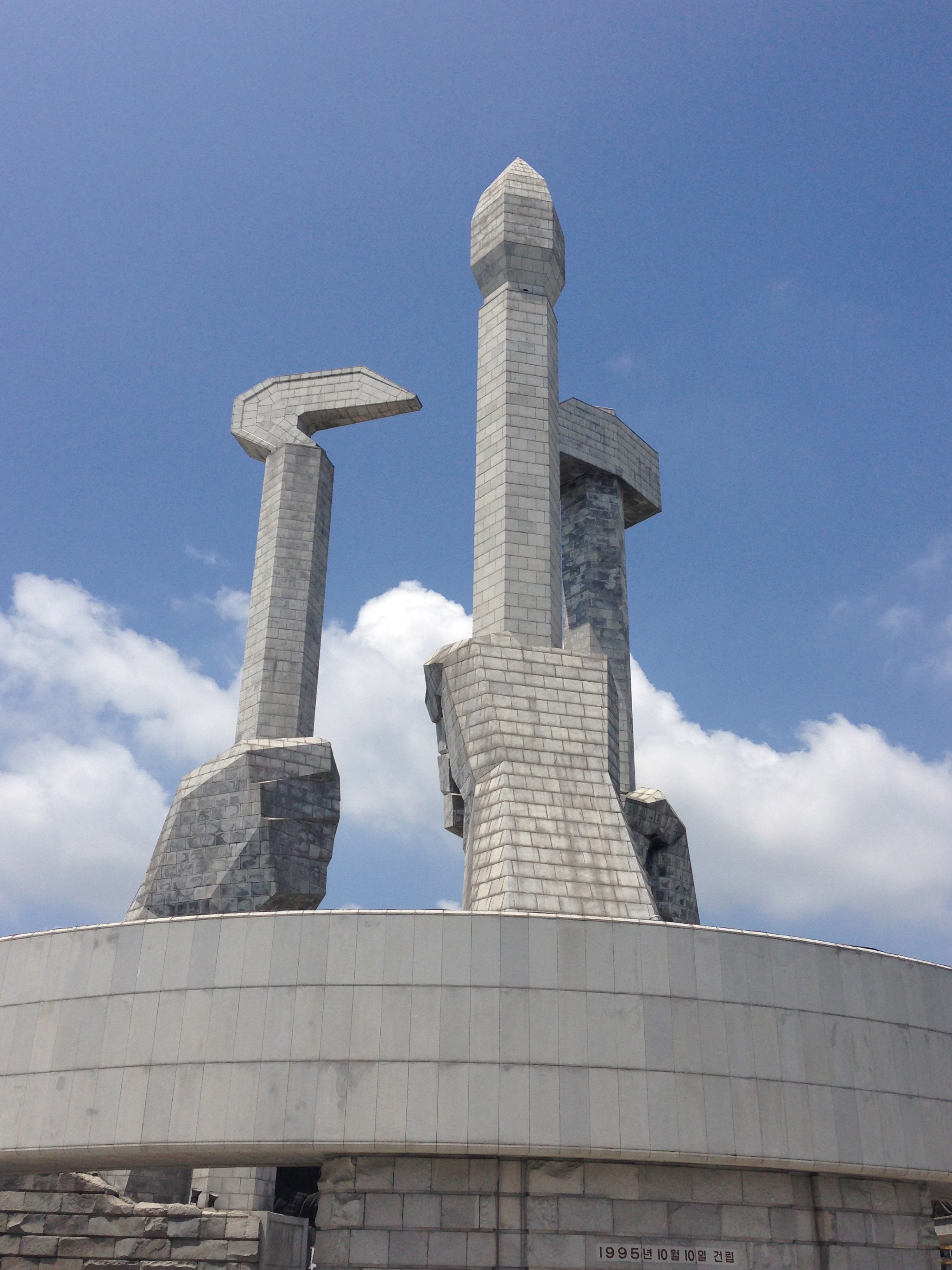
    We move on to the Monument to the Foundation of the Worker’s Party – which was built October 10th, 1995, the 50th anniversary of the workers party. It symbolises 3 main parts – one column for the worker (hammer), one for the farmer, one for the intellectual (writing brush), each column is 50m high for the 50th anniversary. The single column structure is enclosed, symbolising unity. The monument is 42m in diameter, and there are 216 lines in the granite – symbolising February 16th, 1942 – Kim Jong-il’s birthday. Standing in line with Kim Il-Sung and Kim Jong-il’s statues we can see three parts of the pictures – first part, left, showing cooperation to found party in the struggle against the Japanese. Second part shows the unity of the Worker’s Party of Korea. This has party flag as backdrop, and all the people – soldier, student, worker, farmer, intellectual, and shows all the Korean people’s army and people upholding the leadership of Kim Jong-un (my notes say Jong-un, but feel I must be mistaken?) The third part shows people’s struggle for sovereignty, and shows support for all the world’s people in their struggles for independence, peace, and sovereignty.

    There are Korean characters saying 100 battles 100 victories, and various trees from the palace of the sun. Also planting out 38 trees from the garden of the president. The Korean people are memorising (I don’t understand what she means by this – remembering? memorialising?) the exploits of the Kim’s, who devoted everything to the people. The monument was supposed to be done in 3 years, but took only one – Kim came to see it and highly praised the builders who did it in a short time.

    We get to see the Pyongyang culture exhibition which is in a building near the monument. There are more pictures of the Moranbong band, and praise of a Juche-oriented education.

    The tour guide at the culture exhibition was holding flowers in the parade, and so tells us practise was one hour after work, for one month prior to the parade.  Sometimes they practised in the square. The signal is given from the study house to change the flowers. She was 5 when Kim Il-Sung died, and remembers people crying – it was very sad.

    Before we can leave the monument, an international incident has to be averted, because one of the guys on our tour has vomited on the monument – well, mostly water, over a grate, so it’s not as bad as it could have been. However, this is still a Huge Crisis, the guides are very upset, one is on the phone to the head of the tour company, and the other guide is negotiating hardcore. I’m a little amused by it, to be honest, but of course there is the perception of drunken westerners (and there has been a lot of liquor on offer), but our western guide points out that two of us haven’t drank at all, and are also sick (5 people really sick in total), at which point fear of poisoning tourists takes over and everything is settled.

    Factoid: In NK, people drive on the right.

    We have lunch at the KITC (tour company) restaurant. As ever, the bathrooms are gross – given this is a restaurant for westerners, you’d think it would be better. There is always beer with lunch, maybe this is a helpful disinfectant. I’ve decided that I will eat when I get back to China, and just pick at some hot dishes – just enough to keep me upright is the goal, and I’m not eating any more unpackaged cold food here!

    We go to the park, where we are told we will be allowed to hang out unsupervised, but no. Instead we are taken on a lengthy walk up hill, and there is dancing – people look so happy. It is unbearably hot, and I’m wearing long sleeves and two t-shirts as I caught the sun at the military parade, so it’s unbearable. At least when we reach the top there are ice lollies.

    We go to the bowling alley, and I get some much needed quiet time, and then for dinner.  During dinner, a guide tells us about another tour companies’ worst tour ever – guys snuck out the hotel and wondered about in Kaesong, and a drunken eastern-european guy had a humdinger of an argument with his girlfriend, which some Koreans described as the “worst thing they had ever seen”. It makes our guy vomiting look tame, apparently, although in retrospect that worries me – wondering around unsupervised worse than vomiting on a religious monument?

    Our last stop of the day is a theme park! I love roller coaster rides, so this is super fun, although many people are opting out because they still feel sick. Barely eating is working pretty well for me though, and I would hate to miss out on this! The rides seem new and safe, and we get to jump the queue – which is cool. And we ride next to locals; at one point I’m sitting on a spinner thing with a military dude. There’s an odd system of payment, we are accompanied by a park employee who takes note of what rides we go on, and at the end we settle up. My total is around 20 euro for 5-6 rides (I guess the queue jumping is extra).

    After the park, we drive for an hour to the out-of-town hotel, where we are “so lucky to go to this nice place”. But we will leave at 7am tomorrow, so why are we here? The story now is that the Yanggakdo is full. I’m super irked by this – constantly changing stories. I thought the benefit of a western guide is that they wouldn’t lie to you, even when the official guides do – but our guide seems to lie with the best of them. This annoys me more than his constant drinking. But lesson learned – when the Korean guide says “you are so lucky”… expect bad news. Apparently our guide is the strictest. How incredibly lucky for us.

    I “shower” by dumping buckets of water over my head.

    Tomorrow, we will go to the mausoleum. We are required to wear nice clothes – no slippers, sandals, or short pants.


    %%wppa%% %%slide=9%% %%align=center%%

  • Why I Hate Budget Airlines

    Why I Hate Budget Airlines

    Credit deviantart / ~rosie-pidge
    Credit deviantart / ~rosie-pidge

    I know I’m a diva about air travel. I have favourite airports* and also most hated airports**. To be clear, I think more competition, and anything that gets more people travelling and exploring the world is a good thing. These comments refer to European budget airlines.

    It’s Not Actually Much Cheaper

    OK – sometimes it really is. But the advertised “super cheap” rates are really hard to find. Then, often when you’ve added all the fees for baggage, checking in, boarding, credit card charges etc etc it comes to not far off a regular airline cost!

    I’m much happier having one price, and making one decision – all the extras mean multiple decisions.

    Super Early “Boarding” Time

    The “boarding time” is when you need to get in the queue… and it’s a long time before the actual departure time. Sometimes the queue is even outside, because one of the ways they save money is by not using the walkways. Not pleasant in winter!

    Smaller Airports

    And then you fly into a tiny airport that’s often not actually that near your destination. So, longer drive to where you are going (and, more expensive if you’re not renting a car but taking a cab or public transport – if there is any), long queue at passport control for the 1-2 agents, and poor facilities – so expect a queue for the bathroom, too.

    In All…

    The thing I’m mainly short of is time – and flying budget airlines are full of extra costs in terms of time, as well as in money. When air travel is a nice experience, short queues, maybe a little light shopping, and a nice cup of tea in the lounge, it’s like my vacation starts there. In an endless queue with a bunch of other grumpy people carrying as much as they can to avoid the baggage fees… it’s something to endure in the hope that the experience at the destination is worth it.


    * Vancouver (to clear US customs, also I love the Fluevog exhibit), Tokyo (great sushi and the best chocolate in the world), Dubai (such great people watching – every kind of national dress).

    ** Toronto (for clearing US customs), Beijing (horrible queues for Immigration, poor signage, long waits for trains), Bangalore (worst lounge, nowhere to sit, just 2 bathrooms, separate queues for men and women – and of course all the children are in the women’s queue, so it took forever).

  • North Korea, July 2013: Day 4

    North Korea, July 2013: Day 4

    Our plan for the day is to go to the DMZ and Kaesong.

    We leave early, because it is a long drive and they are strict about when you can come to the DMZ. We are warned about missing our time – I later think this is nonsense, as we change our schedule to go to the DMZ later rather than first. But what else is new? Every day the schedule we take bears little resemblance to the schedule we are told the night before and in the morning.

    We drive past a monument built in 2011, the Arch of Reunification, two women hold up a sphere with an image of Korea on it, symbolising reunification. The last time I saw so many monuments, I was in Washington DC. And so many of them are so new – is this a consequence of full employment?

    We pause at the rest stop, where there is a stand of things to buy, and some tea, and some unappealing bathrooms. I had hoped to sleep on the bus, but the – mostly deserted – road is very bumpy and this isn’t possible. I bought my iPad to watch, but don’t think that will combine well with the jolting!

    Eventually we arrive in Kaesong. 300,000 People live in Kaesong, half in the city and half outside it. It used to have the #1 university for Confucianism, during the dynasty. The buildings for which were built 400 years ago. Now it is a state university.

    There are trees (Ginko trees) in the courtyard, 31m high, 6.5m circumference – 4 people hug it. The guide tells us a joke about how all the trees in the courtyard are male, but that they have started to add female trees outside, which doesn’t really make sense to me. I think it is something to do with the university only admitting men. There are two boarding houses and a lecture room, and a small library.

    During the dynasty, 700k people lived in Kaesong. The founder of the Koryo dynastyTaejo of Goryeo started the dynasty in 918 with the capital and unified 3 kingdoms in 936. Whenever he would expand he married the daughter of the richest family, and as a result he had 29 wives.

    In 1361 the main building burnt down so only the sides remain. Behind the palace is a mountain called “mommy mountain” because it looks like a pregnant woman lying on the ground.

    There was lots of foreign trade, rapidly developed. Many things were produced including porcelain, ginseng, and exported to other countries (China, Japan, even some “Arabian” countries). Koryo was mispronounced by the Italians, which is how Koryo became Korea.

    We learn about the price of slaves – young lady slaves fetched a higher price than men, because they could have more baby slaves (delightful).

    The Korean people were very brave and patriotic (a recurring theme throughout this tour) against foreign invaders. We are told about a “renowned military general” who was very famous and respected by many people, although he was actually very small and thin – but very smart. Learned Korean at the age of 3, and military strategy at the age of 7.

    There’s a iron helmet, weighing 4kg.

    Factoid: The Chinese invented gunpowder, but the Koreans were the first to use it.

    We’re told the story of a Korean Mulan, women were not allowed to fight but one girl put on a man’s costume and fought. At the end of the battle she was dead. I don’t think there will be a Disney movie about this story!

    There’s a wooden block that was used for printing. You print one page at a time, and in this way people printed the whole collection of Buddhist scriptures in the 13th century. This required 80,000 blocks. This was done in Kanghwa island, where the originals still live.

    First metal type in the world was created here between the 11-12 century, and is 300 years older than the Gutenberg. This was proved in 1972.

    There are lots of Korean ceramics on display, the colour is “very unique – not blue, not green”. Mixed, like Jade colour. Ceramics are divided into 60 kinds, according to the amount or iron in them. Patterns are not drawn, but filled up with another material. Some of the ceramics on display were buried for over 1000 years, but retain colour and shade.

    A sculpture of a dragon is there, moved from the palace. It’s a dragon heading towards the sky, and the male dragon has a “miracle bead”. I’m not sure what this does, or means.

    We arrive at the DMZ, and are carefully counted in. There are so many military people (men) there. Apparently there are a lot of landmines in this area – this isn’t peace, it’s a standoff. We have to walk in two lines, over the boundary line and then we get into the bus again. There are high walls either side of us, and you can see the barricades – held by wooden blocks, and if they are removed the stones will fall.

    The boundary lines are 2km each side of the military demarkation line.

    We are told that the white buildings belong to the DPRK, and the blue the US. It is the tensest station in the world, with both sides aiming at each other with their guns. We are told that we “will see who is the aggressor and who is blocking unification”, and that the army accompanies us “for safety”. We are allowed to take photos where the guide allows, but not of the military for the most part (we ask permission, sometimes yes, sometimes no).

    240 families work on farms in the north part of the DMZ.

    We get to go into the building where they had the armistice talks with the US during the war. The middle seat was taken by the chief of staff, and senior delegate of the Korean People’s army, General Nam Il. Vice Admiral William K Harrison, as chief delegate for the US, was in the middle on the US side. The story of the war is told as follows: it was provoked by the US in 1950, and after severe blows from the Korean People’s Army, the US asked for talks. The first talks took place July 10th, 1951 in Kaesong. Later, there was the agreement to move to the DMZ and talks resumed October 25th, 1951. During the talks, issues were discussed including the military demarkation line, the DMZ, and the exchange of prisoners. With the debate and argument, coming to agreement on 5 issues took 2 years.

    Two seats were for delegates from the Chinese People’s Volunteers, and the same desk and chairs are there as were used for the original talks.

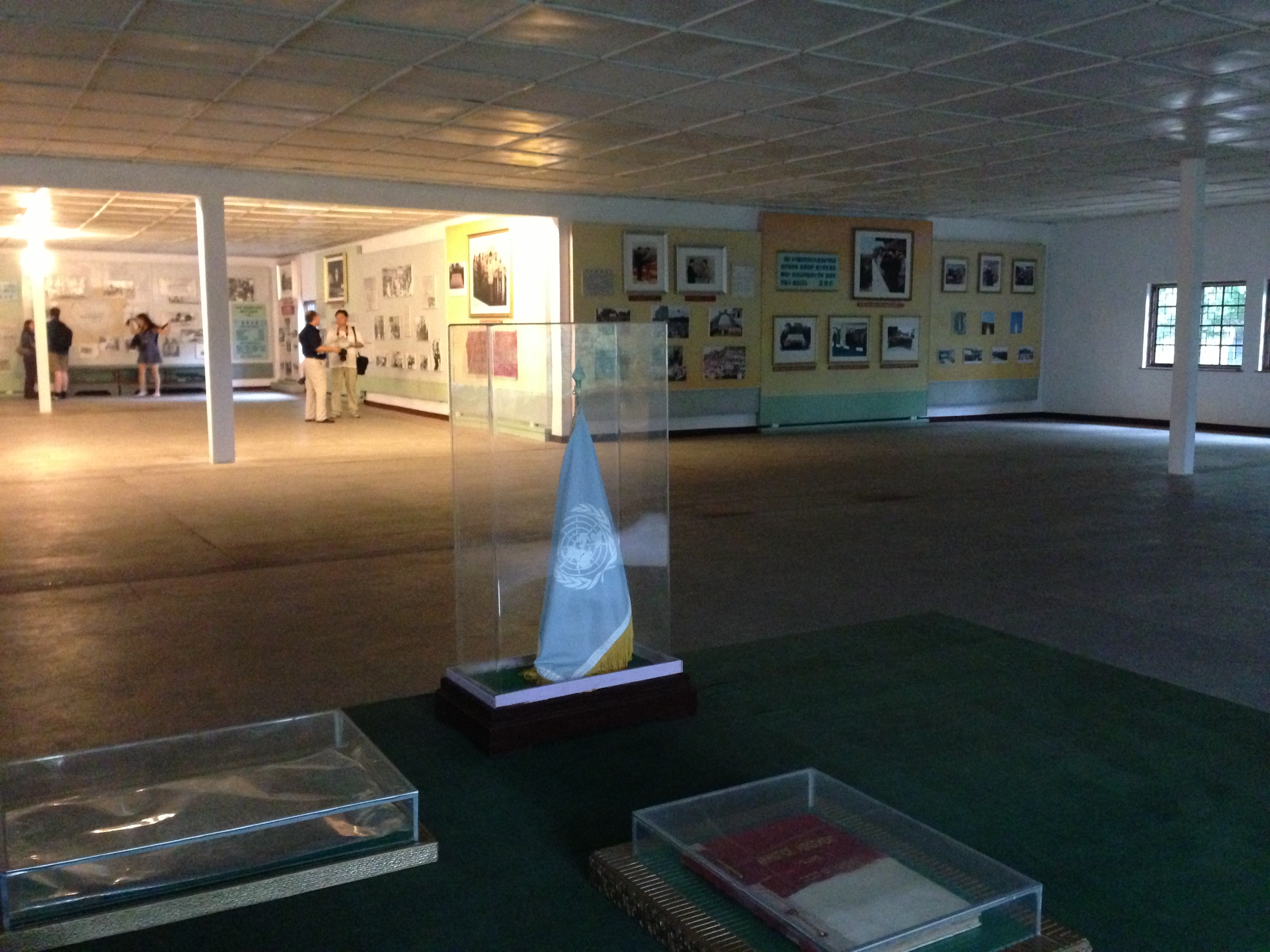
    We move on to the place where the armistice agreement was signed, again with the original desks and chairs. The agreement is described by the military guide as the “surrender document”. There is a UN flag, that was brought by the US (apparently they were ashamed and did not want to take it home), and this prompts my favourite quote of the trip: “The flag has faded, but the aggressive nature of the US has not changed.” They do not acknowledge the oppression of the DPRK, and they still blame [the DPRK] for the war. Yesterday marks the completion of the Korean War, in NK the victory day, and they opened a museum – the US cannot hide anything of their doing in the past.

    I’m checking my quotes, but the guide is nervous, she asks me, “why are you taking notes? Are you going to put it in the Google?” – there is an understanding here that Google is important in the West, but not a clear idea of what that is. I am wearing branded clothing (I wonder if the security cameras picked it up).

    We go to see a monument (another!) with the signature of Kim Il Sung. In order to provide prosperity, he (this maybe refers to his son? Kim Jong-il) told them to erect a monument with his signature on it. Kim Jong-il passed away December 17th, 2011, which was heartbreaking news for all the Korean People as he was everything for the country’s reunification. On March 3rd, 2012, Kim Jong-un visited the monument and memorised it. It is 9.4 metres long, which symbolises 1994. The monument is apparently balance, to encourage people on the road to the country’s reunification.

    There is a concrete line between the buildings, this is the military demarcation line. The South buildings – blue ones, built and managed by the US – have lots of cameras. There is a third building which is where conferences happen That building is a place where people from the North and South can go freely, but currently the South has shut it. Military line has more landlines per sq m than anywhere else in the world. The south has a wall.

    On the way back out, we have to stop so our guides can pick up their ID, which they are required to leave when they go into the DMZ.

    It starts to rain, and soon it is really pouring. It is quite pretty around the DMZ, park and farmland, doesn’t look like I expected (not that I’m really clear on what I did expect). I had hoped to get some brief internet, but sadly not – I miss Twitter, and wish I could check into all these crazy places I’m visiting on Foursquare!

    We have lunch that is apparently how the kings ate in the Koryo dynasty. It’s all cold, and comes in 12 tiny golden bowls with lids. I’m not keen to eat cold food here, but this is supposed to be a fancy place so I eat a little. The rice comes, and the woman serving it has filthy fingernails… I don’t eat any more after that.

    The roads are terrible here, and the bridge is full of potholes, which makes me nervous.

    We stop at a “big, local city”, of 300K people. Main industries are cement, tractors, and electricity. It is the capital of the Northern Hanyo province. The street we walk on was built in 2008, and is like a “pleasure ground” where people go on holidays and on Sundays. Most rice is produced from these provinces. We take a walk up a small hill, and then stop for a fermented rice and barley drink, something that is between beer and wine. I don’t drink it, but another person tells me “it tastes like acid”.

    The popular Korean girl band, Moranbong Band, is on the TV again.

    By the time we get back on the bus, I’m experiencing complete social overload. We were supposed to go back to the hotel, but stayed too long drinking (a common theme, with our western guide). There have been no clean bathrooms all day, so I am thirsty, and grumpy, and frankly desperate for some alone time. The hours of jolting about on the bus have not helped.

    In all, at this point, I’m feeling very negative about bring in North Korea. Cold food served by people with dirty hands, gross bathrooms lacking toilet paper and soap… I cannot wait to get to clean Japan. Part of me wants to leave the following day (we opted for the longer tour), but I know I am mostly having an interesting time. I do hate being part of a tour though, no control in where you go or when, and there is just too much emphasis on drinking (this is our western guide, not the tour in general). The schedule is brutal enough, I can’t imagine doing it hungover.

    I crack, and decide to plead sickness and skip dinner (I hate to miss anything, and dinner sounds appealing and safer than lunch – BBQ) and insist they drop me at the hotel. I am so reluctant to ask – what if they say no? But I do, and it’s fine, although our Korean guide is anxious about why I’m sick (“is it the food?”) and I plead jolting from the bus. We arrive at the hotel, and I run in, making it to the room just in time to get really sick.

    Ah, vacation.

    %%wppa%% %%slide=7%% %%align=center%%

  • North Korea, July 2013: Day 3

    North Korea, July 2013: Day 3

    Day 3 of our trip is a national holiday for “Victory Day“, which marks the end of the war against the Japanese in 1953. We are spending another day taking a city tour – the plan is that we will see the home of the President Kim Il-sung, the Arch of Triumph, the Revolutionary Mountains Cemetery, an Exhibition of Special Flowers, and the National Symphony Orchestra.

    Most people are off work for the national holiday. According to our guide, they may have a mass meeting in their company to celebrate the victory of the War from 1950-1953. They may give a performance, enjoy themselves together, and then go home to spend time with their family. They may go to a park or river with BBQ (bulgogi), where they can dance and sing.

    Our first stop is the house where Kim Il-sung was born (where his grandparents lived and worked as farmers). He left for China at the age of 14, saying that he was not coming back until Korea was free. When Japan occupied Korea, farmers were very poor and had little land.

    In 1946, the Kim Government managed democratic reforms with three principles – free confiscation of land from the Japanese, turned out by land owners. Free delivery to the farmers, no compensation. And a third principle involving the amount of land. (See this article that explains it more thoroughly). This took 20 days, and over 1 million hectares of land that were owned or rented out by Japanese or pro-Japanese were freely taken and freely delivered. This affected around 700 households. The people were so grateful that they all respect Kim Il-sung as the great leader of their nation.

    The house we see is original one where Kim Il-sung was born and spent his childhood. From the oldest time it has been a place for people to enjoy beautiful scenery. Rich people like to buy land there for the graves of their ancestors, so there are many graves around. Rich men would also buy a grave keeper for their ancestors grave, so many people – poor people – worked here as grave keepers in houses they would build for themselves. The birthplace of Kim Il-sung was built by a grave keeper, but they were so poor that the landlord and the (great?) grandfather of the President took it over in 1842. In 1912, Kim Il-sung was born. The family lived there for 100 years. We are shown the farming implements, that were apparently used by the grandparents of Kim Il-sung, some of the tools they made themselves.

    Kim Il-sung left home at 14, led the revolution for 20 years, and then came home. Some key quotes from our guide: “Miserable life of the Korean people being exploited by the Japanese.” “Easy to lose a country, so hard to gain it, at a cost of life.” Kim’s parents were also devoted to the country (well of course), and died young. His wife was also apparently a guerrilla – the wikipedia article about her is fascinating.

    On our way back into the city, we pass the Palace for Young Children which is where children can go for extra-curricula activities. Narelle asks if we can visit, but the excuse is that it is closed (or, more exactly, “you are not going there in our trip”). In the DPRK, there is 1 year of kindergarten, 4 years of primary school, 6 years of secondary – from the age of 6 to 16 education is free. The school year is split into two semesters, April-July. August is the summer break and September is the start of the second semester. Students have a weeks vacation in January. Primary school classes last 45 minutes, with 10 minutes in between. Middle school is the same. University lectures last 90 minutes. After middle school, students have choices – university, military, or industry (factories).

    As well as the ordinary middle school, there is also a special middle school for gifted pupils. Each district is divided into units, and each unit has primary and middle school in their area (unit). The good students are chosen to go to the special middle schools, and top students are chosen to go on to university. Several steps of passing through final exams (entrance exams) for university. It is hard and long to get a university education. Education is free and compulsory until the age of 16, university is free but not compulsory. During exam time, it is very competitive, and parents will make their children study all day. Each family has 1 to 2 children, although this is not limited. As society develops, people’s expectations are higher – more and more parents want their kids to go to university, hence, they are more competitive.

    After university, students get a job. Government officials look for the top students at the top university, then companies, then factories. Students apply for jobs, have interviews and examinations, test include foreign languages, then they get a job. Everyone works for the government, as there are no private shops or restaurant. People get an apartment, salary, and “daily food” from the government.

    In 2012, the DPRK government revised the constitution to change the school system. Now there would be 12 years free compulsory education – one year pre-school, 5 years primary, 3 years junior-middle, 3 years senior-middle.

    We pass the April 25th Culture House – April 25th was the foundation of the People’s Army.

    The cemetery we visit opened in 1985, which marked the 50th anniversary. There are 148 revolutionaries, including 12 women. Everyone got a big medal.

    We watch the military parade on a TV in a bowling alley (weird). The sheer volume of stuff and people is pretty impressive. There is a flag with Kim’s face on it, and furious waving from soldiers in trucks driving by. The camera keeps focusing on the new Kim (Kim Jong-un), standing next to the Chinese Vice President. Kim always looks uncomfortable, I see him scratching his nose twice – it must be hard to live up to the god-like status of his father and grandfather. There’s a lot of religion in the west, and Kim Il-sung was a man, although now elevated to god-like status. Is that really so different? Is it worse?

    The soldiers walk with a high-kicking step, perfectly in time. The parade is, in it’s way, and incredible display of military strength. But does military strength in 2013 actually come from weapons and computers behind desks?

    We see old-style cannons, some huge guns with so many shells. Mounted on the back of what looks like a regular truck, but towed by something that looks like a red tractor? Also, tanks and helicopters.

    The planes drive everyone outside, and we sit and wait for a really long time. There’s sometimes yelling that we can hear – even though we are several blocks from where the Main Event is happening, and some planes fly over, which is kinda cool. I’m not hugely into Military machinery or planes, so I don’t really get how big a deal it is that we are so close by. We are close enough that when some fireworks are let off (in the day time!) some of the parachutes with flags on them float down nearby. Not close enough to really see what they are, though.

    New factoid: women in North Korea weren’t allowed to ride a bike until two years ago, as it was considered dangerous and unladylike.

    There are little stands set up on the street we’re on, where more locals have gathered along with other groups from our tour. I pick up some ice cream, using RMB as of course I don’t have any North Korean money. I want two (me and a friend) and give them 10 RMB (about 1.63 USD), but this is way too much money and as they can’t give me change (foreigners can’t have local currency) and won’t just keep the change (as I am happy with), I am given two more ice creams and sent on my way. As it is so hot, it’s easy to find someone else who wants one!

    Finally, the vehicles from the parade start coming by and everyone rushes to gather around the intersection. We see vans full of soldiers, tanks, tractors, driving by. There is no cordon or anything, I could touch them, if it wasn’t for the soldiers who stop us from going into the road and keep pushing us back. The air is filthy, and it’s crazy and chaotic but also incredible – despite the solder standing a couple of feet from me, it’s the least constrained I have been so far. Most of the soldiers wave furiously and look so proud and happy.

    It’s incredibly hot, though, and air quality is pretty poor – these tanks are not fuel efficient, you can feel the heat and the dirt from the exhaust hit you. I’m incredibly thirsty, and eventually my conviction that I’m about to get heat-stroke drives me inside a building that I think is a hotel, but is actually (or so I’m told later) a Japanese shopping mall. It’s a beautiful building, feeling modern, new and ostentatious, rather than just ostentatious, which is what our hotel feels like – grand, but shabby. This place is new, and clean. I go in and ask for a drink, but am directed into a small store selling luxury goods, including Maybelline! As well as designer handbags, and gold watches. Once I have clarified that I want a drink, I am ushered upstairs to a bar where I saw my first credit card machine, and obtained 7up and water. I tried to pay by credit card for fun, but they wouldn’t take it and so instead I paid in RMB. There was much distress about and confusion about their inability to give me change, which eventually I resolved by getting an extra bottle of water. Eventually the poor girl says “I would give you change but I have none”. Of course I really don’t care! But I do not have much success convincing them of that. Eventually as I’m now confident that I am over-, rather than under-paying I just leave. They clearly think I am mad. I, meanwhile, am saddened by the fact that in one of the fanciest and grandest places I have ever been in, where I feel horribly under-dressed and grimy, about one AUD could cause that much stress to another human being. My idea of the poverty there is shaped by these interactions – everything looks fine, everyone looks OK (of course, only the most loyal, politically reliable, and healthiest citizens are allowed to live in they live in Pyongyang), but their reaction to me overpaying by so little is illuminating.

    I head outside, exhilarated from my brief escape in time to catch some large things that look like rockets go by. I think these are the nuclear weapons. Parade over, we head back to the bus, and people are buzzing. We are the first Westerners to ever see that much.

    Lunch is hotpot.

    In the afternoon, we head to the Symphony. The music is rousing, militant, and it’s an incredible performance. I really enjoy it, I’m mesmerised by the violinists and cellists – everything, body, bow, moves in time. At one point the orchestra sang – I have never seen such a thing before. By my count, the orchestra features 8 women (I don’t know how many musicians total, but women are very much in the minority.

    North Koreans get 15 days vacation a year, and our tour guide tells us they can go abroad if they want to. She hasn’t gone herself, so can’t (won’t?) answer my questions about visas. People used to go to other socialist countries in Europe (I guess before all those pesky human rights improvements came about) – including, I later discover, our other (older, male) tour guide. We are told that Pyongyang University is the “number one university for foreign studies” – in North Korea, not the world, I imagine… although I am consistently impressed by the English of the people we encounter.

    The subway in Pyongyang, like many things we encounter, is apparently record holding – the world’s deepest subway at 150m deep (this is not corroborated by the Wikipedia page – which says 110m and others deeper), and could double as a nuclear bunker. Each station is decorated to show the meaning of their name. The first station name means “first station” (extra points for originality with that naming) and is decorated to mean the countries future – prosperous day after day. Second station is the biggest and most beautiful, we will also go to the 6th station.

    I think if you wanted to escape your guides (and I kinda do – I would love to see the Hotel of Doom) this, the subway, would be the place to do it. You would have to know where you were going though, but it would be so easy to sneak on to a train going in the other direction. I’m told by our Western guide that unescorted Westerners would apparently immediately be picked up by the police – I’m not sure this is true though. People don’t really seem to be empowered to make decisions here. If you just keep moving, maybe noone will feel like they have the authority to stop you. Narelle told me about the journalist who ran from the hotel we are staying in, to the Hotel of Doom in the middle of the night.

    Our male guide has heard of Google, although he doesn’t really understand what we do (I guess “organising the world’s information does not seem like as big of a problem in NK). He asks me how it is different from other “working with computers”. I try and explain data-centreas, and having everything available everywhere (not just on one computer) and talk about services being free – again, perhaps not a compelling argument in a place where the government provides everything. I show him a search from a cached web page on my phone.

    I ask him if a tour guide is considered to be a “good” job – he tells me it is a “middle job”, good jobs are doctors, and working for the government. I think it is a lucrative job though, as well as the tip we will give them at the end of the week we were instructed to bring a gift of something Western that won’t easily be obtained here. These gifts are then sold on the black market (I wonder if they go for above, or below, their market value?)

    People in Pyongyang in general look really happy and prosperous, and nicely dressed  – in the Western style, although you rarely see women wearing trousers and never jeans. I feel perpetually scruffy. Is it just Pyongyang where people seem to have a good quality of life? In the stories that get told – internally, externally, in the Western media… what is true?

    Everywhere we go looks very grand, by Pyongyang is a pretty city with lots of parks and greenery. I’d love to be able to just walk around, instead of this frantic tour where we bus between everything and it all feels quite rushed.

    We have a delicious dinner of potato, omelette, dumplings, and bulgogi. For the first time since leaving China, I’m not hungry.

    Tomorrow we have an early start, and our guide tells us she has a taser in case we are late. I think she is joking? These kind of jokes about violence are somewhat less funny in a police state.

    %%wppa%% %%slide=5%% %%align=center%%

  • North Korea, July 2013: Day 2

    North Korea, July 2013: Day 2

    Narelle tells me about Koreans sympathetic to the North who are living in Japan, with no passport, but with special schools and a direct boat to NK.

    First stop is the Grand People’s Study House, where they have 30 million books.

    The newspaper building has pictures of the deceased Kim’s on it – free press!

    Our guide tells us about working hours in North Korea. Everyone is employed by the government. They work six days a week, from 9am until 6pm, with one hour for lunch from 1pm until 2pm. School starts at 8. Rush hour is from 730am to 830am. People rely on public transport, which is 5 Korean won per ride.

    We buy flowers to put on the statue of the Kims. Not everyone has to do this, but they are just 10 or 20 RMB, so about half of us do.

    Narelle (much more well researched than me) points out the Hotel of Doom (also known as the Ryugyong Hotel) – a tall pyramid rising in the skyline. Apparently bears resemblance to the ministry of truth building in 1984. At one point, it was the set to be the world’s tallest hotel. I am very taken with it’s appearance and weird story, would love to see it and go inside. This is extremely unlikely to happen.

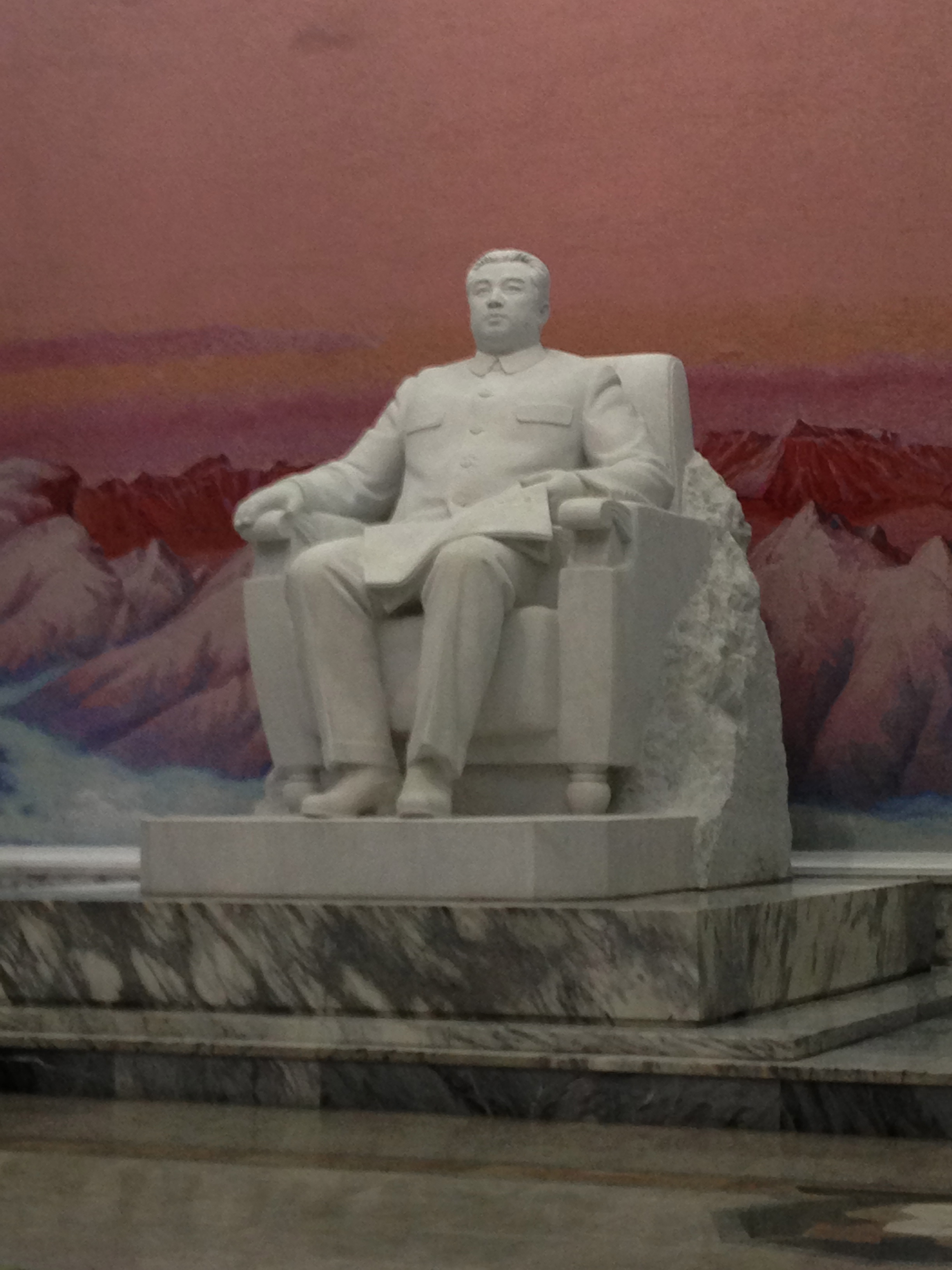
    We arrive at the Grand People’s Study House, there is a large marble (?) statue of Kim Il-Sung in the entrance, and behind him a beautiful picture, which is in fact a mosaic. The Study House is 100,000 square metres, and contains 30 million books. It is open from 8am-6pm, and apparently 6000 people visit every day. Based on the number of people who we see there, 6000 seems like an unlikely number! We are told it is quiet because of the coming victory day holiday.

    We see some computers – they are for the computer catalogue, and can be consulted to find the books available in the study house.

    There is an exhibition for Victory Day (July 27), including the hovercraft photo that was found to be doctored, and another one of fighter jets that also looks like it benefited from some copying and pasting.

    We learn about the three pillars of North Korea – the worker, the farmer, and the intellectual.

    Display of the book fetching process from a librarian, she selects the book and it comes out on a conveyer belt. Of course, we don’t know what book she actually selected! One of them is about Object-Orientated programming – this makes me and Arya pretty happy!

    The People’s Study House is the social educational centre for the country, and every day hosts lectures and seminars and workshops. Unfortunately, there are no lectures today because people are practising for the festival. They send the lectures through media – TV – so that everyone can attend, they just need to apply in advance. Everyone can come to study and read books, most of the services are free.

    The largest lecture theatre seats 800. Slogan: Let us make the whole society. I don’t understand what this means…

    We come to the foreign language lecture area – this is by far the busiest place that we see. A woman is teaching English and is repeating “The greatest holiday” in a way that forcibly reminds me of evangelical preaching. The language courses are six months long, and languages that can be studied are: Chinese, Japanese, Russian, German and English.

    There is also a room full of stereos, old style enormous boxes. An old song is playing, sounds somewhat country – “I’m free as a breeze…”

    Talking to our male (2nd) guide, he tells me his second daughter is a programmer. I think this is really cool.

    On the bus to our next destination, our guide tells us about fruit and vegetables – essentially, about rationing. People get a monthly allowance of fruit, vegetables and rice. Sometimes also meat and fish. It’s very cheap – almost free. Some stores have state prices (rations), other stores have regular prices. The government also gives people flats (“In DPRK, don’t buy house”), free of charge – inhabitants just have to pay for water and electricity.

    There is a long Korean tradition that “boy and girl” don’t live together before marriage, once married they live together, but with parents. Once they have a child, they can live independently, or if they remain living with the parents, once the parents die they will get the house (or apartment).

    There are some nice flats for sportsmen, artists, and musicians.

    We drive past the Russian embassy, and the Chinese embassy, and also the People’s Palace for Culture which is a venue where you can sometimes see performances. The Pyongyang indoor stadium, which is the largest stadium in the DPRK. All sports games are available there, and also an ice rink. There is an outdoor ice rink; skating is very popular amongst the kids.

    We visit a bookshop which is a rich source of North Korean Propaganda, I look through a biography of Kim Il-sung, his father was fighting against the occupation. There are many stories about his brilliance from an early age, which frankly aren’t that compelling to me – he noticed two lumps of clay joined together make one, and similarly for water. He helped another child who fell in a childhood tricycle race. Another book I saw was titled “Korean Unification – a Burning Question”.

    We move on to the art gallery, there are some beautiful works but more is available to buy than to look at, and the rooms for viewing are crowded with pictures – it’s like no other art gallery I’ve ever been to! There is a “famous painter” on display too, working. The guide speaks excellent French, and so we chat together in French. I buy a black and white picture of something that looks like a nuclear bunker. It’s actually the ice rink.

    On our way back to the hotel for (lukewarm, unappealing) lunch, we pass the train station. It was build in 1956 and all trains go out from there, including to Beijing and Moscow.

    Our first stop in the afternoon is to the Maternity hospital. Most people arrived on an earlier flight and have already seen it, but we have to go again. Our Western guide suggests that we won’t have to go, but he is wrong. We are to do a quick tour, and offered the choice of babies or machines. Of course I vote for machines, as do most of the rest of the group (all male, bar me and one other woman), except one guy – who has the best manners of us all, I guess – who says we should see both of them but quickly. He doesn’t want to offend.

    The Maternity hospital opened in 1980, and has 6000 square metres over 13 floors. 1500 beds; 450 in obstetrics, 350 gynaecological, 500 babies, and 400 outpatients can have exams daily. It was visited many times by Kim Il-sung, who made the suggestion of adding a dental section. I guess it is possible you might want your teeth seen to whilst giving birth…?

    In North Korea, women get 5 months of maternity leave (note – this is much better than in the US).

    Triplets are very revered (I look this up after, and discover not so much revered, as feared), so the ones that were there were displayed to us – they had their own room. We saw so many babies all bundled up in plastic boxes. I only saw two move. This was my first (and last) time to visit a hospital and look at random babies, so I have no idea whether this is normal.

    My mom (a doctor) in one of our talks about “why would you want to go to North Korea?” talked about the visit to the hospital in the Panorama Documentary where they say (apparently – I can’t verify this as it won’t work in Australia). “Where are all the patients?” “They are all better, we sent them home”. This she found somewhat freaky, so I was on the look out for patients, and we did see one on our way around. It’s eerily quiet for a hospital, though. The emergency room in the US, Canada, Australia I found to be much busier. Even when I ended up in hospital in China, which was comparatively super-quiet it was much busier than this one. We went past a lab where people were peering into microscopes, but one of the other women on the tour works in a lab, she told me later that the chemicals smell for days, and also the microscopes weren’t turned on (no light).

    For our last stop on the tour, we are taken into a room and our guide announces, “And here are some patients”. I guess they heard about the documentary then… and don’t at all understand why Westerners found it odd. You don’t expect to be taken into someone’s room and shown a patient! You expect to see them moving around the hospital as their needs are seen to. It was a really uncomfortable moment, about 8 of us shown into a room, 6 of us men. We turn around and awkwardly leave. I’m not sure what we are supposed to say or do here?

    New factoid: Kim Jong-il afraid of flying, and took the train everywhere.

    We head to the Film Studio (fascinating article about film studies in NK) which apparently Kim Il-Sung visited 36 times. As we enter, there is a statue of him with the cast of the film “The Flower Girl“. The film studio is 1 million square metres, of which 750,000 square metres is film set. There is an old Korean street, a Chinese street, a South Korean street, and a European street. This was all built in the 80s, and hundreds of films have been made since then.

    We tour the streets, which are – as with almost everything we see – deserted. There is a place to try on costumes though, so some people get quite into that. I’m finding the heat brutal though (we have been told to dress nicely for one of the stops we will be making today), and have no desire to wear more clothing! After, we stop at a little cafe where we can get soda and ice lollies, and we watch a film shown on the TV. I don’t understand much of what is going on, but it seems that the americans are the bad guys.

    Eventually we end up at the statues of Kim Jong-il and Kilm Il-sung. We’ve been supposedly heading there next all day, but at every point it has been deemed too busy. It’s a popular place to visit currently because Victory day is coming up. We have to “dress nicely” as a sign of respect, and when we “pay homage” (bow) we take off our sunglasses. When taking pictures, we are instructed to take pictures of the whole body. The flowers we bought much earlier in the day have been stuck in the bus, and are looking distinctly worse for wear, not that they were that appealing to start with. But it is the thought that counts, right? Especially when they are for a statue of a diseased leader.

    The sight seeing portion of our day is over, and we move on to a brewery where we have a “great opportunity to try Korean micro-brewery”. There are three kinds of beer available today – dark, brown, and light. It is not possible to get a lycheetini, so I drink Sprite instead.

    Whilst we are there, we get an important cultural lesson on how to chat up women. How to say hello, ask for beer, and tell them they are pretty.

    Everyone DPRK person we see is wearing some kind of badge, always red, with pictures of the Kims on them. Our guide explains to us that everyone belongs to an organisation, depending on their age or job. Children get a children’s badge and a red tie at the age of 9 (every school child we see is dressed in blue and white, with a red tie). At 14, they join another union, the Kim Il-sung socialist union. At this ceremony, they take off the red scarf and get the badge of the present son. At a certain age they can then join the workers class union, women join the women’s union. There is also the farmers union. At the top, you get to join the Workers Party of Korea. People wear the badge of the party, and there are different colours and designs. They are now starting to produce Kim Il-sung badges. If the badge gets damaged or lost, you report it to the organisation to get a new one.

    Dinner is our last stop of the day. The duck is pretty nice, but there is a dead, or nearly dead fly on the vegetables. It’s hard to be vegetarian here.

    %%wppa%% %%cover=4%% %%align=center%%