Author: Cate

  • Book: Careless People

    Book: Careless People

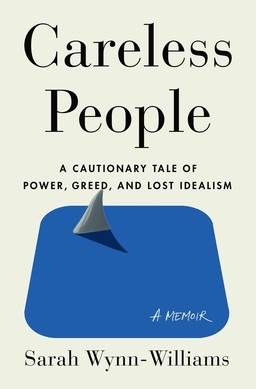
    Facebook tried to shut it down, so obviously like so many others I had to read it!

    Careless People covers the period of 2011-2017, the author pitches a job to Facebook working in policy, and was there from the inception of Facebook getting involved with governments. It’s a well written, engaging story. The author knows how to grab your attention and keep it.

    It’s also the kind of book that stayed in my head even once I had finished it. Asking myself what I believed and what I didn’t. In the end, I think of it as a composite of three pieces.

    The first, the gossipy stories. These are obviously cherry picked in support of the bigger narrative. For instance, there’s a lot about Sandberg’s behavior in 2015 and no mention of her husband’s death. These stories are certainly part of what makes it a good read, but I don’t know how much weight to give them.

    Second, is Zuck and Sandberg’s villain origin story. Essentially that Sandberg’s was always a status obsessed megalomaniac, and that Zuckerberg became that way over time. Reading the book, this makes for a good narrative arc, but having left that narrative and come back to the reality of this being two people with tremendous power, I don’t really care about their villain origin stories.

    Third is the real thing, which is the way that the pursuit of growth and money has done untold harm to democracy. The stories about working with China demonstrate a kind of moral bankruptcy that is appalling but also by that part of the book, par for the course. I did not realize the full extent to which Facebook had enabled Trump’s first election win, but it is all laid out. The part I found most horrifying was the dark ad targeting designed to suppress voters. A close second to Facebook embedding staff in the Trump campaign because they were spending so much money. (As an aside, as a European, I do find US election spending absolutely horrifying. It re-enforces why it is illegal elsewhere.) Now Musk buying Twitter and the existence of Truth social make so much more sense.

    Well worth the read.

  • Q1 2025

    Q1 2025

    Having set my intention for the year as “health”, Q1 2025 felt a bit like whatever the atheist, gender neutral equivalent is of the saying “Man plans, and God laughs”. I had a good start to January – all set with my intentions and my Trello board – only to get very sick in February (the worst time of year at work to get sick, the annual review cycle). Then, mid-February, my friend Martin died. After all of that, I was physically and emotionally decimated. At the end of March, I feel like I’m only just starting feel human again.

    I like the idea of doing a quarterly review of my annual theme, as a way to reset, re-evaluate, figure out what I want to change and celebrate what I did actually accomplish. For all Q1 was pretty rough, I did move many things along.

    One part of the word “health” is the core habits that keep me grounded. In Q1 I:

    • Clocked just over 1K peloton minutes (2/3 of my goal, because spinning with a chest infection is inadvisable).
    • Read 10 novels
    • Finished 2 non-fiction books: Traction, and Backlash.
    • Finished one crafting project
    • Wrote 10 blog posts
    • Sent 6 WTHIC letters

    I had a good number of adventures:

    • A weekend in Dublin
    • A trip to Madeira with Nandana
    • A couple of days in London for work
    • A night at Castlemartyr for a special dinner event with Ballymaloe Cookery school
    • A weekend in Kinsale
    • A couple of nights in Manchester
    • A week in Iceland for work

    When I’m stressed I tend to stay with things that are familiar, so one of the things I’m paying attention to is how many new experiences I have, aiming for at least one each month.

    • Crafting: my friends and I tried pottery painting, crocheting, and pottery making.
    • Restaurants: We went to a new pizza place in Cork (GoodHood), and an exciting fine dining restaurant in Kinsale (Rare).
    • Experiences: I saw the Turner Prize collection in London, and visited the Sky Lagoon and Fly Over Iceland in Reykjavik.
    • Places: Madeira!

    Part of health for me is definitely keeping the life debt under control, this is always the first thing to give when life is not going well! However, I did move some things along:

    • We replaced the water tank and the dishwasher. The building projects might be finished but home ownership never ends! But seriously, it’s been nice to upgrade our quality of life with these things where possible, and we’re fortunate to be in a position to do it.
    • I switched my business bank account which was an ORDEAL but has been a vast improvement.
    • I got the first round of Botox in my jaw (for the teeth grinding, argh).

    Professional growth is also important – I always want to feel like I’m learning, growing, and giving back.

    • I completed the (updated) PQ program. It was interesting to do it again after 4 years or so, and a good refresher.
    • I was on the program committee for LDX3 in London.
    • I did a round table with Sergio from sudo make me a CTO.
    • I got promoted.

    Looking forward to Q2 I have more adventures planned, including an elaborate birthday party! I have a talk to prep and give in May, and some projects to work on, and more life debt to pay down. But really at the core, I want to keep reading, writing, working out, and trying new things.

    I hope your Q1 was what you hoped for, but if not, that’s okay. April 1 is the start of Q2! A good time to reset, and have another go.

  • Decisions

    Decisions

    Credit: Joe Groove

    Recently, someone asked me for my “Leadership philosophy”. My initial reaction was to panic, but after taking a deep breath and a bit of time to think, I came up with this answer:

    “My job is to make it easier for people to make good decisions.”

    What does that mean?

    Firstly – that my job is not to make decisions. Sometimes (often!) it is, but it’s important to think about when someone else should be able to make the decision and how to change it for next time.

    What do people need to make decisions?

    • Context: What is the information around the decision they need to understand? As you rise up the org chart, you end up with a broad amount of context,so think about what you need to be distilling and passing on.
    • Scope / Responsibility: This is clarity about the scope of the decisions people can make, and what they are responsible for.
    • Timeframe: What timeframe is being optimized for.

    Local / focused decisions can help teams move faster in the short term, but have higher costs over time – e.g. optimizing for features over infrastructure that would make more features easy. Shifting this requires:

    • Enough shared context such that people can identify possible overlap.
    • Clarity about how and when a broader scope can make sense.
    • Understanding of where it’s critical to just deliver vs where it’s possible to justify longer investments (i.e product market fit vs iteration).

  • Book: Backlash

    Book: Backlash

    Book cover of Susan Faludi - Backlash - the undeclared war against women

    Backlash (Susan Faludi) is a long and not particularly easy read. Written in response to the Reagan administration’s assault on women’s rights (originally published in 1991), it was reissued in 2020 as history repeated itself.

    Two recurring themes in the book. First, the way that the data did not at all align with what was being written about women in the media. Second, the hypocrisy of so many who proclaimed to know what women want. I enjoyed both of these, but it does add to my confusion about how little fact checking goes on.

    “Trend journalists in the ‘80s were not required to present facts for the same reason that ministers aren’t expected to support sermons with data. The reporters were scripting morality plays, not news stories, in which the middle-class woman played the Christian innocent, led astray by a feminist serpent. In the final scene, the woman had to pay—repenting of her ambitions and “selfish” pursuit of equality—before she could reclaim her honor and her happiness.”

    Since November, I’ve been wondering why so many white women vote against their own interests, and I thought this book would provide some answers. The short answer, I understand, is “racism”. I wanted a longer one – what is the narrative? What is the belief system? Ultimately in as much as I understand those things better after reading this book, it is simply that the rules they don’t apply the rules the put forward to themselves. That some women have so little imagination that they would sooner be fembots of the patriarchy rather than support a different world, even if that different world aligns better with the way they personally (want to) live.

    The final chapter, on women’s reproductive rights, is particularly eye opening. It explains the history behind why women in the USA have so little access to reproductive health care. It also covers a truly horrifying story of some women who, trying to support their families, were forced to “choose” between getting sterilized and keeping their employment.

    All in all, if you’re trying to understand the current state of affairs, this book provides useful context. And, I guess, some modicum of hope – the situation in the 80s sounds pretty dire for women in the USA, but prior to 2016 much progress had been made. That such progress will have to be made again seems inevitable.

  • Questions for the End of a 1:1

    Questions for the End of a 1:1

    Credit: Joe Groove

    I have a set of questions I ask in some variation at the end of my 1:1s.

    What are you taking away?
    What was most useful to you?

    These two I got from my coach and I use them both at work and in my own coaching. The concrete questions are useful, but it can also be a source of implicit feedback about what was useful / what was less useful.

    Is there anything I can help you with or do for you?

    It’s amazing to me how often this starts another conversation about what someone needs help with. I also like that it frames asking for help as a normal thing.

    Is there anything I can be doing better?
    Is there anything I do that you particularly appreciate?

    I ask these more periodically because I want it to be unexpected enough that people actually think about it and try to give me an answer. The second question is useful for getting at least some specifics if the first one doesn’t elicit any information.

    Is there anything that I didn’t ask you that I should have?
    If I made you complain about one thing, what would it be?

    Useful for flipping someone’s thinking around if I feel like there may be things I’m missing.

  • Comfort Reads

    Comfort Reads

    I really believe in the power of a good novel as an escape from Real Life. Some of my recent(ish) favorites I’ve been recommending.

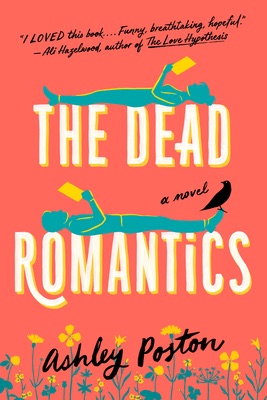
    The Dead Romantics by Ashley Poston – an absolutely beautiful novel, I loved it.

    Somali Dev’s Austin inspired series – I adore this series about an Indian immigrant family, each one of the series inspired by a Jane Austin classic.

    Write my Name Across the Sky by Barbara O’Neal – a 70-something influencer confronts her past.

    One Last Stop by Casey McQuiston – a gay magical mystery, what is not to love.

    The Seven Husbands of Evelyn Hugo by Tara Jenkins Reid – a disaster bisexual love story.

    Bonus – all of these authors have other novels (I’ve read all of them, but these are my favorites), so if you like them you too can work your way through the back catalog.

  • Thoughts on Reviewing CfP Submissions

    Thoughts on Reviewing CfP Submissions

    Credit: Pixabay / Dangel099

    Recently, I reviewed ~150 submissions for a conference. It’s been a while since I did a CfP review, and here are some things I noticed. Noting this is my own personal experience – others may disagree!

    This was an anonymous review, which was interesting. There are a lot of great reasons to do an anonymous review, but if you’ve submitted to one you need to consider that your bio can be critical information about the talk you plan to give.

    • For instance, if your workplace is in your bio, so maybe you don’t mention it in your abstract – but a brand name company implies things about scale and impact that can’t necessarily be inferred without it.
    • If you can’t expect people to know who you are, you need to include more detail in your abstract about the actual content of the talk and the frame of reference it comes from – these things are often implied by a bio, and without them I find it hard to evaluate. Many topics will succeed or fail based on the credibility of the person delivering them.
    • Send your submission to a friend to make sure it’s coherent before you submit it – and specifically ask the question “if you didn’t know me, would you still want to listen to this talk?”

    Other observations and suggestions:

    • Think critically about what other people will take away from your talk. Why should they want to listen to it? What can they expect to gain from it?
    • Many people want to speak about their own experience, but it’s more useful to blend some (hard won) experience with a structure or framework that other people can take away and use to shape their own thinking.
    • Make sure you’re clear about why the problem you’re talking about is real, and not remedial. Again, numbers are helpful here, for instance “How we scaled our database” is potentially interesting as talk about some genuinely unexpected problem that occurs with a certain volume, not as talk about a basic problem that occurs writing bad SQL. Call me a cynic, but as a reviewer I cannot know which one you plan to give unless you make it clear.
    • I was surprised how many AI talks seemed genuinely useful and applicable. But of course AI was a buzzword, and too many buzzwords make a talk proposal unreadable. If you’re hitting a hot topic, you need to work harder to make it clear why your talk is a) actually useful and b) based on actual knowledge rather than theory.
  • Explore / Pursue / Depth

    Explore / Pursue / Depth

    My friends and I went pottery painting recently. Next, we’re trying crotchet. The pottery painting was fun, and my star shaped bowl painted in rainbow colors came out better than I expected. I’m thinking to go back and paint a dragon next.

    My friends and I, we’re exploring. Trying some new things. Seeing what we enjoy. No pressure to be good at it, or even do it a second time. It’s oddly liberating. I think this is good for me, because I get too focused on being good at things, which makes me too likely to stick to what I know, unwilling to branch out and explore.

    It also reminds me of professional development. Sometimes I know what I’m trying to learn and how to do it – I’m pursuing it, in a depth mode. For example when I took the full co-active coaching training, or when I wrote the book.

    Right now I’m in more of an exploratory mode. I have some broad themes that I’m interested in, but I’m not quite ready to commit to anything that big. I was inclined to be a little self-judgemental about that, like, I ‘should’ know and focus and achieve. But I’m trying instead to find the beauty of the exploration. The freedom to make small decisions, the lack of pressure when I can truly believe that it’s okay to be wrong, the joy of following my own curiosity, just because.

    As a result I’m:

    • Listening to wildly different podcasts (a history one!)
    • Reading an interesting book with no real practical application
    • Redoing a new version of a program I took before, and experiencing it very differently
    • On a program committee for a conference I really like
    • Planning on taking a course that feels wildly different from anything I’ve done in a long time
    • Working on a fun / exploratory project with a friend

    In an exploratory mode, I feel much less of a sense of progress, perhaps because it’s so much more chaotic than when I’m more focused on something specific. But I think maybe that’s part of what makes it good for me right now. Exploring is a more generative activity, as in, generating of ideas and perspectives. Depth is more of an exploitation of ideas and perspectives that are already there. Post writing a book – basically a packaging and exploitation of years of exploring – I really want to get back to a more generative space; and I’ve concluded that means I have to explore.

    How about you? What have you been exploring lately, and what did you learn?

  • Book: The Problem with Change

    Book: The Problem with Change

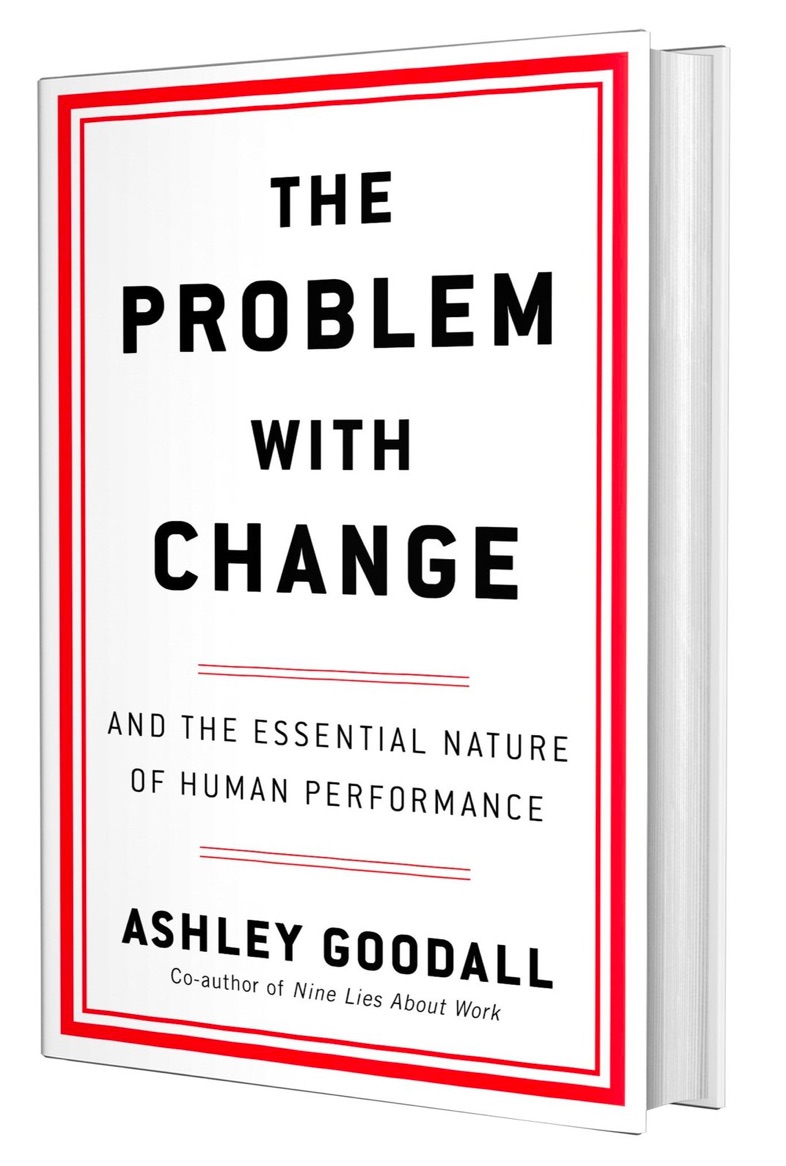
    I think the thing I enjoyed most about Ashley Goodall’s The Problem with Change is the author’s cynicism about corporate America. In places it’s a little bit of a diatribe, but what can I say, I love it. I love it all the more that it comes from someone who successfully navigated the Byzantine ladder of advancement that is Corporate America – this is someone who succeeded in the system enough to add extra weight to the deconstruction of why the system itself is nonsense.

    The core thesis of the book is that there is too much change for change’s sake, and a lack of evidence that backs that up as driving effectiveness. In fact the opposite. Human flourishing and human productivity are entwined, and the things that make the best conditions for that are themselves quite human.

    • Make space – don’t control people, create the conditions for effectiveness.
    • Forge undeniable competence – understand strengths and unique value, and how it delivers value.
    • Share secrets – belonging is not driven by corporate values statements but by information that is specific and more meaningful.
    • Be predictable – leaders who are consistently defined by the people multiple levels drive more impact.
    • Speak real words – remove corporate jargon and buzz words and be clear about what is.
    • Honor ritual – ritual is a core way to create belonging, and consistently is the most important aspect.
    • Focus most on teams – teams are the units that drive results (and also the strength of the team is one of the strongest predictor of engagement scores).
    • Radicalize HR – HR needs to align with employee flourishing rather than business metrics.
    • Pave the way – look at making the paths people do take easier, rather than defining new paths.

    Some things in the list are easier to implement than others; it’s not the most directly actionable book. But it gave me many things to think about, and was worth the time to read.