Author: Cate

  • Announcing: The Engineering Manager Survival Guide

    Announcing: The Engineering Manager Survival Guide

    Image credit: Joe Groove

    One of the biggest issues I saw running remote teams for the past decade+ was the lack of good engineering manager training. With a global team it’s harder (and more expensive) to get everyone in the same place at one time. With a small team, the cost of doing anything custom is infeasible.

    To help new managers I was responsible for be successful, I had a set of options. We’d attend LeadDev as a group – but that happens once or twice a year and not everyone could make it. Many people would take Co-Active Fundamentals training, which is great – but general. I had a roster of coaches I recommended for 1:1, but that budget wasn’t always available.

    In the post-ZIRP era, being an engineering manager is harder than ever. When headcount was a vanity metric, managers had value simply as an abstraction layer over a number of people. When things were growing fast, there were opportunities to move up just because someone needed to fill the position.

    That era is over.

    Now it feels more important than ever to have a clear point of view on how an engineering manager actually creates impact – and how to support yourself while doing it.

    What is the EM Survival Guide?

    Jean Hsu and I designed The Engineering Manager Survival Guide for managers navigating this new reality. Whether you’re a new manager trying to ramp up, or a more experienced one who knows you’d benefit from devoting some time to consider your approach, this course gives you the frameworks and tools to be effective without burning out.

    The course runs over 8 weeks with 4 modules. Each module includes:

    • Written content and frameworks
    • Audio conversations between Jean and me, with personal stories and reflections
    • Exercises to apply what you’ve learned to your specific situation
    • Personal feedback from us on your submissions

    It’s designed to fit into a busy schedule while still creating space for real reflection and change. Around 60-90 minutes a week, in pieces, as you can fit them in.

    Why now?

    The expectations for engineering managers have fundamentally shifted. The role used to be about coordination and headcount. Now it’s about tangible impact, strategy, and doing more with less.

    If you’re feeling squashed between what your team wants from you and what your boss expects, if you’re wondering how to be effective without burning out, if you want to feel intentional instead of reactive – this course is for you.

    It can be hard to make time to step back and learn. We get it, and we’ve designed this course to fit your schedule. Plan to spend a minimum of 60-90 minutes a week, and it’s completely asynchronous, so you can listen to our audio conversations on a walk or in the car, read the module content in between meetings, and do each module’s targeted exercises whenever is best for you.


    Enrollment is open now.

    Early bird pricing: $799 USD (available until February 28th)

    Regular pricing: $899 USD

    The course starts March 13th, 2026. Enrollment closes March 10th or when we are at capacity.

    👉 Learn more

  • Performance Reviews Are the Scorecard of Capitalism (And Why That Should Free You)

    Performance Reviews Are the Scorecard of Capitalism (And Why That Should Free You)

    Credit: Daniel Dalea / Unsplash

    Every review season is an emotional rollercoaster. Anxiety. Self assessments. Anticipation. Disappointment. As an IC, I felt like how much it impacted me was a personal failure. As a manager, I learned that review season trauma is pervasive.

    The worst thing about all of it, I think, is how much people take it out on each other rather than seeing the system for what it is. The games. The performative work. People stepping on each other to get ahead. We’ve all known people who do this. We’ve all seen them get away with it. But they leave a trail of resentment and people who would be happy to see them fail behind them. Do you want to be that person? Before you buy into that as a way to get ahead, it’s worth asking yourself what timeframe do you want to live on? It’s easier to build something that lasts when people trust and want to work with you.

    What performance reviews actually are

    Performance reviews are the scorecard of capitalism. They measure your value to that specific organization at that specific moment. No more, no less.

    It’s not a measure of your worth as a person. Not a measure of your talent or your potential. Just: what are you worth to this organization right now, given the current market conditions, the current priorities, and the current budget.

    The goalposts move with market forces. It’s not (just) that the system is unfair – although it can be. It’s that capitalism changes the rules. When talent was a scarce resource, companies promoted in order to retain. Now companies are promoting fewer people not because they suddenly care more about excellence, but because the market shifted, and they can. In the era of mass layoffs, attrition is less likely to be seen as a problem; it’s an exit the company didn’t have to pay severance on.

    Getting angry at your manager doesn’t change this. Often they’re the messenger, not the system. Most of them are doing the best they can within constraints they didn’t set and can’t change.

    The conflation problem

    Performance reviews exist for a reason, and it’s not a bad thing that people get some minimum amount of feedback at least once a year. The problem is that when growth feedback and position feedback come bundled together, it gets emotionally charged.

    Growth feedback is useful. “Here’s what you could get better at” is information you can actually do something with. Position feedback is “you’re not deemed as valuable to the org as you would like to be” (or think you should be). That second part carries all the emotional weight. When both kinds of feedback arrive at the same time, people hear the second part louder.

    If review season is the only time you hear feedback about your work, that’s a problem. That’s a process-driven minimum, not good management. (Better ongoing is a whole other conversation I won’t get into here.)

    The real question: Are you actually growing?

    Forget position for a moment. Forget the level, the title, the rating. Ask yourself:

    • What have you done this year you couldn’t do before?
    • What have you learned?
    • What feedback are you getting and are you able to action it?
    • What do people come to you for advice on?
    • What problems do you see coming that others don’t yet?

    If there are deficits, you need to shore them up. If there are bright spots, consider how you can build on them or apply them more broadly.

    The core mistake people make when looking for increased responsibility is thinking more about where they “should” be rather than what is actually being asked of them and what the organization really needs. They ask for the diff to get to where they want rather than focusing on impact. Approach these conversations from a place of genuine curiosity about growth and impact, and you’ll learn a lot more.

    Outside the drama of review season, these can be great conversations to have with your manager. Just about growth. Not about position. Once your manager starts “managing your expectations” you’re getting a whole lot less information that could be useful to you.

    The market goes up and down, and is well outside of your control. Your own capability and growth – that is within your control, and expending your energy on that has a bigger payoff longer term.

    What you can actually control (and what to do about it)

    You can control your work and how you approach it. That’s it. That’s what’s in your control.

    If you feel undervalued in your current job, maybe it makes sense to check the market. Actually check it. Interview. Get an offer. Or choose not to pursue it because you realize it’s not worth the effort. Either way, you get data.

    Sometimes the market validates you; it turns out you could get promoted or paid more elsewhere. Sometimes it shows you the state of things broadly is rough. Both are useful to know.

    Own your growth

    Caring too much about position in this market will make you miserable.

    Companies are less interested than ever in fostering career development. So you need to fill that gap – and more. This means:

    • Building your own support system beyond your manager
    • Developing a clearer point of view on what you need to learn
    • Going toward it

    The performance review is the scorecard of capitalism. When you can separate your strengths and career goals from that scorecard, you can step into your own growth—whether that aligns with what the organization wants, or it does not. Make this market the push to be the DRI of your own career. No one else is going to do it for you.


    Want help figuring out what you actually want from your career and how to move toward it? Check out DRI Your Career, an 8-week course starting in April. Jean Hsu and I designed it for mid to senior-level engineers who are ready to take ownership of their growth with clarity, confidence, and intention.

  • Scaling Teams: People, Projects, and Process

    Scaling Teams: People, Projects, and Process

    Credit: Spencer Watson / Unsplash

    Scaling teams is one of my favourite things to do – probably because it’s where people meet systems, with ever-changing questions about what makes teams effective and how to balance now versus next.

    Sometimes this gets presented in a pure numbers way, but I like to come at it from a systems perspective: Engineering teams have three primary components: people, projects, and process.

    Strong teams of people who are individually doing well, deliver business value, predictably and efficiently.

    I don’t include process in that statement deliberately – good teams are not defined by their processes, good teams use and evolve process effectively in order to meet the organizational need. My hot take: engineers often love process, but when they love it, they call it culture.

    This post builds on a previous one about what makes a good team. This is about how to scale one. Scaling teams requires attention to all three of these components, identifying and addressing bottlenecks as (or ideally before) they emerge.

    People

    Having enough people (hiring) – As you scale, your hiring process needs to be effective – can it be improved? Should it be improved?

    The process needs to be efficient without sacrificing quality. It’s not enough to just hire people – you also need to make them effective. Good onboarding is predictable.

    Note that whether the hiring process is working well isn’t impacted only by the stage and needs of the team, but also by the market. The market has been a wild ride the past few years, and AI has presented additional special challenges. It’s worth thinking regularly about whether your hiring process is a good predictor of success, and if you have concerns about that, what you can do about them.

    Ensuring people are properly supported (managers/leadership) – in an ideal world, everyone gets a good manager. Sometimes “good enough” has to do.

    As teams scale, you need to grow your management layer thoughtfully. What blend of hiring and growing internally makes most sense for you? Both of these take time and have their own associated risks.

    Feedback loops/culture – feedback loops need to be solid. Under-performers are addressed (up or out), high performers get developed. As teams grow, individuals can be lost sight of, and when there’s pressure often high performers get taken for granted rather than developed further.

    If you want to build teams where high performers can thrive, you need to make sure that good work gets rewarded and poor work gets addressed. Feedback loops are foundational for this (more on that in this post on 1:1 structure).

    Team alignment and values – larger teams need more deliberate alignment. What are the shared values and principles that guide how the team operates?

    A team is formed based on what they share. Is that some shared ownership (like a codebase), or a mission (like a flow or feature). What metrics is the team responsible for? As teams scale, the scope of what they can cover adjusts, so you need to come back to the shared purpose and figure out how that needs to evolve, too.

    Projects

    What is being worked on and why – clarity of purpose becomes even more critical as teams grow. Everyone should understand the portfolio of work and how it connects to business value.

    With more people, what used to be obvious starts to be less obvious over time. You need to get more explicit about metrics, mission, and goals, and more structured about prioritization and decision-making.

    Work allocation becomes critical. For small teams, there’s often a ‘goto person’ who gets pinged for everything, but the more people you have, the more important it is to create transparency, equity, and accountability in work allocation.

    Effective project management – it’s not enough to pick the right work, you also need to deliver that work, and to continue to deliver consistently over time.

    This means thinking about the project life cycle:

    • Set projects up for success – clear goals, well defined scope, and the right people involved from the start.
    • Keep projects on track – larger teams need better visibility into project health. Set up warning signs and mechanisms for course correction before problems compound. As teams scale, decide what you’ll actively monitor versus what gets surfaced to you through people or process.
    • End projects well – close projects cleanly, capturing learnings, and celebrating success often gets lost in the push to start the next thing.

    Process

    Process should be driven in support of the above. Good process is like an oil that keeps a team moving, bad process is like glue that favours performance over progress.

    How do we communicate – meeting structures, standups, documentation practices all need to evolve. What worked for 5 people won’t work for 50.

    How do we work together – collaboration practices like PR review, design review, and pairing need to scale without becoming bottlenecks.

    How do we escalate effectively – as teams grow, escalation paths get longer and more complex. Clear escalation mechanisms prevent small problems from becoming crises.

    How do we build a mindset of continuous improvement – all process has a purpose. Easy things are easy. Hard things are possible. Processes evolve as problems change.

    Identifying Bottlenecks

    The key to scaling is identifying where the bottlenecks are and addressing them before they constrain growth. Is it hiring? Is it unclear prioritization? Is it communication overhead? Is it feedback loops breaking down?

    Good scaling isn’t about implementing every process or even doing every process perfectly. It’s about thoughtfully addressing the specific constraints your team is facing, evolving your approach as the team and organization changes, and always keeping the focus on people delivering value effectively.

  • Spring Cleaning in December

    Spring Cleaning in December

    Credit @stepanvrany / Unsplash

    I used to have a habit of refreshing my website at the end of each year, but I missed a couple and then it became in my head a bigger project that was a discouraging combination of feeling both pointless and overwhelming.

    But on a productive tear (with Claude) during the winter break, I finally added it to my Trello board of projects, and sat down to do it. In the end, it was just a bit stale and messy, and wasn’t that big a job.

    Site wise I:

    • Updated the theme (from Twenty Twenty to Twenty Twenty Three) – a similar clean and modern theme built on the block editor, just a bit newer. The big difference is the three column layout on the home page.
    • Added the Auto Featured Images plugin to make everything look right.
    • Removed a bunch of obsolete plugins, mostly ones that were deactivated or were needed before the block based editor.
    • Installed WPConsent to make the website EU compliant. I think it’s just comments as I don’t use Google analytics or anything. But someone left a comment and I figured I may as well action it.

    Content wise I:

    • Revamped the navigation
    • Created a resources page to collect things like my newsletter, book, and the EM slack
    • Updated social links
    • Put in some subtle (I hope) book promotion

    In the current era of social media, it feels more important than ever to me to have a space on the web that I control and can rely on. It’s not cheap though, it probably costs in the region of ~1K USD annually. Which includes:

    • Hosting on Pressable (expensive but very performant, especially for a large site)
    • Buttondown subscription for two newsletters
    • Additional hosting on Dreamhost for other projects that require less bandwidth
    • So many domains

    I’ve been writing consistently for what feels like forever. 1K/year to maintain that feels really worthwhile to me, but I understand why it would not seem like a great investment if you were thinking about starting a site today.

    The reason why my site got stale is because I always prioritise regular content over the potential rabbit hole of making the site better. I still recommend that as an approach – before setting anything up, write 4-6 posts you’re actually willing to hit publish on. There are free alternatives to everything I use (except the domains), but do at least make sure you can export and switch if you decide to move later.

    Anyway, all in all I’m so glad I got everything updated. It feels like a nicer place to work from! And as I lean into experimenting with AI as a productivity tool, it is a great example of how it can lower the activation energy and make what could be a tedious chore move a bit faster.

  • Q4 2025

    Q4 2025

    I like the idea of doing a quarterly review of my annual theme, as a way to reset, re-evaluate, figure out what I want to change and celebrate what I did actually accomplish.

    I set my intention for the year as “health”, and in Q4 I returned to myself as a creative being. I read more. I wrote more. I exercised. I used the end of year break to really catch up on my digital life and set a foundation for next year, and spent several hours with the Year Compass to orient myself.

    A focus in Q4 every year is Hamper Season, and this year was no exception. We built beautiful piles in metallic wrapping and ribbon.

    An important part of the word “health” is the core habits that keep me grounded. In Q4 I:

    • Caught up from Q3 to meet my overall goal of 6K peloton minutes! This is a full 1K more than last year; the consistency really paid off. The Whoop also tells me my VO2 has improved, which is gratifying.
    • Read 19 novels including Fang Fiction (my first ever vampire novel and I loved it), Promise me Sunshine (a heartrending novel about grief), Last Call at the Savoy (interesting blend of two stories, one present and one from the past) and The Last Secret of Lily Adams (a former actress leaves a mystery after her death… I devoured it in one day).
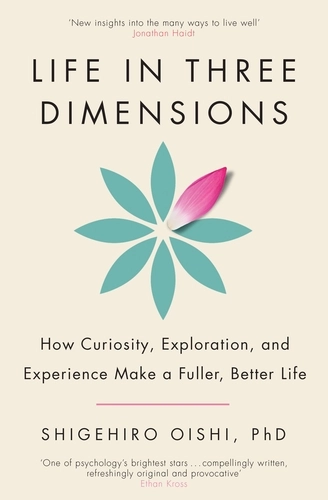
    • Read three non-fiction books – The Fax Club Experiment, Life in Three Dimensions, and one on women’s health.
    • Continued to chip away at my enormous Monet Water Lilies x-stitch (now on sheet 4…)
    • Wrote five blog posts.
    • Sent 4 WTHIC letters.

    In Q4 we again mainly stayed in Ireland, and this year managed to carve out the entirety of December for hibernation season. However we did have some adventures:

    • We spent a weekend in Barcelona with friends visiting from Australia.
    • We attended our first Irish Wedding in Tipperary.
    • We spent a week in Rotterdam, revisiting our favourite places from when we lived there, and trying some new things.
    • We met my parents in Dublin for a weekend.
    • We went to Dun Laoghaire to have Hamper Season and a show with some friends.

    When I’m stressed I tend to stay with things that are familiar, so one of the things I’m paying attention to is how many new experiences I have, aiming for at least one each month. This quarter was more cultural!

    Professionally outside of the day job I:

    • Launched DRI Your Career with my friend Jean. A long time coming and we’re so excited.
    • Took some courses on book promotion from the Book Publicity School.
    • Set up and started some drafts for a new newsletter – What’s My Job Again?
    • Did a thorough update of my blog – updating the theme, adding in some (subtle) book promotion, and updating the structure.
    • Did a livestream for RedHat’s GitOps Guide to the Galaxy.
    • Finished reviewing my friend Cat’s upcoming book.
    • I got the Leadership Circle Profile from my coach and am now working through what I can learn from it.
    • Did some vibe coding for a bonkers little project I plan to launch in the new year.

    Looking forward to 2026, I want to keep leaning into the creativity whilst being grounded in the habits that I know work for me. I have many more ideas and it’s been fun to get some energy back and fuel into my own stuff after the post-book fried vibe and a bunch of big things at work.

    My word for 2026 is freedom. I’m excited. Let’s go.

  • From Chaotic Learning to Intentional Growth

    From Chaotic Learning to Intentional Growth

    Credit: Brett Jordan / Pexels

    Before the pandemic I was always on the move, and I would have told you always learning. I found myself at various events, talked to many different people, was always reading something, and my job changed frequently, even within the organisation I was in. I also wrote a lot, which helped me consolidate and clarify my thinking.

    Then, the pandemic. Everything came to a halt and that included my own learning… I no longer had the breadth of experiences that made me feel like I was learning constantly, and some days I barely felt I could write a text message, let alone anything else.

    At some point, I realised that I was stagnating – that I was executing a familiar playbook, and couldn’t list anything that I had learned recently – and tired of it. That I wanted to feel like I was learning and growing again, but that I would need to find a different way. The world had changed. My job had changed. I had changed.

    It took some time and experimentation, but eventually I shifted to a more deliberate, outcome driven approach. This looked like:

    • Signing up and paying for specific courses (like CoActive coach and leadership trainings), and blocking out the time to learn.
    • Shifting away from habits and to more outcome driven personal projects (this was the difference between writing a book and blogging every week).
    • Rethinking my organisational systems to be more goal oriented (my Trello board is now oriented around outcomes rather than habits).

    Basically I stopped managing my learning the way I manage my fitness (a blend of habits and whims, which mostly works, but probably only because I genuinely enjoy working out) and started managing it how I would manage a large project. Identifying high level goals, defining supporting strategy, and then using that to confirm or deny. Less visible activity, but more outcomes. Less validation, more meaning.

    I think prioritising professional dev is often hard because it’s IC work on top of your existing job, that you have to fit into your schedule. It’s also often a shift in mindset – from meetings to doing, or from coding to writing… The most important learning is important but not urgent, which means it can always be put off until tomorrow when you will have more energy – even if you know that’s not really true.

    It’s much easier to just do things you’re committed to (aka conference talk driven development) and/or what you want and argue that something is better than nothing. Something probably is better than nothing, but it doesn’t mean your effort-impact actually makes sense. The less effort you have time or capacity to put in, the more the impact matters.

    Essentially this change made me both the manager and the IC. Doesn’t everyone joke they are their own worst manager and difficult to manage IC? I am no different. Manager-Cate would set goals for Cate-the-IC that seemed like a cruel joke at the end of a long day or week. The only thing that I’ve found that helps (so far, suggestions welcome), is to split the activities:

    • Carve out time to think deeply about what my next proximate objectives are (strategy). The end of year quiet and the year compass is a helpful exercise for this.
    • With my manager hat on break down and prioritise the tasks.
    • With my IC hat on, see what I can chip away at.

    Do I feel like I have my professional dev on lock? No. There were things I wanted to do in 2025 that I didn’t figure out how to fit in. But at the same time, I can see that I accomplished more with this approach than I would have done without it. Such as:

    • I read 12 non-fiction books this year.
    • My Irish citizenship application is in (will give me freedom to work in the EU again).
    • Jean and I shipped DRI your career.

  • Book: Life in Three Dimensions

    Book: Life in Three Dimensions

    I learned about the book Life in Three Dimensions on the Happiness Lab podcast. I was fascinated by the idea of psychological richness. A psychologically rich life is one with interesting, varied and perspective changing experiences.

    Oishi argues this is the missing dimension of what it means to live a good life. Distinct from happiness (pleasure and contentment) and meaning (purpose and contribution).

    This struck a chord with me. While my life in many ways is happier since 2020 (aka since I stopped travelling constantly), I’ve been feeling the absence of something that I might have characterized as novelty. Psychological richness is a better term, and it’s clearer to me now what I want more of, and that while airplanes help, they aren’t a hard requirement.

    Throughout the book Oishi contrasts his life as a migrant and a professor, with his father’s life of stability and contentment. His father’s life becomes something of the definition of happiness and contentment, whilst Oishi talks about his own desire for more, even when that makes things hard. The three dimensions are not mutually exclusive, but I think psychological richness and happiness might be the hardest pair to combine.

    All in all, I found this a really interesting and helpful read. Recommend.

  • Resisting Capitalism’s Shoulds

    Resisting Capitalism’s Shoulds

    A confused raccoon looking at a selection of headwear
    Image credit: Joe Groove

    I’ve been feeling pretty mad about capitalism lately.

    One of the core things I’ve been angry about is realizing that capitalism is a huge source of “shoulds” and fake productivity. The goal of capitalism is to keep us running, keep us consuming, and to distract us from what is actually meaningful to us as human beings.

    The goal of capitalism is maximal utilisation, but it’s a pretty horrible thing for a human being to be maximally utilised. And, if you allow your day job to maximally utilize you (or close), that leaves very little left for you to think about how that job fits into the broader picture of your life – or career.

    In this era of tech, the premise of job stability has been broken. We’ve all seen the layoffs. The shift to more hostile employment conditions, whether it’s RTO (return to office) or longer working hours. The other thing that has been broken is the idea that if you don’t like your current job, you can just go and get a better one. The market is tough

    I’m mad at capitalism, but like most of us, I still need to live under capitalism.


    For the past year, my friend Jean and I have been talking regularly about what this era of tech means. How perhaps the things that have always been true (your job won’t love you back) are truer than ever, and the need for tech workers to develop a better set of coping skills than “find a new job”.

    We wanted to find a way to make some of the benefits of 1:1 coaching accessible to a broader audience, in a format that is more accessible – something that was needed for our collaboration, given that Jean lives on the West Coast, and I live in Ireland.

    The course we came up with is the course we wish we’d had, in a format that we hope makes it easier to fit into your life – wherever that is, and however that looks like.

    Each module lasts two weeks. You get a document outlining the concepts, and a podcast we recorded together about how this has shown up in our own lives and careers. Then there are some exercises to work through, that you can submit and get feedback on from us.

    It’s async, self directed, and carefully and deliberately cut down to try and help you use the time you have well. If you can carve out 45 minutes a week for 8 weeks, we believe you’ll come out of it feeling more grounded in what you want, what your values are, how you want your career to fit into your life – ready to push back and be more deliberate when it comes to what capitalism expects from you. 

    We’d love you to join us. More at: driyourcareer.com

  • Announcing: DRI Your Career

    Announcing: DRI Your Career

    Image credit: Joe Groove

    When I wrote part 1 of The Engineering Leader, about what it means to be the DRI (Directly Responsible Individual) of your career, it was a product of some hard won lessons of my own, conversations with friends, and an arc I saw repeatedly with my 1:1 coaching clients.

    Talking with my long time friend Jean about it all, it was apparent to us there needed to be something in the middle ground. More than a book that you might read, but struggle to apply, but something less than the intensity of a 1:1 coaching relationship, which just isn’t available to everyone. Especially in this market. And yet in this market, I think we need to own our choices and create agency in our own career more than ever.

    Over the past year, through sync conversations, voice notes, and text messages and documents shared back and forth, Jean and I have been putting together the course we wish we had had earlier in our careers. Something self paced, and suitable for introverts, but also something that we hope will provoke deeper reflection and more deliberate choices.

    We are so excited that we’re finally ready to share it with you all.


    What is DRI Your Career?

    DRI Your Career is an 8-week course starting on January 15th, 2026  to help you take ownership of your career with clarity, confidence, and intention.

    Through this course, you will learn tools, mindsets, and frameworks to become the Directly Responsible Individual of your own growth. 

    The course is designed for mid to senior-level engineers (or engineering managers) who aren’t finding the default career ladder all that motivating and are ready to figure out what they actually want — and how to move toward it.


    Why now?

    The tech industry is being flipped upside down and inside out. The old career playbook doesn’t work anymore. But that’s actually good news — because it means you get to write a new one.

    One that’s actually yours and is based on what you want, not what creates a consistent pipeline of workers for a growing tech industry.

    If you’ve been stuck between “shoulds” and wants, if you’re wondering what’s next but don’t have a good answer, if you want to feel intentional instead of reactive — this course is for you.

    It can be hard to make time to be intentional about your career, and if you’re like us, you might be thinking, wow I really need this, I just wish I had the time.

    We get it, and we’ve talked through so many possible versions of this course to land on this format that feels genuinely like something we’d want to take.

    We designed the course to fit in your schedule — plan to spend a minimum of 45 minutes a week (more if you’d like!). It’s completely asynchronous, so you can listen to our audio conversations on a walk or in the car, read the module content in between meetings, and do each module’s targeted exercises whenever is best for you.


    Enrollment is open now.

    Early bird pricing: $349 USD (available until December 31st)

    Regular pricing: $399 USD

    This will be the last time the course is available at this price point.

    The course starts January 15. Enrollment closes January 10th or when we are at capacity.

    👉 Learn more