Author: Cate

  • Presentation Slides for "Conversation 2.0: Twitter"

    I’ve created my slides for my presentation (abstract) following a Presentation Zen (Amazon) approach. So there are basically no words on any of my slides. I’m going to lay them out one by one, with narration. Let me know what you think!

    Title Slide
    Title Slide

    I’ve gone for a blank template. I wonder if this is too plain and could use some background color? Let me know what you think. The color of the lettering matches the color scheme for my soon-to-be-launched website.

    This is where I introduce myself and what I’m talking about. I don’t really like this bit of presenting, so I’ll keep it brief.
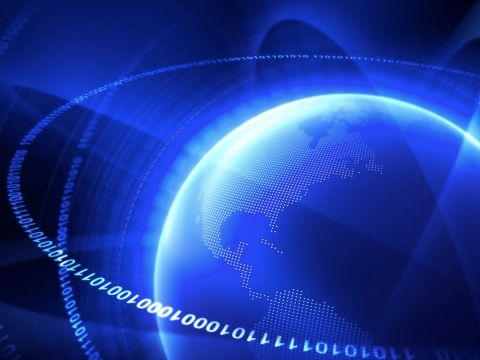
    The World Wide Web
    The World Wide Web

    Image from iStockPhoto

    I’m going to start off by talking about the “World Wide Web” and trying to provoke a bit of thought about it. It’s relatively recent, and yet it’s game changing. How many of us could live without it? I certainly couldn’t. Whilst the internet has been around since the 1960’s, the web as we know it (with hyper-linked web pages) has only been around since 1989. But within 20 years we’ve got to the point where the web is basically infrastructure…
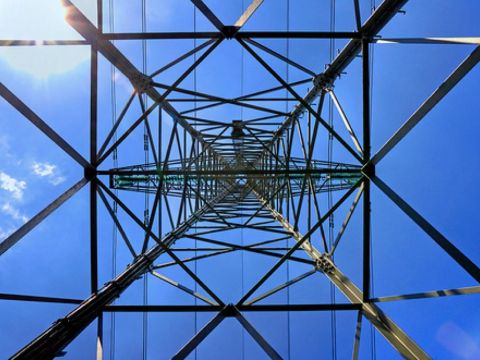
    Electricity Infrastructure
    Electricity Infrastructure

    Image from Flikr User BK59

    … like electricity. For more on how I think the internet is just infrastructure like electricity, running water, or roads, see this post.

    Clay Shirky - Why I Ignore 5 Year Plans
    Clay Shirky – Why I Ignore 5 Year Plans

    Clay Shirky – giving us some needed perspective. I think when we reflect on what’s changed, and how recent it is, we realize that this is really just the start of it. I remember life-before-Facebook but I can’t imagine living without it, even though I’m not always sure that the level connectivity it gives us is a good thing (for more on my mixed feelings about Facebook, read this post).

    Near-Universal Authorship
    Near-Universal Authorship

    A couple of hundred years ago, all the information your average person had came from the Bible, if they could even read. Now, not only are rates of literacy very high but the internet gives everyone the ability to be a publisher of content too. There’s a fascinating article on this here.

    How Web 2.0 is Changing the Way we Comminicate
    How Web 2.0 is Changing the Way we Comminicate

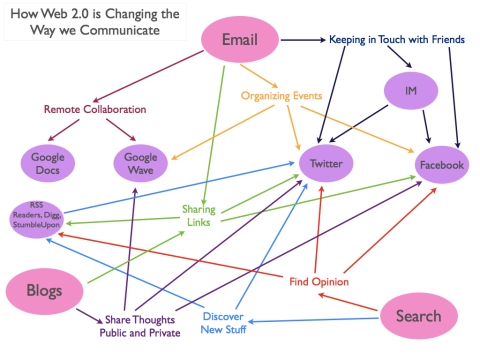
    I put this graphic up in this post. What I want to show here is that there’s a shift to newer technologies and that it’s a process. This diagram captures what I’m thinking and finding now, but no doubt in a year it will be different. Also important, is how many arrows are going into Twitter – it’s simplicity and flexibility mean that it’s a great way to do a whole variety of things. There’s definitely stuff that’s missing from the diagram – the thing is to balance what’s important with trying to include everything and making it impossible to follow.

    Serendipitous Connections
    Serendipitous Connections

    Image from iStockPhoto

    Something that isn’t represented in the previous diagram though, is the possibility of serendipitous connections. By lowering the bar to communication, and through ambient awareness we can have more “weak-tie” relationships. Think about how many people you’ve lost touch with but found (or had find you) on Facebook, or the number of people you “follow” on Twitter but have never met.
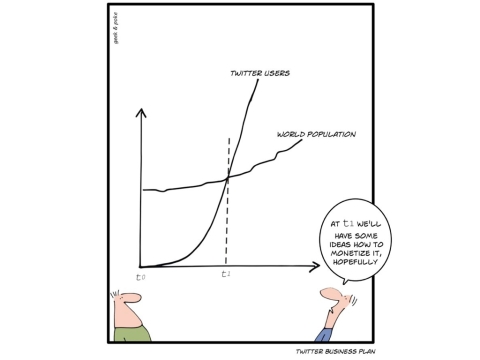
    Hang on - Isn't Twitter Completely Pointless?
    Hang on – Isn't Twitter Completely Pointless?

    Image from http://geekandpoke.typepad.com/geekandpoke/2009/04/twitter-business-plan.html

    I don’t think Twitter is a Pointless Waste of Time, but a lot of people do. If you do think Twitter’s pointless, why do you? Have you tried it? Over the next couple of slides I’m going to talk a bit about the impact that Twitter has had on events and the reasons why I think it’s useful.
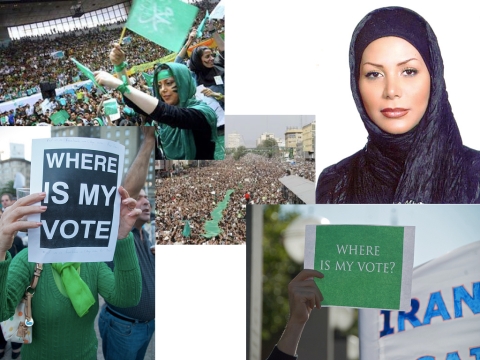
    Iranian Election, 2009
    Iranian Election, 2009

    Images from http://spinster.blogs.com/rak/2009/06/green.html, http://whatothersmissed.blogspot.com/2009/06/round-up.html, http://www.flickr.com/photos/ari/3644667355/, http://www.flickr.com/photos/ari/3625401150/

    In the aftermath of the Iranian election, the US government intervened to change Twitter’s maintenance schedule so that it wouldn’t be down during the day in Iran. Twitter allowed Iranians to communicate with the outside world and express their distress at the rigged election. The governent’s reaction to this did not help their case.

    I was working in Shanghai during the summer, and when the riots started they shut down Facebook and Twitter (at the time, I wrote this post). When I was there in 2007, you couldn’t access Wikipedia – but this time I could. This makes me think that the government is no longer afraid of information – it’s afraid of the conversation.

    What's the Connection Between the British Parliament and an Irish Pop Star?
    What's the Connection Between the British Parliament and an Irish Pop Star?

    Images from http://commons.wikimedia.org/wiki/File:British_Houses_of_Parliament.jpg, http://www.flickr.com/photos/24960504@N06/3581090321

    As a Brit, I tend to follow the news over there and the other week two things happened. The first one that a law firm got an injunction to prevent a newspaper reporting from a question to be asked in parliament regarding some toxic waste and a firm called Trafigura. The newspaper (the Guardian – read their story here) could only report that they couldn’t report anything about the MP asking the question or the question itself. However some smart people soon worked out what the question was and soon #trafigura was trending – causing the very awareness that they had sought to prevent.

    The seond thing that happened was that this pop star died, of a heart condition. However he was gay, and with his husband at the time so it was enough to get some vile columnist in the Daily Mail to write a homophobic diatribe about him. Her name was soon trending as people expressed outrage (interestingly the Wikipedia article on Jan Moir consists of little more than the story of this).

    I think what these two events show, is that Twitter provides a forum for people to express their frustration with all kinds of things – whether it’s concern over restrictions of reporting on parliament or just celebrity gossip. It also captures what people are getting angry, or excited about. Trending topics can answer what’s hot right now – Apple trends whenever it has an announcement, Windows 7 and even Ubuntu 9 were trending on their release.
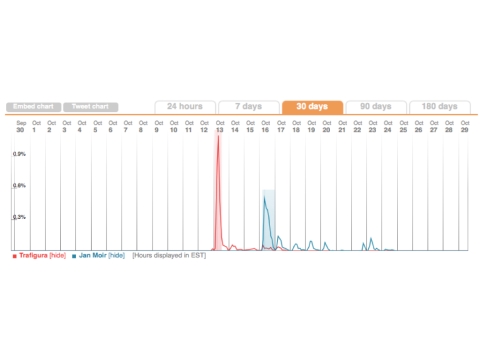
    Trend Graph for #trafigura and "Jan Moir"
    Trend Graph for #trafigura and "Jan Moir"

    Trendistic is a service that allows us to graph how often words are occurring in Tweets. We can see that #trafigura rapidly became popular and disappeared again quickly once the injunction had been lifted. “Jan Moir” has a wider curve, and there was another flurry of mentions when she released an apology a week later.

    Information Gathering
    Information Gathering

    Image from iStockPhoto

    Information gathering is the best use I get out of Twitter, and I feel it’s something that it would be hard to replicate anywhere else with as little effort. Follow leaders in your field, or just people who work in a similar area to you who tweet interesting stuff they found, or people who inspire you. I get so much information this way, and it doesn’t take very long to go through it. I’m literally crowd-sourcing my news! And if someone I’m following tweets too much or I lose interest I can un-follow them. Lists are going to make this even easier.

    Ambient Awareness / Ambient Intimacy
    Ambient Awareness / Ambient Intimacy

    Image from iStockPhoto

    Ambient Awareness is like the Facebook newsfeed. It’s passively letting information about your friends lives come to you. But on Twitter, people often update more often – so if it’s someone you’re really fond of it can be better than Facebook for staying in touch with their lives. Two of my good friends live in London and I love the little bits of their lives that I see on Twitter and we definitely use ambient awareness to stay in touch. I was having a lousy day last week and I tweeted about it and one of my friends sent me a message just saying “*hug*”. When another friends released his work project (Google Sync) and it hit the trending topics, it was really nice to share his excitement about it in real time.

    Great article in the NY Times on Ambient Intimacy.

    Customer Relationship Management
    Customer Relationship Management

    Image from iStockPhoto

    Twitter is amazing for overhearing what your customers are saying about your business. There was actually a paper published earlier this year analyzing brand sentiment on Twitter. Businesses (and non-profits, like @kiva) that get it are on Twitter seeing what’s being said about them and taking part in the conversation.

    I wrote more about customer relationship management in this post.

    Conversations on Twitter
    Conversations on Twitter

    Image from iStockPhoto

    I think conversations are a great way of measuring engagement on Twitter, and this is what I’m working on at the moment. If your a brand, how engaged are you with your community? If you’re an individual, how engaged are you with the people you’re following? Are you passively absorbing content or are you sharing, adding value? If you’re a spammer, no-one’s talking to you!

    Who's Following You?
    Who's Following You?

    Image from iStockPhoto

    It’s possible to have a large number of followers by either paying for them, or by following people in the hopes they’ll follow you back (and unfollowing those that don’t) until eventually you have several thousand people “following” you.

    Spammers
    Spammers

    Image from http://geekandpoke.typepad.com/geekandpoke/2009/02/spam-followers.html

    But are they listening?  Or are they just spammers? If they were listening you’d expect at least some of them to be talking to you.
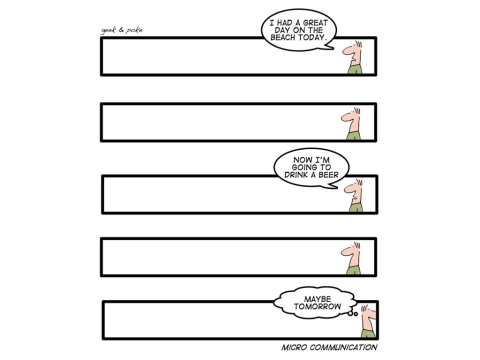
    Is Anyone There?
    Is Anyone There?

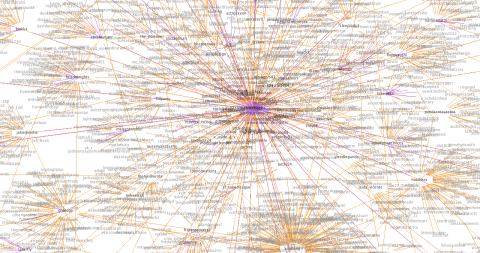
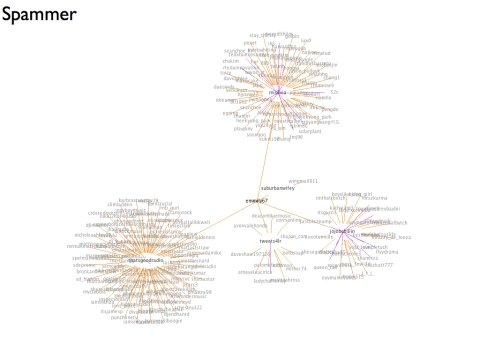
    So I decided that follower/following counts were basically meaningless, and wrote a program that will graph your conversation network (more on that in this post).

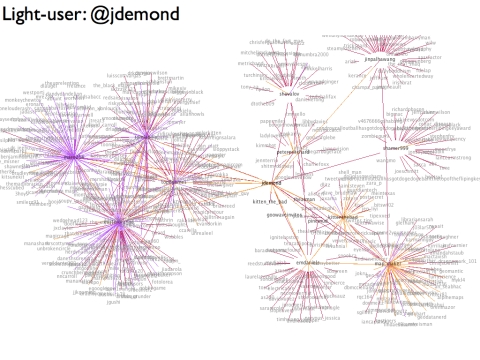
    And it’s fascinating, because someone’s graph really says a lot about the kind of user they are. Are they a power-user? A regular user? A spammer? A light user?

    My Conversation Network
    My Conversation Network
    Spammer Conversation Network
    Spammer Conversation Network
    Power User Conversation Network
    Power User Conversation Network
    Moderate User Conversation Network
    Moderate User Conversation Network
    Light User Conversation Network
    Light User Conversation Network

    It’s nice how you can see the different networks that he’s a part of here. I hope to use a clique finding approach to draw out this kind of information for bigger and busier networks.
    Is This Pretentious?
    Is This Pretentious?
  • Email

    Since I started using Remember the Milk my task list is now separate from my email – so email that I mark as “ToDo” items don’t show up in it unless I put them there. I’ve opted not to, and instead made a recurring task every other day to “clear email”.

    As a result of this, I’ve discovered two things: 1. not having it on my list means I do other things instead, which is good – clearing my email in one go should be more efficient. 2. I dread doing this task.

    Perhaps the thing is, that the people I want to talk to I am talking to – on Twitter, or Facebook, or Wave. So the emails I get are mostly tedious things that I need to attend to for someone else’s benefit. Except that one, and er, that one. And yours if you’re waiting a response from me.

    I wonder if with real-time or near real-time communication I’m just getting to the point when something so asynchronous seems weird. I mean, if someone doesn’t respond to a Twitter message within 2 days, that’s it right? You don’t expect a response.

    What’s bothering me? Too many services? To much mail, period?

    I remember when getting a letter in the post from a friend was exciting. But now only getting a package is exciting, because letters consist of bills and things trying to get you to buy insurance or whatever. I wonder if I’m starting to see e-mail in a similar way. E-mails mostly consist of people asking me to do stuff, and spam.

    Hmm.

  • How Web 2.0 is Changing the Way we Communicate

    How Web 2.0 is Changing the Way we Communicate


    How Web 2.0 is Changing the Way we Communicate

    This is what I’ve been finding in my research – what do you think? Anything missing?

  • Overwhelmed

    The thing about focusing on effectiveness, is that everything that I put on “the List” is something I think is important. And then if I get a little behind I end up in a situation where my todo list for today has a time estimate of over 11 hours. And then I panic.

    Today I managed to convince myself that I’d forgotten my wallet. I spent half an hour waiting at the physio for my boyfriend to come by with his credit card (thankfully his office is across the road, but he was in a meeting). And then he rushed off and I walked home to find it. And I did – buried deep inside my backpack between my laptop and a pile of papers that I’ve been carting around for days but haven’t found the time to read.

    By the time I got home I’d calmed down, and when I found my wallet I felt so stupid. I don’t, typically, see myself as a person who forgets important things. However I’d got so frazzled that I had believed it when emptying out my backpack would have shown me that no, I am not that person. I thought about concealing it from my boyfriend, but I opted not to. When I called him to confess, he laughed. For some reason he finds it endearing when I’m really dozy. I think it’s best not to question this.

    Getting overwhelmed is something I need to focus on. When everything is important I don’t prioritize as well as I should do. My “List” is a mix of things that need to happen today, with things that make long-term easier. Such as reading a paper every day – I don’t need to do that today, but when I have to do something like write a project proposal (like I did last week) it only took a couple of hours because I’d laid all the ground work ahead of time – in the piles of annotated papers on my desk and the references organized (with notes) in Zotero.

    So, he’s my plan for staying calm and getting on with things. Because one thing is for sure, when I’m overwhelmed and freaking out, I’m not being productive!

    1. Breathe
    2. Do what’s possible, starting with things that need to happen today
    3. Forgive myself for taking a break (I needed it!)
  • Another Spammer

    @NonaCobbzea's Twitter Conversation Network
    @NonaCobbzea's Twitter Conversation Network

    This one is interesting – the network is fairly connected, if it wasn’t for the big ball of purple in the middle (@NonaCobbzea) it would look pretty normal. She’s sending unwanted @ messages with the same link in each one to a weird “blog” that’s a overly descriptive of certain aspects of her life I’d rather not know about. But is it working? Most likely it’s driving traffic, but no-one’s talking to her and hopefully Twitter will kick her off soon.

    There’s a bit of an Ottawa focus, so I wonder if the connectedness in the graphs is a result of that.

  • Managing Data Across Multiple Machines

    I have a problem – I now have 4 computers. Yes, I realize this is a problem that many people wish they had, but still. I have:

    • MacBook Aircarry about at university and use out and about, use for notes, reading stuff, and small amounts of development and document editing.
    • 15″ MacBook Prouse mostly at home unless need to get a lot of work done. More development and document editing.
    • Mac MiniMostly used as a backup system and multimedia centre. Static, so useful for running long processes.
    • Windows PCin my office at university. Mostly used for things that require a Windows PC (marking). May want to run long processes involving a large amount of API calls.

    Up until now I’ve managed by segregating the things I use each machine for. So I use the mini for web development (CS3 will not run on my Air!), the university machine for… pretty much nothing, and the Air for everything else. It’s not been a great system, but it’s been manageable. With the arrival of the Pro, that is no longer the case. I’m going to have to be able to work on the same document on my Pro and my Air, and I don’t want to be keeping track of what’s where.

    So I’ve come up with a strategy, which I’ve outlined below. Nothing is fixed yet, though, so I’d welcome tips as to how you manage your data across multiple machines if you do. It’s obviously important to me that I come up with an effective way to do this – the point of the Pro was to increase my productivity as the Air just runs too slowly sometimes. I don’t want to spend the time I save on file management!

    1. Move as much as possible to the cloud.

    My email has been in the cloud for a long time now, of course. However I recently migrated my ToDo list (Remember the Milk) which is working out great as it also syncs to my iPod Touch. For references, I use Zotero, which also syncs to the cloud. I’m going to move my calendar to Google Calendar and work on small documents in Google Docs (all our stuff for WISE is in Docs).

    2. Set up a SVN for code

    Yes, I should have this already. But when I was only developing on one computer I never got around to it. Now I hope to develop on at least two, it’s crucial to get this sorted out. So I need to go through each of my workspaces, tidy them up, and put the stuff I need in a repository that will run on the Mini.

    3. Mobile Me

    This is a temporary solution. One year of this with a new machine was about $60-$70. This makes the need to set up a repository for my home director less pressing (a good article about the best system to use for this is here). SVN is less practical because of the overhead, so I’ll either use Mercurial or Git (whichever is easiest to set up on a Mac). Also, right now, it’s not practical to have all my documents in Google Docs as some of them are too large and there’s the need to edit offline. This time next year though, I’ve no doubt I will have way more options.

  • Family Resemblance

    Sometimes when I wake up, I walk into the bathroom and see myself in the mirror, and I’m taken aback by my resemblance to my grandmother, who died when I was 15. The dark circles under my eyes highlight that I have the same bone structure as she did. I  look less like my (great) aunt, who died when I was 18 but the other day I caught myself behaving in a way very reminiscent of her.

    I only use Clinique products on my face. They actually recognize me at Sears, because each time there’s a gift I buy enough stuff I get it twice. As a result, I have a makeup bag for every day of the month and a lifetime’s supply of lipstick (I don’t wear it, prefer gloss). So this weekend my friend got two makeup bags, a lipstick and a lipgloss from me. And I remembered that my aunt would do the same with Lancome products. Every time we’d go to see her, I’d come away with miniature Lancome products and perfume samples.

    I’m sad that they’re gone. I wish they’d got to see me graduate, met Alistair. They’d have had kittens about me going off to China to kickbox, and I wouldn’t have enjoyed that, but I wish they’d been about when I came back in one piece.

    Two generations, and thousands of miles apart. My grandmother and my aunt were both nurses and then housewives. They didn’t travel anywhere near as much as I have (nor has my mother). They were both amazing cooks. There’s so much I don’t know about them, though, especially because the war was something that was never spoken about, by them or my grandfather or uncle. Our lives couldn’t be any more different – and yet, there are these tiny similarities.

    The opportunities that we have are so recent, when you think about it. And much as we might be overwhelmed by the choices available to us, at least we are not oppressed by our husbands, and families, and society’s expectations. My mother is a GP (family doctor) and she juggled that with two children. I know she felt guilty about it, but she would have been bored out of her mind at home with me and my sister and I respect her more for having a career.

    For me, I’m in a degree that didn’t exist when my mother was at university. I’ve lived in a variety of places and speak a second language. I’m not special, or unique. But the life I lead would have been unheard of 60 years ago. It would have been possible and I’m sure people did it, however without the same means of getting in touch and things that we take for granted, like wiring money, and being able to use my British credit card abroad (credit cards period) would be much harder.

    And – I’m only 24. Who knows what other opportunities will arise? I just hope I can keep being brave enough to grasp them with both hands.

    I wish my grandmother and aunt had got to see who I am now, though. I hope they would have been proud.

  • Week in Brief

    Last week my goals were:

    • Write more on thesis not as much as I wanted, but some progress
    • Create slides for presentation – made plan, have a good idea of what I want to do
    • CA Project plan (need to find out what this entails)
    • WISE event
    • Write survey for other project – on hold until my supervisor gets back
    • Keep working on Twitter Viz, maybe look for a new viz toolkit.

    Last week was in some ways a write-off. I was miserable and strung out because of my TA job – after all the marking I did the week before (all Sunday afternoon and most of the evening) the Prof had made a mistake with the login he sent me, so that was all for nothing and I had to mark another group. And, as he didn’t mention this mistake when he sent me another username and password, I didn’t realize this had happened – until Wednesday when my marks had to be submitted Thursday morning. There was various other stuff, including a barrage of complaints from students about the marking scheme (I have no power! I have no power!) which meant by Friday I was really upset.

    But then I spent the weekend in Boston, and whilst I’m slightly overwhelmed by the amount of stuff I’ve come back to and still feeling slightly motion sick from the 8 hour car journey, I really needed the break. And, I’ve finished reading Stumbling on Happiness (Amazon) – wonderful, insightful book. I’m not any happier, but at least I know why. And maybe it gives me some tools to make better predictions of what will make me happier in the future.

    So, for this week:

    • Read 8 papers
    • Create diagram in Viseo
    • Turn plan into slides for presentation
    • Get started with CA Assignment 2
    • Deal with final issues from marking fiasco
    • Read 2 chapters of CA book
    • Set up new laptop and get important stuff syncing.
    • Code more on my viz stuff
    • Write more on thesis
    • More on website
    • Move to Google Calendar
    • Clear up apartment
    • Finish reading Tribes (Amazon)
  • Graphing @spam

    I wonder how this will change with the new report as spam feature.

    @spam on Twitter - October 22nd
    @spam on Twitter – October 22nd