I think Principle Centered Leadership (Amazon) was the most annoying, preachy, and useless book I have ever read. Really disappointing as I got a lot out of 7 Habits (Amazon) and thought reading this would similar enough to refresh my thinking, but also something new.
Actually I hated it so much, I may never manage to read 7 Habits again either.
As far as I could make out, the first third of the book evangelised the idea of getting up at 5 in the morning. The last bit evangelised religion, and either implied or outright said the necessity of religion for being a decent human being (something that I, as an atheist, obviously completely disagree with). I don’t really know, at that point I was too annoyed to care.
In the middle he talked a lot about parenting, about family mission statements, and about his children. But only his male children.
Don’t read this book. The real mystery is why I made it to the end. I just kept thinking there must be something worthwhile in it! But there wasn’t.
I recently finished reading What I Wish I Knew When I Was 20 (Amazon) by Tina Seelig. It’s a wonderful and inspiring book, and I’m going to write a little about how it inspired me, but I also want to touch on two other books that changed the way I look at things.
The God Delusion (Amazon) by Richard Dawkins. This book took away the last residual guilt about being an atheist. Even in Secular Britain, it felt sometimes that I needed to apologize for not believing, or that I was weird because I literally couldn’t suspend rationality in order to feel better about myself/the future/whatever. Since then, I don’t. I think I’m also more optimistic as well – although that was a more gradual change.
The 7 Habits of Highly Effective People (Amazon) by Stephen Covey. This book showed be the difference between effectiveness and efficiency. The advice in it is so simple, and yet I read it and think about those people who embody the principles and the difference between them, and those that don’t… is profound.
So, What I Wish I Knew When I Was 20 (Amazon). The biggest lesson? Give yourself permission – to try, to lead, to create… to fail. And I think we 20-somethings need that, because it’s easy to go along, being told what to do. Too easy.
And really, I think one of my biggest successes has come from giving myself permission. About a year ago, I applied for a more senior position to the one I’d had for two summers. And I had this incredibly strange interview, where the woman kept saying how alike we were and how she disliked aspect X of herself that I had too, and I tried to construct sensible arguments to say “we are not that alike”, but got nowhere. The only constructive feedback I got was that I didn’t have enough examples of leadership, outside my work for that company.
By the time I was answering that question, I was pretty discombobulated, and knew that in a better interview situation I could do better… but on that issue at least, she had a point. Soon after, this opportunity came up to restart WISE, and I took it. And part of what drove me to do it, was the idea that I would prove this woman wrong. But that reason soon faded away (I have no desire for that position anymore and didn’t apply this year), and I, and other members of the team, have worked really hard to make WISE a success.
And people seem to be impressed, or surprised by what I’ve achieved in this position of leadership. But I haven’t surprised myself. See – I always knew I could do it, I just waited too long for someone else to give me permission to prove it.
Cookie Consent
We use cookies to improve your experience on our site. By using our site, you consent to cookies.
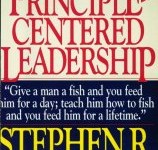
 I think Principle Centered Leadership (Amazon) was the most annoying, preachy, and useless book I have ever read. Really disappointing as I got a lot out of 7 Habits (Amazon) and thought reading this would similar enough to refresh my thinking, but also something new.
 (Amazon) by Richard Dawkins. This book took away the last residual guilt about being an atheist. Even in Secular Britain, it felt sometimes that I needed to apologize for not believing, or that I was weird because I literally couldn’t suspend rationality in order to feel better about myself/the future/whatever. Since then, I don’t. I think I’m also more optimistic as well – although that was a more gradual change.
 (Amazon) by Stephen Covey. This book showed be the difference between effectiveness and efficiency. The advice in it is so simple, and yet I read it and think about those people who embody the principles and the difference between them, and those that don’t… is profound.