Tag: career

  • Confidence

    Confidence

    Tlazolteotl 18:7:13
    Credit: Flickr / Amy Palko

    I was having a conversation with one of my mentors last week about a specific challenge I was facing, and she made this observation, and gave me a brilliant piece of advice that completely transcends that discussion and put so many things in context for me.

    If it’s affecting your confidence, then we have a problem.

    The tech industry is stressful. That’s just how it is, and you have to manage it. Expectations get overstated, priorities get changed, deadlines get missed. Most programmers seem have a degree of control freakery, and yet what we have control over (our own code) is the least of it. Writing code is invariably the least stressful part of my day. A day when I do nothing but write code is by definition awesome.

    And how much of the external stress matters? Some, but not all of it. A lot of it, I just need to let it go – and that’s something I need to get better at. I care, deeply, about the things I build, and the process and standards that are part of that process. In many ways that’s a good thing, but it’s also often a source of angst.

    This advice, I see it as a framework for evaluating stress. OK, that sucked. OK, that was hard. That, yeah, that annihilated your confidence, that’s the real problem.

    She’s completely right – at a functional level, nothing has ever been more damaging to my productivity than having my confidence shattered. Unhelpful feedback that has left me not knowing where to turn or what to focus on. Having my decisions second-guessed and having to endlessly justify them. Getting steam-rollered in a discussion, when it seems like my points aren’t being heard. Gaslighting – because nothing makes me question myself like questioning my view of reality.

    In fact anything gendered, or historically-gendered – it strikes at my core fear that I am not a nerdy boy, and thus don’t really belong. Maybe that bit is impossible to avoid, but for my own sanity it needs to be minimised.

    To be clear, this isn’t every interaction where I am in some way, lacking; it’s those interactions where I am some way lacking, and I have nowhere to go with that information. I got some really helpful, constructive feedback on Wednesday. It was so clear – this is what you should be doing, here’s something realistic to aim for. And then, I was so productive. Things just seemed to make more sense as a result. Knowing that there’s something I need to do better, or more of, is not a confidence annihilator. It’s helpful.

    Anyway, that’s what I am doing and thinking about with this piece of advice, and I’ve found it really helpful – passing it on in the hopes that someone else might, too.


  • My Career, Her Job

    UPDATE: I expressed myself very badly in this post. As a result, I hurt and offended some good people, and some of them were quick to let me know. I’m sorry. I’m feeling a bit overwhelmed by the response, but as soon as I saw the comments I knew I’d made a mistake. I appreciate people taking the time to call me on it.

    I never meant to disparage marketing careers, it was a mistake to use the phrase “women near tech,” and I didn’t define “job” and “career” well enough for what I was trying to say.

    wanted to talk about tech careers in terms of how much mobility one has. How big is the cage, and how tightly is it locked? Does a marketing person at a software company have different options from a software engineer at the same company? Is it different if they work at an energy company, or when they become sufficiently senior? There are a lot of corner cases where this breaks down, and those places are (to my mind) the most fascinating. I’d been thinking about this idea for a while, of how different options make for a different experience, and jotted down some incomplete thoughts.

    I’m sorry. I did not mean to offend or disparage anyone. I need to take more care to work through these kind of thoughts and get some input from other people before I hit “Post!” I hope people will see that this was a failure of wording and not of intention.

    Every so often there’s some article/panel/thing on women in tech that drives me nuts, because I look at who is on it and I think, these are not women in tech, these are women near tech. This is my life. Don’t tell me what you think it’s like! On reflection, the distinction between women in tech, and women near tech to me is this.

    If she gets tired of being surrounded by the… terrible shoes, poor dress sense, low standards of personal hygiene, arrogance, patronization, or just plain feeling like the odd one out, does it require a change of job, or a change of career?

    (I would like to say here, that aside from how smart they are, the vast majority of my colleagues are extremely normal.)

    So Marketing at a tech company? Job. Software Engineer? Career. HR pro? Job. Technical program manager? Career.

    This means if a woman spends enough time in tech they essentially become a woman in tech, even if that’s not their background. Sales – still job, but progress to be CEO of a tech company and that would look more like a career change.

    Still a theory-in-progress, because I don’t want to be exclusionary, but I need some way to explain why when I went to a “women in tech” event where I only met marketing people working for tech companies, I left feeling very “not for me, probably won’t go along to one of these again”. I’ve no doubt that women near tech face their own set of challenges, and that women in and near tech have many things in common, but it’s not the same, and it’s helpful for me to have an idea of what differentiates.

  • Blood, Bones and Butter

    Blood, Bones and Butter

    blood, bones and butter
    Blood, Bones and Butter

    I read about Blood, Bones and Butter by Gabrielle Hamilton (Amazon) on the Eloquent Woman blog, which discussed a section of the book in which the author writes about a panel she was on, and things she wanted to say, but didn’t. It was a panel about female chefs. Initially she has an attitude of “why are we still talking about this?” but it turns into frustration with the other panelists, as they come out with trite things and she wants to say, but doesn’t, that it is hard to do the second shift, to constantly second guess yourself, make tradeoffs between your work and your family.

    I was fascinated, drawing parallels between that and women in tech, and trying to find some broader variety in my reading matter. So I bought it.

    That is my favorite chapter in the book, but the book as a whole I also really enjoyed and it gave context for it. This woman has had a fascinating and extremely eventful life. So many stories. They can seem a little disjointed, and the ending a little abrupt, but it’s an autobiography not a novel, so I forgive it.

    I think, ultimately, the thing that gripped me most is that this woman is fantastically successful, and it’s clear – and she writes about this – that she never had a plan. She never set out to be a chef. She went off to grad school thinking about becoming a writer. And here she is, apparently both. There are so many people who are all about the plan, say they always knew. It’s refreshing to see this other, honest, perspective, of not knowing what the hell you’re doing but working incredibly hard and figuring it out as you go along.

  • Friends Don’t Let Friends… Become PMs

    Friends Don’t Let Friends… Become PMs

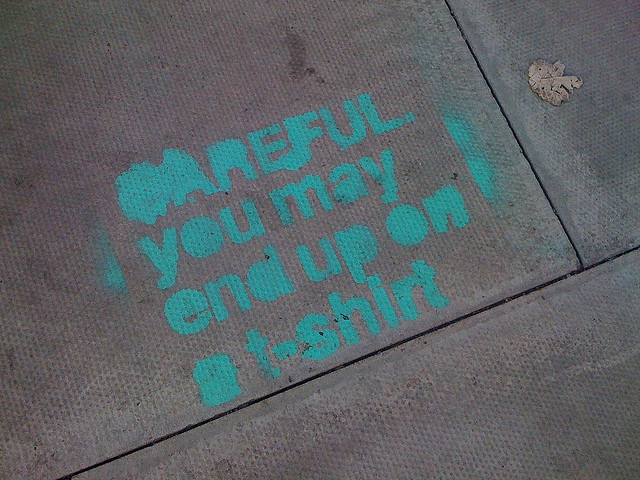
    Careful
    Credit: flickr / Tom T

    Recently, I heard about a school that has a mandatory “technology” class that students have to take in order to take CS classes in later years. It features: wood-working, circuit building, and Excel.

    This is horrifying. I want to go there with picket signs and stage a protest. Dress up as robots and chant things. If someone deliberately set out to design a course that would put kids off CS without them ever getting an inkling as to what CS is, they couldn’t do better than this.

    Wood work? WOOD WORK?

    And then, I’m in “training” for something (external) where old white men are telling me how to talk to high-schoolers, and describing what I do – software engineer, programmer – as “builder”. Apparently I have an “isolated” job and it’s the kind of thing that can be out-sourced… really not that high-potential a career. They seem to be saying that students should be blending a little bit of the technical with business and voila they’ll have a great career and let’s all enourage girls to do this, shall we.

    And I think, it’ll be a cold day in the hell I don’t believe in before I encourage anyone to study business period, let alone for a technology career.

    I cry a little inside because I thought I’d signed up to encourage women to go into tech, not near tech.

    Wood work starts to seem sensible by comparison.

    Thankfully after that I go back to my team of 50% woman and we keep working on creating something extraordinary. We’re trying to build something that can’t just be in the head of one person, so we have to communicate. We’re trying to build something well, so every piece of code gets looked at by 2-3 others. And later I’m stuck on something and one of them steps through it with me and I realize what I’ve done wrong and fix it. We get creative trying to do things that we haven’t done before. We have so much fun together that our visitor goes back to his office raving about how lovely we were to him and how close we are as a team.

    My isolated job, is not so isolated.

    Things I worry about with respect to girls and technology. I worry about terrible math teachers and gender-stereotyping convincing them that math is not for them, that girls aren’t good at math. Regularly I have conversations with women not in tech careers and they tell me they were good at math in school, and yet somehow didn’t consider taking it further – it just didn’t seem like an option.

    I suspect wood-working classes won’t change that.

    Then I worry about girls in university who think “I’m ok technically, but where I really differentiate myself is that I have good communication skills… I could be a great bridge between the technical and the non-technical…” who then go and become product managers. And they never find out that they were just as good as many of the guys in the class, that a technical career was an option. I know, because this happened to a friend of mine – thankfully she rethought it before she took that path and now she’s an engineer. And because it was nearly me, too.

    And so my friend and colleague complements me on my communication skills, and I quip that they would be distinctly average compared to people in any other profession, it’s just compared to engineers that they seem good.

    My point – being able to communicate doesn’t mean that a technical career isn’t a great fit, just like I don’t think there is much correlation between wood-working and software engineering skills. I’m on a mission to urge university girls – think about being an engineer before you decide being a PM is for you. It’s been four years since I finished my undergrad, and in that time I’ve come to realize – those guys who thought they were great and I figured they must be if they could be that confident? No-one is as good as those guys thought they were. Under-confident does not mean under-qualified. Really.

  • Rise: How to Be Really Successful and Like Your Life

    Rise: How to Be Really Successful and Like Your Life

    rise
    Rise

    Rise (Amazon) is focused on helping you become CEO. As a result I found some of it a bit overly-ambitious for me. But – it contained some really great advice.

    1. Ruthless Priorities. You have too much to do, but hey – don’t we all. The trick is to decide what’s critical and do an outstanding job on that, rather than a mediocre job on everything. It’s important to pick the right things to prioritize ruthlessly – the things that make a huge difference.

    2. Work smarter, not longer. If your answer is to throw hours at everything, you’ll never scale up.

    3. Mentors. This was probably the biggest insight I got from the book, and it made me think “I’ve been doing all these things that will benefit other people, but when did I last make time and prioritize someone mentoring me?” – it motivated me to set a time with one of my mentors and after a fabulous evening of delicious food and horizon-expanding conversation, I left with some key ideas and a contact that will help me move things forward, but more importantly – feeling inspired and energized and ready to go!

    Overall, a useful read if you want some strategies and reminders for moving forward on your personal development and crazy goals.

  • Misconceptions of What Software Engineers Do

    Misconceptions of What Software Engineers Do

    connecting the dots
    Credit: flickr / novaldiflickr

    My first proper day on my new project, and our PM says to me – “Cate, you seem to like to travel. How about you spend time in New York?” – I’m tasked with helping another team out, and being the bridge between that team and my team here.

    Initially I was a bit… thrown. Part of why I’d changed teams was because I didn’t want to need to go to California as often. Whilst I’d joked that it would be different if it was somewhere I’d actually chose to spend time, like New York, I’d also enjoyed my time staying still, and wasn’t sure if I wanted to continue making (typically – June was the first month since March 2010 that I didn’t go anywhere) a trip a month.

    Once I’d got over the surprise, two things struck me. The first, that this guy had – in a matter of days – noticed what I was good at and was working with my non-eng strengths – being a connector, and something of a nomad.

    The second, was that what I was going to spend my time doing, completely debunked a very depressing conversation I’d had with two (female) CS teachers. They’d talked about why their female students didn’t want to go into Engineering – and one of them, why she left industry for education. It was… somewhat stereotypical. Girls like to make things pretty. They’d prefer to market something than build it. Women are more interested in the big picture, how things fit together. They want to spend time with people, not machines.

    About a year ago, someone asked me if I was interested in working on a compiler team. I said, “I think I’d enjoy it for about 6 months, and then I’d start to miss humans”. He was amused and replied that my response was what he’d expected me to say.

    I suspect you have to be a particular kind of person to work on a compiler team. I am not that kind of person. In fact, many of the things these teachers saw in their female students are true of me, too. I like things to be pretty. I care not just about what something does from a technical perspective, but why it’s useful. I’m better at a system design level than at bit-twiddling. I’m obsessed with humans and how technology can improve things for them.

    Yes, I love to write code, and that is a big part of my job. But – it’s not all that I do. To say that being a software engineer is like X, and girls won’t like it because they don’t like X is a mistake.

    In this case, I think the thing about girls not liking X is a massive over-simplification and generalization. But my point – even if it is accurate – it doesn’t mean that being a software engineer isn’t a good fit. Being a software engineer is not “like X” – that’s far too simplistic. There’s so many different kinds of things you can work on, and they require different skill sets. I would be unhappy and not very good at compiler work, but the kind of person who would excel at working on compilers would likely be unhappy and not very good at the kind of work that I do.

    I don’t just write code. I also think about user interaction – working on features, I will say, I think this flow is more consistent. I work on the design of components from a perspective of the overall system – and testability. I work with other people who have less experience on the codebase or in the language to get them up to speed. I write up patents, and get to explain what I’ve come up with to lawyers. I put myself in the perspective of the user and think about what will be most important to me as a user. And I’m a connector – sometimes the most useful thing I bring to a discussion isn’t what I know, but that I know who will know about it.

    Of course, there are things that I’m terrible at. I can’t see pixel differences, in fact if you show me one UI and then another similar one I will be pushed to see the difference between them, and certainly not in a matter of pixels. I’m not great at convincing myself that something is programmatically correct – probably why I love testing. I can’t “hack”, it makes me nervous when I don’t know why something works. I can’t write assembly. When I need to optimize, my preferred plan is “write it in Haskell”.

    To take a narrow view of what you need to be good at in order to enjoy being an engineer, is crazy to me. All over the world, software engineers are building an unimaginable number of wildly different things. I’m incredibly lucky, but I think if you work at it you can often create the flexibility to make it whatever you want.

    So what if girls want to make things pretty. There’s too much ugly software out there, and I say – go for it. All I think matters is – do they want to solve problems? Build cool things? Can they think logically and break down a problem?


  • Decisions

    Decisions

    "Goody Glam"
    Credit: flickr / yarnpunk

    Last week, in California, I met the amazing Meggin who leaves such astute and beautiful comments here. It was great – or terrible timing – depending on how you look at it. Terrible timing, because, one of the first things I said to her was:

    In a while I’ll spin this into a really positive sounding blog-post, but right now? I can’t do that because I’ve spent half this morning in tears.

    Great timing because she gave me some good advice. So – rough week. I’m pretty chilled out travelling, but packing and timezone changes are still stressful, and I get claustrophobic in MTV. I spent the week jetlagged, came back, and I’m still jetlagged. I enjoyed the weather, wondering around San Francisco, and a day at MOMA. It was great to meet Meggin, and hang out with Maggie and John, and connect to other female engineers based in MTV who I had only seen on video chat.

    Anyway, circumstances have meant that I’ve been figuring out what to do next. Stay on my current team with more travel, or move to a new team. I’ve been trying to work that out in the context of wanting to move back to Europe sooner rather than later, of enjoying what I work on currently, but being tempted by this other challenges, and not really wanting to spend so much time in California – it would be different, if I was going somewhere (a city!) where I’d actually enjoy spending time.

    It’s been difficult – hence the tears, and the lack of blogging – I couldn’t write about this, but I was sufficiently absorbed by it to be unable to write about anything else.

    Coming to a decision has really forced me to think about – what is most important to me? What compromises will I make? For the right project I could be willing to travel more, but the right project depends on a number of things, not just the project itself, but the people involved, and the potential for personal growth.

    So I’ve been asking myself questions. What do I want to work on? What level of pressure can I live with? Who do I want to work with? How much will I compromise? How do I want to organize my schedule? What matters to me most? In the end, certain events made the decision was very clear, although still not easy.

    I’m switching teams – I know, again. I’m going back to my original manager, and I’ll be working on docs. I’m excited about the project, the people on the team (50% women! Yay!) and I’m really happy – and lucky – to have this guy as my manager, because he’s awesome. They all are. The project is a really good fit for me, I hope. Social was too, and I am fortunate to have been part of that incredible experience, but – for a number of reasons – it’s time for me to move on from that, and this is, I’m completely sure, the right place for me to move to.

  • WISE Talk: 3 Things That Make Me Luckier

    WISE Talk: 3 Things That Make Me Luckier

    Commentary (I didn’t have slides) for the talk I gave for UO WISE.

    I thought I was going to come and have an informal chat about how interviewing at Google is not that scary, and then I saw Krystal’s tweet.

    [blackbirdpie id=”55757050474532864″]

    I freaked out a little, to be honest. Like, woah – I need to be inspiring? I don’t feel inspiring!

    The thing is, I used to help organize these talks, so I know what I used to look for out of them.

    Life advice.

    Because I’ve long felt that if I had more information, I could do better at life. We had some great speakers, and I got some very useful advice. But – I do not feel qualified to give anyone life advice. Because honestly, I think that any success I have comes down to working really, really hard, and being lucky.

    The thing is, there have been studies of people who consider themselves “lucky” and some interesting observations have came out of it, from an article in the Times:

    I gave both lucky and unlucky people a newspaper, and asked them to look through it and tell me how many photographs were inside. On average, the unlucky people took about two minutes to count the photographs, whereas the lucky people took just seconds. Why? Because the second page of the newspaper contained the message: “Stop counting. There are 43 photographs in this newspaper.” This message took up half of the page and was written in type that was more than 2in high. It was staring everyone straight in the face, but the unlucky people tended to miss it and the lucky people tended to spot it.

    Which tells me that lucky people see things that unlucky people don’t. So, I’m going to talk about three things that I think make me luckier.

    1. Get the right people on the bus.
    2. Gaps are opportunities.
    3. Bravery is not always what you think it is.

    1. Get The Right People on the Bus


    bus
    Credit: Aires Dos Santos / http://www.fotopedia.com/users/airessantos

    In Good to Great (Amazon), this is identified as something that good companies do, to take them to great. They get the right people on board.

    I also think it’s true of yourself. Who’s on your bus? Are they the people you want on there? I think we’ve all been there, whether it’s the drama junkie, or the drunken friend who you carry home every time you go out.

    For a while, I was hanging out with the wrong kind of people, and I started changing that. It was amazing how much happier I was, how much more energy I had, and how much more I got done. The drama was hugely affecting me, for all I tried to stay away from it. We’re hugely influenced by the people we interact with. It’s important that they are good people.

    2. Gaps are opportunities


    Phonebox nonsense
    Credit: flickr / Darkroom Daze

    Wherever there’s a gap, somewhere where you think “that should be happening”, but it isn’t – I think that’s an opportunity. To do something, to create something, to bridge a gap. The most exciting things I’ve done have come out of gaps I’ve seen.

    3. Bravery is Not Always What You Think It Is

    fall apart
    Credit: xkcd

    People said I was brave to move to Canada. The truth was the opposite – I was afraid to join the real world, so I hid from the real world in grad school. Now I live in the real world, I wonder what I was afraid of. Seeing someone else as brave is not the full story, you don’t know what they’re running away from.

    There’s that quote, it was in The Princess Diaries (Amazon), but originally by Ambrose Redmoon.

    Courage is not the absence of fear, but rather the judgement that something else is more important than fear.

    What this means to me is that being brave doesn’t mean that you’re not freaking out. I freak out all the time. Every time I start a new adventure. Every time I stand in front of a bunch of people to talk about something. Every time I’m somewhere where I know no-one. Every time I hit “post” on something that is non-trivial and honest.

    It’s easy to say, X is braver than I am, I could never do that. It’s a cop out – people can be brave in different ways. People think I’m brave because I say “yes” – but I think people who say “no” are brave, they commit to one opportunity when I hedge my bets with many. They are not as terrified of missing out as I am.

    Anyway, I don’t think being brave means you have to be sure. I don’t think it means that you don’t get to be really scared. It definitely doesn’t mean that you won’t push yourself. It doesn’t mean being unrealistic about chances of success – or failure. Being brave is seeing all that, and deciding to go ahead and do it anyway. For the hell of it, or for the challenge, or for the adventure. Or, for me, because I’m too afraid to say no.

    But these are just my three things, and like I said, I’m completely unqualified to give life advice. So pick and choose what you think is worth considering, and then make up your own list of things that make you lucky.

  • Post Grad Rehab: January/February

    Post Grad Rehab: January/February

    January is for Career

    At the start of the month, I asked myself some questions.

    How do I manage my work email? I want to minimize the time I spend on email, but stay on top of it.
    So far, it’s ok. I use priority inbox and starred action items and delete aggressively. It’s helpful that we get mails that start “If you’re not interested in X don’t read any further” – so I just delete the ones that aren’t relevant to me. The number of emails that I came into after 3 days off was quite terrifying, but so far I just eliminate everything I can in the morning and go though my action items at least weekly. I don’t have alerts turned on, but I check my email tab far too regularly for my liking – hopefully this will change once I no longer feel like I’m fighting with things and actually have some idea of what I’m doing…

    Of course, I’m not of any importance to anyone, and later on I will probably want to switch my inbox clearing to the end of the day and use a todo list, but at the moment as I’m ramping up I’m pretty much single tasking, so I don’t need a todo list other than my action items.

    What’s the vision for the project I’m working on?

    I’m currently working on mobile Gmail but will switch to another project once I’ve finished the two things I said I’d do for them (one is complete, subject to code review – hopefully I will be able to write about my first code review here, it was eye-opening). I think I need more time to fully get it, but I’m starting to. The new project is not email, and I’m really excited by what they are doing and can’t wait to get involved with that! More than this project vision, there’s the vision for the company as a whole which is shared very openly with engineers and I’m really inspired by that, too.

    How can I contribute to that vision?

    One of the things I’ve discovered in my first projects is that I can already have a say in what’s going on. Caught in the middle of an email argument about my first submission my manager told me that I should include what I thought, not just let someone else make a decision. So far, I mostly ask questions – how does this affect usability, internationalization? How will this work in a low-bandwidth situation?

    Set up an internal blog (what do I call it?)

    Cate’s Googley Adventures. I have two posts in my drafts section I haven’t had the nerve to hit publish on. Must do that.

    How can I get the most out of my manager?

    My manager is really lovely. We have a weekly scheduled 1:1, but if I ping him on chat or stop by his desk he makes time for me. I think one thing I’ve learned in all this grad school kerfuffle is that I need to ask for what I need more, and so I’m making an effort to do that. Feeling like a complete failure because I hadn’t yet made a commit I told him that and he was helpful (apparently I am not the most hopeless noogler ever. Yay!)

    How will I organize myself?

    Last week and this week, I’m single-tasking. I know exactly what I’m working on when I go in today, so I don’t use anything. When I have a mix of tasks – like in the first couple of weeks when I had training modules etc, I use a spreadsheet with color-coded categories.

    How do I organize my day to be most effective? Gym in the morning? When is my make time?

    Definitely, gym in the morning! Make time is most of the day, since I have next to no meetings (yay!) but sometimes in the afternoons when the sun is bright in the office and I want to be quiet to focus better I go and hide out inside this hollow-tree-trunk like thing that’s full of pillows. I love it in there!

    What has to change about my writing here?

    I still don’t know. I have a couple of things in mind to write which I’ll then have to run past people, after which I’ll know more. For now, I’m keeping this blog a bit more personal.

    Of course, the question I asked most often was – what do I do about grad school? I wrote about that a few times, but this post – Fear is Not an Acceptable Excuse is pretty much where I’m at now. I’m not happy about not getting my masters, but I’m over fighting with uOttawa’s bureaucracy and institutionalized incompetence.

    February is for Rehab

    This Valentines day, it will be a year since I injured my shoulder. But at least I can finally afford healthcare! So this month, I’m really focusing on getting over that – seeing the chiropractor and the sports masseuse regularly, and working out with my trainer. I’m also trying to stop the whole [do nothing / work out an insane amount / do nothing] cycle that too much travelling has got me into. This week I’m limiting myself to 3 gym trips, and having noticed that I tend to regret the second spin class I won’t be doing more than one spin class a week for a little while. Stress hasn’t been helping (it sends my shoulders up around my ears) so this month I’ll be trying to be a little less strung out, as well.

    I’m also going to be using this month to get settled in my apartment properly and sort myself out after so much jittering about. I want to get my art hung up, stuff I don’t need thrown out, and meet more people in KW.

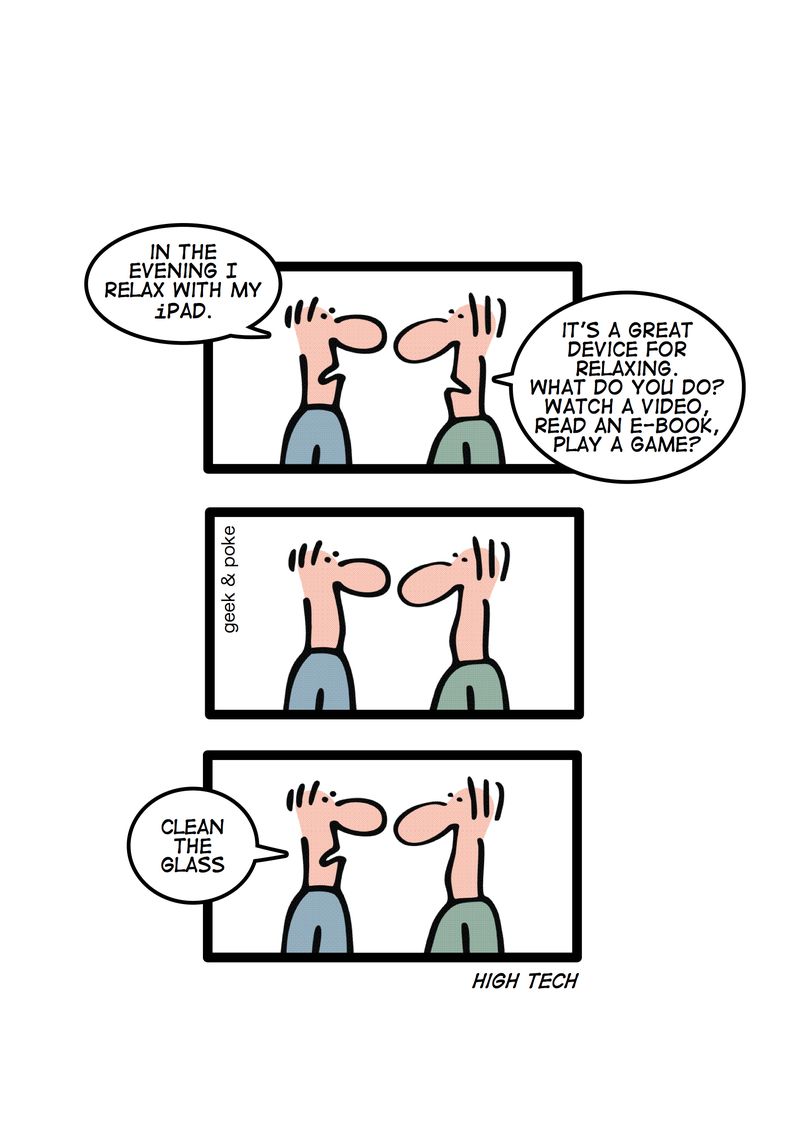
    High Tech
    Credit: Geek and Poke