Tag: books

  • I ♥ My Kindle

    I ♥ My Kindle

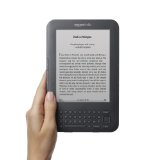
    KindleI finally caved and got a Kindle (Amazon). My friend showed me his, and it looked pretty cool, and then I packed up my apartment… and I have a lot of books. And it started to seem stupid that I was carrying around all these large, physical objects. Time to digitize.

    Ironically I had held off getting one in part because of having a lot of physical books. In the interim, I kept buying books because I read a lot so the problem has just been getting worse. Time to go digital. Between now and when I move again (I think about 2 years) I’m going to give away or sell my physical books and replace the ones I want to keep with digital versions.

    Five reasons why I love my Kindle:

    1. Case with light – Kindle Lighted Leather Cover (Amazon) combined with the Kindle made my 24 hours sans power in my apartment much more bearable.
    2. Carrying multiple books at once. I can go out for the day with a novel and a non-fiction book and alternate between them. Well actually a whole array of books, but the point is – reading multiple books at once is much more pleasant. Also, I flew back to the UK for 3 and a half weeks and my suitcase and backpack were that much lighter – I didn’t bring any books, just my Kindle.
    3. Free books. There are TONS, particularly popular classics like Pride and Prejudice etc although it’s hard to find the page listing them on Amazon. You can also look for limited time offers. Also, lending books is possible. I think I was holding out for this feature before I would get one! Anyway, if you want to borrow one of mine that I write about on here let me know – I’ll be happy to share it with you.
    4. Reading novels is fun again – when I decide I want one, it arrives instantly. No waiting, no need to go to the bookstore. I love it.
    5. It doesn’t feel like a gadget. I’m just reading a book. I’m not distracted by popups or alternative activities (a black and white web browser is just weird). I find the UX to be really well designed for the context – it just gets out the way.

    The downsides. I’m flying a lot at the moment and the Kindle is considered an electronic device that should be powered off on takeoff and landing. Yes, for real. Perhaps they’d like me to power off my digital watch as well? Hopefully airlines will come up with a sensible policy for this as given that it only uses power when you change a page, I don’t think it can’t be considered an electronic device the way an iPad is. That is a little frustrating.

    Bigger was Amazon’s response to Wikileaks which I wasn’t keen on. I’d literally just committed to buying all books from them and then that? I was not overjoyed by that. It does tie you in to one supplier, which can be problematic.

    But, overall, I’m really happy I bought one.
  • Books to Read Before You Graduate: Design Patterns

    Books to Read Before You Graduate: Design Patterns

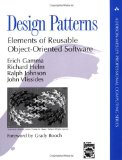
    Design Patterns: Elements of Reusable Object-Oriented Software – I had to read and study this for a class, and then we played Design Pattern Poker, where we “played” the design patterns we had in order to solve a problem.

    Seemed like nonsense at first, but then I read the book. And saw solutions that I’d been applying – and solutions that I should have applied, but didn’t.

    It’s nice to solve problems from scratch and feel that sense of “aha”, but the Patterns give us a shared language to talk solutions – that CompSci students should know. Also, it’s all very well solving a contrived university assignment, but in the real world – problems are bigger, and have more dependencies. The more we expose ourselves to lessons learned in real life, as opposed to the ivory tower, the better. We don’t always get that insight from professors, unfortunately.

    After a chat with someone today about design, and realizing how much I’d learned from this – I’m officially adding it to my “books I’m glad I read before I interviewed @ Google” list.

  • Drive by Daniel Pink

    Drive by Daniel Pink

    Drive
    Drive (Amazon)

    The premise of Drive is that “if-then” rewards don’t motivate us, and actually what people need are three things – Autonomy, Mastery, and Purpose. I.e. you want a higher reason for doing what you’re doing, be working towards mastery in the process, and have as much control as possible about when/where/how you do that.

    The cover of Drive says “The Surprising Truth About What Motivates Us”, but there wasn’t much that was shocking to me. Perhaps that’s because I’m a programmer – one profession where managers have already embraced “Motivation 3.0” (Google is held up as a shining example, IBM definitely gave EB interns a lot of autonomy).

    Pink does a good job of organizing the research around motivation, particularly I’m interested by Carol Dweck’s work on having a “growth” rather than a “fixed” mentality. With a fixed mentality, everything you achieve (or don’t achieve) is a commentary on your innate abilities. With a growth mentality, everything is a learning process.

    The pursuit of flow (coined by Mihaly Csikszentmihalyi) and the idea of “Goldilocks tasks” (tasks that are neither too difficult nor to easy – key to achieving the state flow) are interesting.

    My favorite concept is the difference between extrinsic motivation and intrinsic motivation. Extrinsic motivation means being motivated by external factors – like job title, or money. Intrinsic motivation comes from within – from enjoyment in the task, or working towards a higher purpose. People who are intrinsically motivated tend to perform better.

    In all, worth a read, but I think you can get the majority of the value from the book out of Pink’s TED talk (embedded below). But before you watch it – take the survey and determine whether you’re “Type I” or “Type X”.

    This book appealed to me at the moment because I’m feeling low on motivation with my thesis. Having read it, I’m not any more motivated, but I do have a better idea as to why – and as a result what I can do to improve things.

    I feel like what I do lacks purpose. I’m increasingly demoralized that academia is not a place that values what I find interesting. It’s started to make me question the point of what I do. The thesis is a big, intimidating thing that is freaking me out. I need to break it down into smaller subtasks that are more “Goldilocks” in nature.

    Want my copy of Drive? Tell me in the comments or on Twitter (@catehstn) and I’ll pick a winner at random and post it to you! H/T to the lovely Julie for this idea!

  • Books and Paper and Letting Go

    Book Club Boutique Newspaper
    Credit: flickr / STML

    My mother, a busy GP, has accumulated a stack of newspapers that she has not had time to read. She keeps them in the hope that she will, one day, have more free time. I pointed out that she would be unlikely to want to spend this new free time reading newspapers from ages ago, to no avail.

    So, my dad and I decided to get her an iPad. The newspaper can arrive digitally, and the missed details of the world that day can accumulate on the internet, not in the living room.

    We went to the Apple store, and tried out The Times (she insists on reading The Times, despite me explaining that Rupert Murdoch’s deluded approach to the internet was going to kill it and she may as well pick another newspaper now). Unfortunately the app only keeps the current days paper (well who wants to read yesterdays?) and as far as we can make out doesn’t come with an online subscription to look up recipes. Another annoying thing is that having paid for the paper you should be able to get an RSS feed, but I don’t think you can. So what I’ve done instead is save the link to The Times homepage on her desktop, along with a link for Facebook and Flickr. I’ve set up Google Reader (tragically it contains only my blog and twitter feeds), and email.

    Having watched her use IE 6 (yes, Chrome is now installed and she’s been instructed to NEVER, NEVER use IE 6 again) it seems that setup actually fits her model of interaction really nicely. I think the iPad over the iPhone was the right choice for her.

    And it’s got me thinking – yes, as usual, about user’s mental models of the internet – but also for myself. I want an iPad because it’s shiny, and surprisingly quick to type on. But I have a MacBook Air and an iPhone, do I need something in between? I have never read a physical newspaper other than the Economist – but my subscription stopped arriving several months ago and I realized I didn’t miss it. Maybe I could read books digitally instead…

    However, I’m not sure I can. When I moved to Canada I took my music collection – digitalized – and tried to put my DVDs on a hard-drive with mixed success. I rarely buy CDs lately, don’t download illegally, but don’t download legally either because I’m not OK with the DRM restrictions. I do buy and rent movies on iTunes though.

    It’s one thing to change digital mediums; the only CD player I own is in my car; I only own a DVD player because I have both region 1 and region 2 DVDs (life of an expat). However moving non-digital to digital is a leap. I can read a book through take-off and landing. I don’t have to worry about battery life. It’s nice to wonder through a bookstore and pick what I want to read (yes, I know you can do that digitally but my level of indecision is always much, much greater). Because I keep books, and re-read them, what would I do? Buy them again? Or just buy all future books digitally? If Amazon had some kind of service where you sent them a physical book and a digital book appeared on your Kindle (or Kindle app) I might think about it. But that service doesn’t exist.

    And so, as I think about moving on – what of my possessions I can streamline, what I can throw out, what I can ship back to the UK, what will go with me. I’m keeping my books. And – not buying an iPad.

    For now.

    Reading a book
    Credit: flickr / Fabienne D.
  • 3 Books That Changed My Perspective

    Day 14 - Visual Representation of a Reading List
    Credit: flickr / margolove

    I recently finished reading What I Wish I Knew When I Was 20 (Amazon) by Tina Seelig. It’s a wonderful and inspiring book, and I’m going to write a little about how it inspired me, but I also want to touch on two other books that changed the way I look at things.

    The God Delusion (Amazon) by Richard Dawkins. This book took away the last residual guilt about being an atheist. Even in Secular Britain, it felt sometimes that I needed to apologize for not believing, or that I was weird because I literally couldn’t suspend rationality in order to feel better about myself/the future/whatever. Since then, I don’t. I think I’m also more optimistic as well – although that was a more gradual change.

    The 7 Habits of Highly Effective People (Amazon) by Stephen Covey. This book showed be the difference between effectiveness and efficiency. The advice in it is so simple, and yet I read it and think about those people who embody the principles and the difference between them, and those that don’t… is profound.

    So, What I Wish I Knew When I Was 20 (Amazon). The biggest lesson? Give yourself permission – to try, to lead, to create… to fail. And I think we 20-somethings need that, because it’s easy to go along, being told what to do. Too easy.

    And really, I think one of my biggest successes has come from giving myself permission. About a year ago, I applied for a more senior position to the one I’d had for two summers. And I had this incredibly strange interview, where the woman kept saying how alike we were and how she disliked aspect X of herself that I had too, and I tried to construct sensible arguments to say “we are not that alike”, but got nowhere. The only constructive feedback I got was that I didn’t have enough examples of leadership, outside my work for that company.

    By the time I was answering that question, I was pretty discombobulated, and knew that in a better interview situation I could do better… but on that issue at least, she had a point. Soon after, this opportunity came up to restart WISE, and I took it. And part of what drove me to do it, was the idea that I would prove this woman wrong. But that reason soon faded away (I have no desire for that position anymore and didn’t apply this year), and I, and other members of the team, have worked really hard to make WISE a success.

    And people seem to be impressed, or surprised by what I’ve achieved in this position of leadership. But I haven’t surprised myself. See – I always knew I could do it, I just waited too long for someone else to give me permission to prove it.