
I recorded an episode of Console‘s DevTools podcast, talking about privacy engineering. You can listen to it here.
I recorded an episode of Console‘s DevTools podcast, talking about privacy engineering. You can listen to it here.

A bit over a year ago (14 months ago) I joined DuckDuckGo as an Engineering Director on the Mobile – now Native Apps – team.
The biggest thing driving a change was getting back on a positive learning curve. Two big realizations pushed me to start responding to recruiter messages (around a year before I finally made the move; I spoke to 4 places in total) the first being that I was getting too far away from the kind of work I like to do and secondly feeling like I was increasingly learning coping mechanisms rather than skills.
My criteria: net positive in the world, mobile, product development, distributed, director level.
I was willing to bend on these for the “right” opportunity, but in the end I got lucky (or: was pretty deliberate — both?) and checked everything on the list. Beyond that, the big shift was to an all-business-low-drama environment, meaning that my job was cognitively harder but emotionally easier. Of all times, this was a gift during a pandemic, and opened up more space emotionally for the rest of my life.
It’s been fascinating to learn more about the privacy space. I was previously very European in my approach to it, seeing it as human right and not something that I needed to pay too much attention to. I was (and am) extremely particular about some things (largely because of previous experiences of online harassment), but not worried about others. I never click on adverts, so creepy ads following me around the internet was a mild irritant, and judging from the ads I see on Instagram, even Facebook knows nothing about me. Understanding more about the extent of surveillance that enables behavioural advertising has made me glad to have the opportunity to work on giving people alternatives. There are some sneak previews of things we’ve been working on in this WIRED article.
It also makes product development more interesting, many tech companies rely heavily on analytics, tracking everything they can about an individual’s behaviour (quote from someone about a food delivery app, “it was a tracking app, that also happened to have a food delivery integrated”), but ultimately these aren’t needed to make good decisions and build a compelling product. I talked a little bit about our approach to metrics and product decision making in this conversation with Paul Hudson.
All of this to say, it’s been a good year; here’s to the next one. Excited to keep shipping and building out the team!

Something strange happened a few weeks ago. My traffic was normal, but there was this enormous spike in page views. I later discovered someone was doing some stalking in order to write the most upsetting comment they could on something I’d written. Given my normal stats, I estimate they looked at over 500 pages and spent around 5-7 hours on the site. (Analytics are so awesome and their behavior so extreme, I can also tell you the city they were in and that they use Chrome). Seriously odd.
Around the same time, I was googling myself and I discovered a guy I knew at university had embedded Facebook status conversations from 2007 (that I was part of) in his blog.
These things really got me thinking about my expectations of what people will find out about me online. I’m fine with what people find out about me when they search, I’m fine living, to an extent, in public. But – I don’t expect someone to read most of my archive in one go. Especially given the motivation – I found it rather creepy. I don’t share much on Facebook, and I would be fine with what I share (now) being public, but I did have this expectation that over time it would – even if it still exists – be old enough that people were unlikely to find it. As I removed this guy in a clean-up of my friend list some time ago, I can’t even access the comment to delete it.
The realization that when you comment on someone’s status, or write on their wall on Facebook means that you entrust it to their privacy settings (and their ideas of what is appropriate) is seeming more important than it did previously.
These are not technical problems, they are issues of etiquette. The thing is, whilst people have tried to come up with guidelines for online etiquette, it’s not exactly been wildly successful. The guy embedding conversations probably didn’t think it was a big deal at the time (would it have been? Would I have deleted my comment then? Would I have refrained from conversing in public with him?). The woman who spent so much time trying to upset me probably didn’t realize how obvious it would be from the analytics, and thought she could hide behind anonymity.
And what is the appropriate response? To ask for the post to be deleted? To try and add him as a friend in order to delete my comments? Or just to leave it?
Likewise on anonymous comments. I’m against censorship. I believe in freedom of speech. How far should that extend?
Still working on the answers. However, as these were both very odd occurrences, I don’t think I’ll be changing my behavior. I already use Facebook very differently to how I did in my undergrad (specifically, minimally) and I get too many benefits from blogging to give it up because of one weirdo. But – it’s definitely given me something to think about.
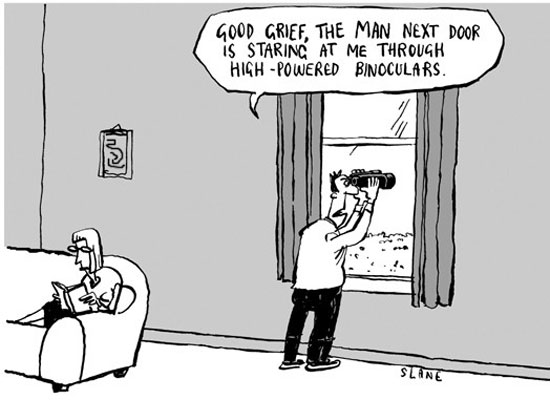
[Image credit: I can’t find where this is from, I found it on another blog who hadn’t credited it properly. I think it’s by Chris Slane]

After some time without Facebook, I’ve become quite happy without it. However, it’s my birthday next week and I’m headed to Seattle for the weekend and later on next week, we’re planning a party for the Awesome Foundation (which is GO – we have 10 trustees and a project, I’m so excited – expect more news this week).
What does any of that have to do with Facebook? Well I know some people in Seattle, but don’t have their email address. Ditto for people I know and will want to invite to the AF party – I don’t have their email, or their phone no. because for the first year I was in Ottawa, I didn’t have a cell phone. Aside – does anyone else find that people don’t really give out contact information anymore? They just say, “Oh I’m on Facebook, you’re on Facebook – right?”.
So I reactivated my Facebook profile and then went through and hid most of my information, and checked (and double checked) my privacy settings. Now Facebook is trying to take over the entire internet, I was trying to stop them from sending my personal data everywhere, and I managed the opt out bit (I think). What I couldn’t find, though, was the bit that stops my friends from sending my personal data out and about even with these instructions. Is it a coincidence that after stuff like this is published there are some subtle changes in the UI?
So I have a BSc (hons) in Computer Science and most of a masters… and I cannot fathom the Facebook privacy settings. Worse, even the one that I think I found I can’t be sure of.
So I’m back on Facebook, but this time it’s more in search of an exit strategy.

I love Google, I do. I wouldn’t use another search engine and I use a lot of their other stuff as well. But I’ve been following the debate about privacy in Buzz (read this – if you doubt that the privacy issues are a potential problem, and this info for lawyers and journalists with useful instructions for managing privacy – note that Google is in the process of making changes to resolve these issues) and wondering where all my random new followers in Google Reader came from… and now I know.
Developers, we like to make things that are new and shiny, and they we assume that other people will get it because it’s oh-so-simple to us. They don’t. Seriously.
Check out the comments on a post from Read Write Web which ranks so highly for “Facebook Login” that there are a bunch of confused people there wondering why they can’t log in to Facebook from that page. For real. The worst part of my mother getting a Facebook account, incidentally, isn’t what she can see that I’m doing (I’ve not done anything incriminating lately), it’s that now not only do I get phone calls for computer support, I get phone calls for Facebook support. And the privacy settings? If they made sense to people this guy wouldn’t have been able to do this level of analysis.
From danah boyd – “Streams of Content, Limited Attention: The Flow of Information through Social Media” :
Throughout my studies of social media, I have been astonished by the people who think that XYZ site is for people like them. I interviewed gay men who thought Friendster was a gay dating site because all they saw were other gay men. I interviewed teens who believed that everyone on MySpace was Christian because all of the profiles they saw contained biblical quotes. We all live in our own worlds with people who share our values and, with networked media, it’s often hard to see beyond that.
I think this is extending to developers and the technically savvy. We’re tweeting, and blogging, and interacting with people who are like us but I don’t think we have a generation of people who are technologically literate, as much as technologically competent, and even that is questionable. What does that mean? It means they use the things we produce but they don’t understand the inner workings of it and they don’t want to.
Wave was supposed to revolutionize conversation, but I still meet people – regularly – who haven’t heard of it. A girl I know was telling me today that her supervisor (a comp sci) hadn’t heard of Google Talk. I wasn’t even surprised by this.
It’s easy to think that whatever you’ve created is the be-all and end all. But we should really know by now that if it’s at all complicated, people will be confused. People will almost never change their behavior because your product is so amazing. If we think otherwise, we’re deluded.
And privacy is too important to screw up in this respect. People complain about Twitter’s controls not being fine grained enough, but it is at least simple – no misunderstanding. Private, public. On, off. It’s a binary choice, of the type that we probably need more of.

Now that my iPhone is unlocked (yay!) and has a data plan, I can play Foursquare. Which is exciting for me, but I know some people hate it and my boyfriend has been getting all angsty about giving up my privacy for nothing.
The thing is though, I love tracking things. I track the applications I use, and the music I listen to. I track random things on Mycrocosm. I track my todo list through Remember the Milk and my goals page and I use various applications for tracking how I’m doing on Twitter (am I tweeting too much? Tweeting stuff that’s interesting?). I track my blog stats through Google Analytics which means I can say that when I added related posts to my blog, my bounce rate went down. I’m a bit of a data junkie, I guess. But that is probably fitting considering that to describe what I like to work on I’ve taken to saying, “I take data and try and present and organize it in a way such that I can answer questions that you didn’t think to ask.”
Not everyone is interested in doing this, of course. But I’ve been thinking about why I like to document my life and track it online like this and I have an answer. And no, it’s not that I’m self-obsessed and want everyone to know exactly what I’m doing, all the goddamn time. It’s my way of keeping a journal – the journal I tried to keep at numerous points growing up, but never had the dedication to stick with. It’s easier! I track my music and application use just by running stuff in the background. My task lists are a little more arduous to maintain, but they can be updated anywhere and the payoff in terms of organization is well worth the time. Twitter allows me to keep track of funny or useful articles I find online and document the highlights of my days in snippets, now I archive my tweets into weekly blogposts for easier searching. My blog is a history of things I’ve thought about and worked on, it documents my ideas and is search-able, and sometimes I find things in the related posts section that I’ve forgotten I wrote.
Now with Foursquare, I can keep track of where I’ve been. And I get that it’s annoying when your every check-in gets posted to your Twitter or Facebook stream, so I don’t do that. Currently it’s set to post only badges and mayorships, but I’ll turn that off if they’re frequent occurrences. Here’s what I’m getting out of it:
Ambient Awareness
I’m a big fan of this idea, I like the ease of keeping track of people and staying in touch this way, rather than the long “this is everything I’ve done in the last month” emails. And I suck at writing emails anyway (working on replying, I’m getting better at it), so nobody gets those from me. This makes it all the more useful to have places where people who are interested in what I’m up to but can’t be bothered to write the email and wait for the response can keep up with me, and hopefully I can keep up with them in return. If you’re not that person and my content is boring, I’m sorry – but it’s not meant for you. I tend to use Facebook for this, because it’s closed and I tend to limit it to people I know, but I think Foursquare can potentially be nice for that too.
Serendipitous Meetings
OK, this hasn’t happened yet but I hope it will. If I’m in Starbucks and you’re nearby and fancy a coffee then maybe you’ll come by and hang out. That’s kinda cool! And the other day when I was meeting friends at a restaurant, I knew one of them was there because his Foursquare check-in popped up on my phone. That’s potentially useful, too.
Competition
I really want to be Mayor of where I kickbox. Perhaps some people might find that a little sad, but if it gets me training more isn’t that a good thing? Competition encourages me to get out there, and visit new places. It’s pretty cold in Ottawa right now – the more motivation to get out and about, the better.
How about you? Do you think Foursquare and services like that are stupid, or do you use them? And if so, why – what do you get out of it?